oruro carnival 2027

Oruro Carnival 2027: Complete Guide to Bolivia’s Spectacular UNESCO Heritage Festival

Picture this: thousands of dancers in elaborate devil masks swirling through cobblestone streets, their sequined costumes catching the Andean sunlight as ancient drums echo off colonial buildings. Welcome to the Oruro Carnival, Bolivia’s most magnificent cultural celebration and one of South America’s most authentic folk festivals. As Oruro Carnival 2027 approaches, this UNESCO Masterpiece of Oral and Intangible Heritage promises to deliver an unforgettable spectacle of faith, folklore, and artistic brilliance.

Key Takeaways
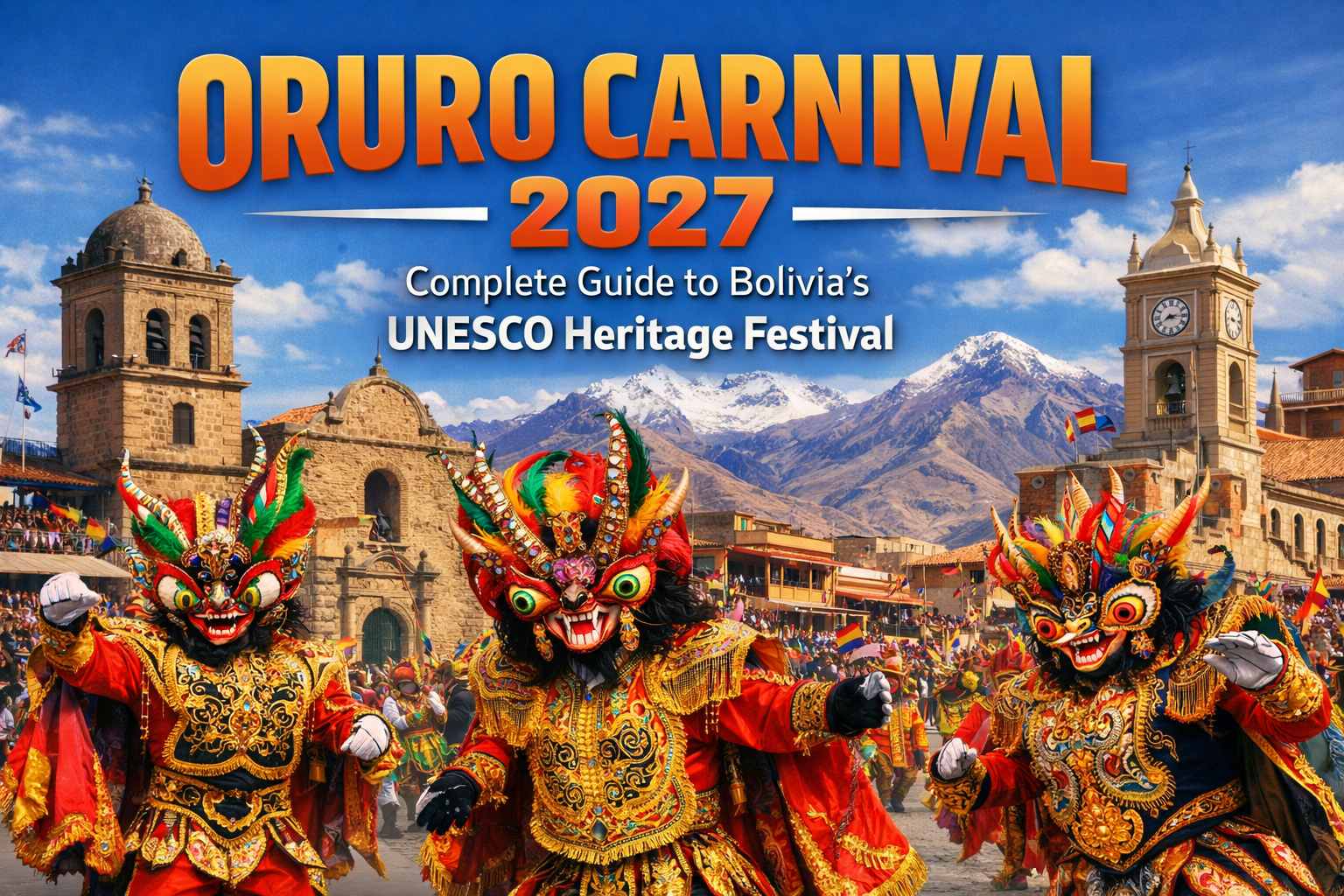
Cover image - Create a stunning 1536x1024 landscape cover image featuring colorful Diablada devil dancers in elaborate masks and costumes pe

Oruro Carnival 2027 will take place February 27-28, featuring the iconic Diablada dance and over 50 traditional folk groups
• This UNESCO-recognized festival combines pre-Columbian traditions with Catholic influences, creating a unique cultural synthesis
• The main parade route covers 4 kilometers through Oruro’s historic center, culminating at the Sanctuary of the Virgin of Socavón
• Advance planning is essential – book accommodations by October 2026 and purchase parade tickets early for the best viewing spots
• Beyond the main carnival days, the celebration extends for 10 days with various cultural activities, competitions, and religious ceremonies

1. CARNIVAL BASICS

1.1 What is Oruro Carnival

The Oruro Carnival stands as Bolivia’s crown jewel of cultural expression, a mesmerizing blend of indigenous Andean traditions and Spanish colonial influences that has captivated audiences for over three centuries. This extraordinary festival transforms the mining city of Oruro into a living theater where ancient beliefs dance alongside Catholic devotion.

History and Origins
The carnival’s roots stretch back to pre-Columbian times when indigenous communities honored Pachamama (Mother Earth) and various Andean deities through elaborate rituals. Spanish colonizers attempted to suppress these “pagan” practices, but the clever indigenous population adapted by incorporating Catholic saints into their ceremonies. The result was a brilliant cultural synthesis that preserved ancestral traditions while appearing to conform to colonial religious requirements.

The festival’s most iconic element, the Diablada (Dance of the Devils), emerged from this cultural fusion. Originally representing the eternal struggle between good and evil, the dance features elaborate devil costumes with intricate masks, symbolizing the triumph of the Archangel Michael over Lucifer. Local miners, who formed the backbone of Oruro’s economy, embraced these traditions as protection against the dangerous spirits believed to inhabit the mines.

Cultural Significance
Today’s Oruro Carnival serves multiple purposes beyond entertainment. It functions as:

  • A religious pilgrimage honoring the Virgin of Socavón, Oruro’s patron saint
  • A preservation mechanism for indigenous languages, music, and storytelling
  • An economic lifeline for thousands of artisans, musicians, and performers
  • A source of cultural identity and pride for Bolivian communities worldwide
  • UNESCO Recognition
    In 2001, UNESCO designated the Oruro Carnival as a “Masterpiece of the Oral and Intangible Heritage of Humanity,” recognizing its exceptional value in preserving cultural diversity. This prestigious recognition highlighted the festival’s role in maintaining traditional crafts, music, and dance forms that might otherwise disappear in our globalized world.

    Comparison with Other Carnivals Worldwide
    While Rio de Janeiro’s Carnival emphasizes spectacle and sensuality, and Trinidad’s Carnival celebrates Caribbean culture, Oruro Carnival stands apart for its deep spiritual significance and authentic preservation of indigenous traditions. Unlike commercialized carnivals elsewhere, Oruro maintains its grassroots character, with participants often spending entire family savings to honor their religious commitments.

    1.2 When is Oruro Carnival 2027

    Dates and Timing
    Oruro Carnival 2027 will unfold on February 27-28, 2027 (Saturday and Sunday), following the Catholic calendar that schedules carnival for the weekend before Ash Wednesday. However, the celebration extends far beyond these two main days.

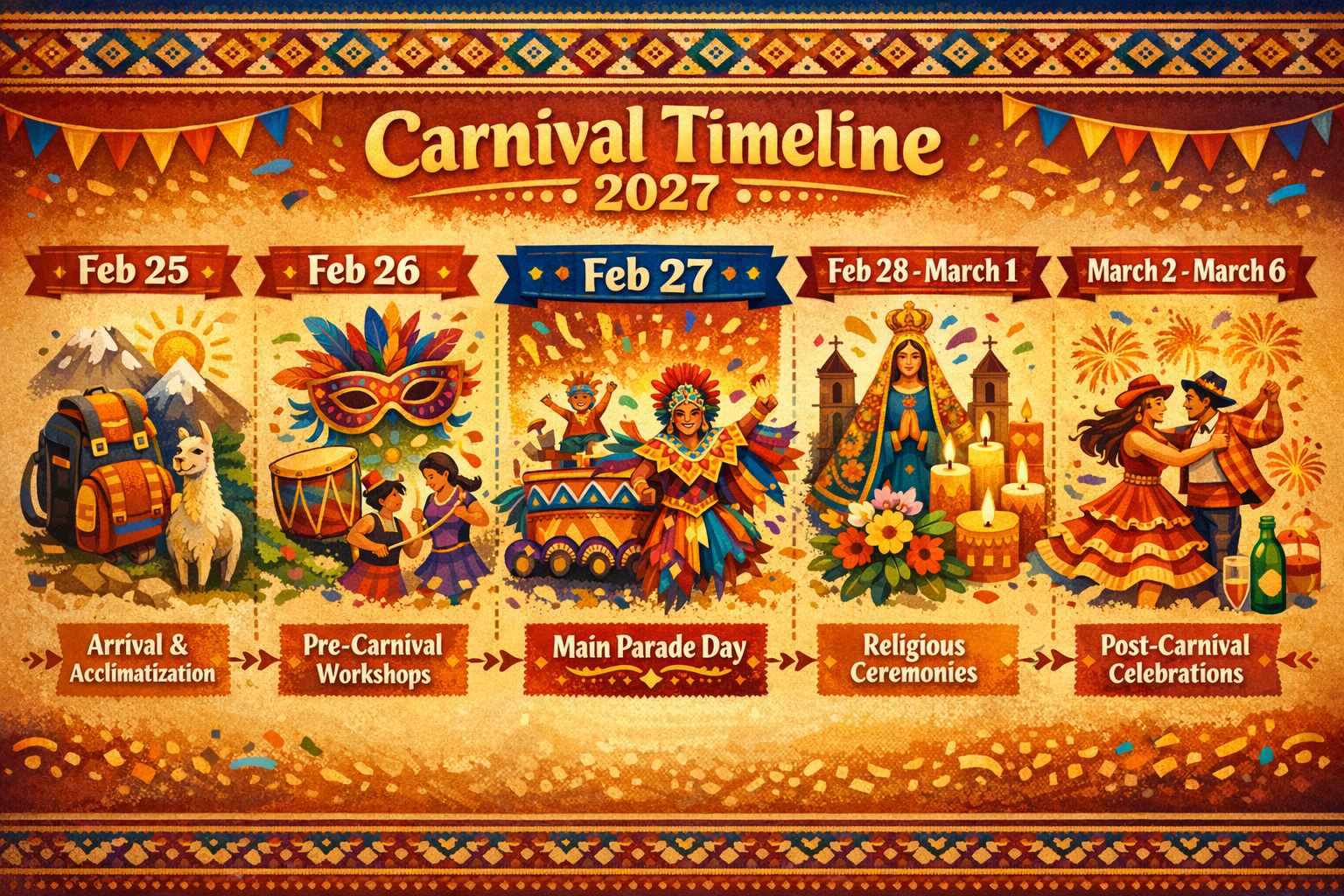
    The complete Carnival season timeline includes:

  • February 20-26: Pre-carnival activities and rehearsals
  • February 27: Main parade day (Sábado de Carnaval)
  • February 28: Continuation of festivities (Domingo de Carnaval)
  • March 1-6: Post-carnival celebrations and religious ceremonies
  • Best Time to Visit
    For the full Oruro Carnival 2027 experience, plan to arrive by February 25th and stay through March 2nd. This timing allows you to:

  • Attend pre-carnival rehearsals and cultural events
  • Secure good viewing positions for the main parade
  • Participate in post-carnival religious ceremonies
  • Explore Oruro’s attractions without carnival crowds
  • Duration of Festivities
    While the main parade occurs on February 27th, the celebration traditionally continues for eight days, reflecting the Catholic octave tradition. Each day offers different activities, from intimate neighborhood celebrations to grand religious processions.

    1.3 Carnival Season Timeline

    Post-Christmas Activities
    Preparation for Oruro Carnival 2027 begins immediately after Christmas 2026. Dance groups start intensive rehearsals, costume workshops buzz with activity, and musicians perfect traditional melodies passed down through generations.

    Main Carnival Days

  • Saturday, February 27: The grand parade begins at 7:00 AM with the entrada (entrance), featuring over 50 folk groups performing along the 4-kilometer route
  • Sunday, February 28: Continued celebrations with additional performances and the traditional “ch’alla” ceremonies honoring Pachamama
  • 2. CARNIVAL EVENTS & ACTIVITIES

    2.1 Major Events

    The Grand Parade (La Entrada)
    The centerpiece of Oruro Carnival 2027 is undoubtedly the grand parade, a spectacular procession that transforms Oruro’s streets into a river of color, music, and movement. Starting at 7:00 AM, this marathon celebration can last up to 20 hours, with some groups not finishing until the early morning hours.

    What to Expect:
    The parade follows a strict order based on tradition and religious significance. The procession begins with the Diablada, followed by other traditional dances including:

  • Morenada: Representing African slaves with elaborate feathered headdresses
  • Caporales: Energetic dance featuring whip-cracking overseers
  • Tinku: Warrior dance from the Potosí region
  • Kullawada: Celebrating Andean textile traditions
  • Tobas: Amazonian-inspired jungle dance
  • Each group consists of hundreds of dancers, accompanied by live bands playing traditional instruments like charangos, quenas, and zampoñas. The energy is infectious, with spectators often joining in the celebration despite the formal parade structure.

    Safety Tips:

  • Arrive early to secure good viewing spots
  • Bring sun protection (Oruro sits at 3,700 meters above sea level)
  • Stay hydrated and avoid excessive alcohol consumption
  • Keep valuables secure in crowded areas
  • Follow local authorities’ instructions for crowd control
  • Religious Processions
    Beyond the folkloric parade, Oruro Carnival 2027 includes several religious processions honoring the Virgin of Socavón. These solemn ceremonies provide a counterpoint to the exuberant dancing, reminding visitors of the festival’s deep spiritual roots.

    Competitions and Judging
    While maintaining its religious character, the carnival also features competitive elements. Expert judges evaluate groups on:

  • Choreographic precision and creativity
  • Costume authenticity and craftsmanship
  • Musical quality and traditional adherence
  • Overall artistic presentation
  • Winners receive prestigious recognition that enhances their reputation for future carnivals.

    2.2 Folk Dance Competitions

    The competitive aspect of Oruro Carnival 2027 adds an exciting dimension to the cultural celebration. Throughout the festival period, various competitions showcase the incredible skill and dedication of participating groups.

    Categories and Divisions:

  • Traditional Categories: Established dances with historical significance
  • Innovation Categories: Modern interpretations of traditional themes
  • Youth Divisions: Encouraging younger generations to participate
  • International Groups: Welcoming Bolivian diaspora communities
  • Judging Criteria:
    Professional judges, often renowned folklorists and cultural experts, evaluate performances based on:

  • Historical accuracy and cultural authenticity
  • Choreographic complexity and execution
  • Costume quality and traditional elements
  • Musical accompaniment and traditional instruments
  • Overall artistic impact and audience engagement
  • 2.3 Cultural Workshops and Exhibitions

    Oruro Carnival 2027 extends beyond performance to education and cultural preservation. Throughout the festival period, visitors can participate in:

    Mask-Making Workshops:
    Learn the intricate art of creating traditional carnival masks from master craftsmen. These sessions reveal the symbolism behind different designs and the techniques passed down through generations.

    Traditional Music Classes:
    Experience hands-on instruction with indigenous instruments, learning melodies that have echoed through the Andes for centuries.

    Textile Demonstrations:
    Observe skilled weavers creating the elaborate costumes that make Oruro Carnival so visually stunning.

    3. MUSIC & CULTURE

    3.1 Music Genres

    Traditional Andean Music
    The soundtrack of Oruro Carnival 2027 pulses with rhythms that predate the Inca Empire. Traditional Andean music forms the backbone of carnival celebrations, featuring instruments that connect performers and audiences to their ancestral heritage.

    Key Instruments:

  • Zampoña: Pan flutes creating haunting melodies that echo across the altiplano
  • Quena: Vertical flutes producing ethereal sounds
  • Charango: Small stringed instruments with armadillo shell bodies
  • Bombo: Large drums providing the carnival’s heartbeat
  • Erke: Long horns announcing ceremonial moments
  • Musical Evolution:
    While respecting traditional forms, carnival music continues evolving. Contemporary groups incorporate modern instruments and arrangements while maintaining the essential spiritual and cultural elements that define authentic Andean music.

    Regional Variations:
    Different dance groups bring musical traditions from across Bolivia:

  • Altiplano styles: High-pitched, wind-dominated compositions reflecting the sparse highland landscape
  • Valley rhythms: More complex melodic structures influenced by Spanish colonial music
  • Tropical influences: Incorporating elements from Bolivia’s eastern lowlands
  • 3.2 Dance Traditions

    The Sacred Art of Movement
    Dance in Oruro Carnival 2027 transcends entertainment, serving as prayer, storytelling, and cultural transmission. Each movement carries meaning, connecting dancers to their ancestors and the divine.

    Major Dance Categories:

    Diablada (Devil Dance):
    The most famous carnival dance tells the story of good versus evil through elaborate choreography. Dancers wearing intricate devil masks perform precise steps representing the eternal struggle between light and darkness. The dance culminates with the triumph of Archangel Michael, symbolizing the victory of good over evil.

    Morenada (Moorish Dance):
    This powerful dance honors African slaves brought to work in Potosí’s silver mines. Dancers wear heavy, ornate costumes with feathered headdresses, moving in slow, deliberate steps that represent both the burden of slavery and the dignity of the human spirit.

    Caporales:
    A more recent addition to carnival traditions, this energetic dance represents the overseers who managed slave labor in colonial mines. The choreography features athletic jumps, spins, and the rhythmic cracking of whips, creating an electrifying spectacle.

    Dance as Cultural Preservation:
    Each dance group serves as a guardian of specific cultural traditions, ensuring that ancient stories, values, and beliefs survive in an increasingly globalized world. Participation often represents a family tradition spanning generations, with knowledge passed from grandparents to grandchildren.

    4. TRADITIONAL FOLK GROUPS

    Create a 1536x1024 landscape infographic showing the carnival timeline from February 25-March 6, 2027. Display each day with colorful icons

    4.1 The Great Fraternities

    Oruro Carnival 2027 showcases over 50 organized folk groups, known as “fraternities,” each with its own history, traditions, and specialties. These groups form the backbone of carnival celebrations, dedicating months of preparation for their moment in the spotlight.

    Major Fraternities:

    Fraternidad Artística y Cultural “La Diablada”:
    Founded in 1904, this prestigious group maintains the highest standards of devil dance performance. Members often invest thousands of dollars in elaborate costumes, viewing their participation as both artistic expression and religious devotion.

    Gran Tradicional Auténtica Diablada Oruro:
    Another historic diablada group emphasizing traditional choreography and authentic costume design. Their performances showcase the most classical interpretations of the devil dance.

    Fraternidad Folklórica y Cultural Morenada Central Oruro:
    The premier morenada group, known for their spectacular feathered costumes and precise choreography representing African heritage in Bolivian culture.

    Group Structure and Organization:
    Each fraternity operates as a formal organization with:

  • Elected leadership councils
  • Membership requirements and fees
  • Costume standards and regulations
  • Rehearsal schedules and discipline codes
  • Social and charitable activities beyond carnival
  • 4.2 Choosing Your Experience

    Spectator Options:
    For Oruro Carnival 2027, visitors can experience the festival in various ways:

    Premium Viewing Areas:

  • Palcos: Reserved seating areas offering excellent parade views
  • Tribunas: Covered grandstands protecting from sun and weather
  • VIP Packages: Including meals, beverages, and prime positioning
  • Street-Level Experience:

  • Free public viewing: Join locals along the parade route
  • Mobile viewing: Follow favorite groups along the route
  • Interactive participation: Some groups welcome respectful audience participation
  • Participation Opportunities:
    Some fraternities accept international participants, though this requires:

  • Advance registration (often by December 2026)
  • Costume purchase or rental
  • Attendance at rehearsals
  • Understanding of choreography and cultural significance
  • Physical fitness for the demanding 4-kilometer route
  • 4.3 Behind the Scenes

    Costume Creation:
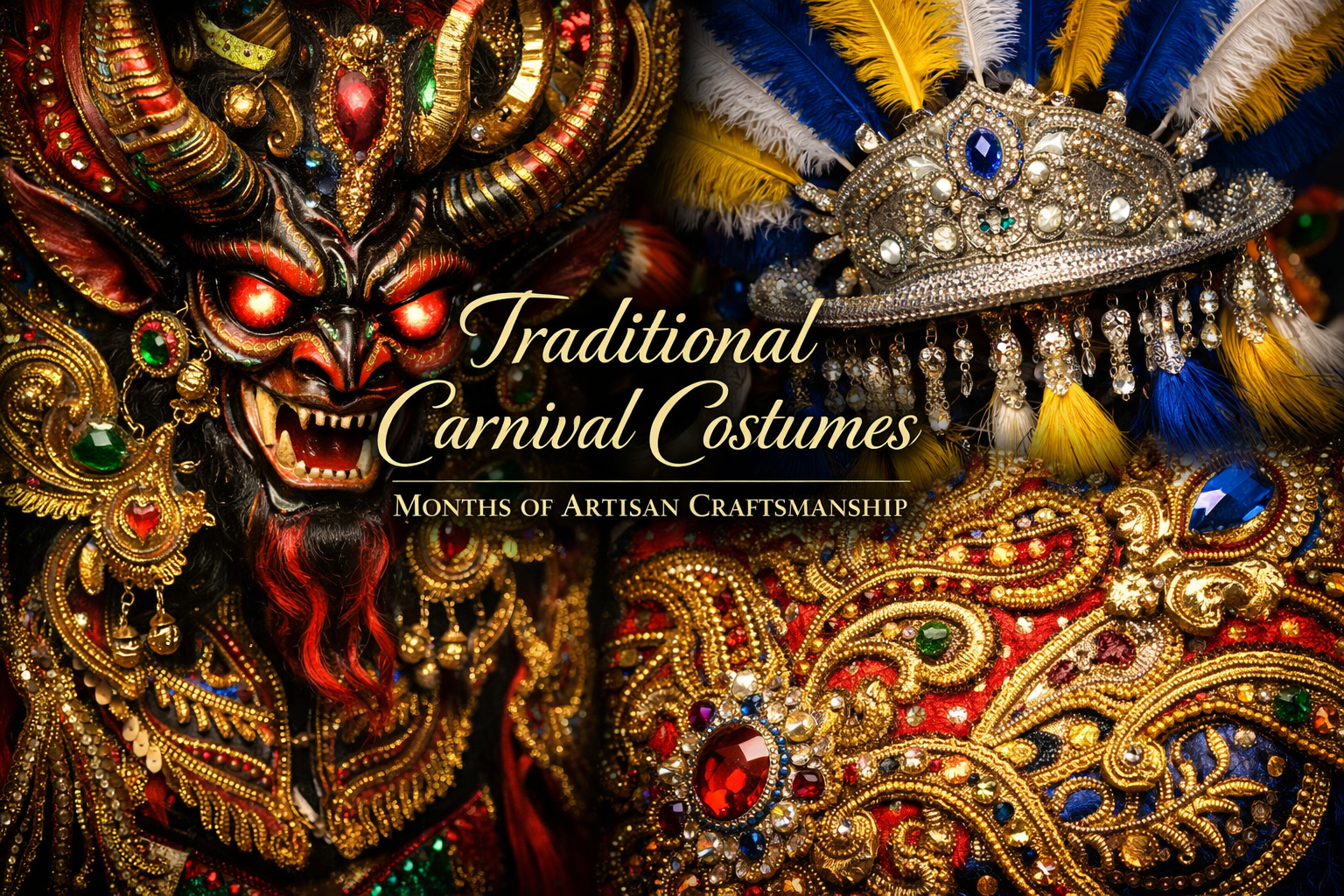
    The elaborate costumes defining Oruro Carnival 2027 represent months of skilled craftsmanship. Master artisans work year-round creating:

    Devil Masks:
    Each diablada mask is a work of art, featuring:

  • Hand-carved plaster or fiberglass bases
  • Intricate painted designs with religious symbolism
  • Real or synthetic gems and decorative elements
  • Traditional color schemes representing different devils
  • Textile Work:
    Costume creation involves:

  • Traditional weaving techniques using alpaca and sheep wool
  • Elaborate embroidery with metallic threads
  • Beadwork and sequin application
  • Feather arrangement for morenada headdresses
  • Economic Impact:
    Costume production provides year-round employment for hundreds of artisans, supporting entire families and preserving traditional crafts that might otherwise disappear.

    5. COSTUMES AND CRAFTSMANSHIP

    5.1 The Art of Carnival Costumes

    The costumes of Oruro Carnival 2027 represent some of the world’s finest examples of traditional folk artistry. These elaborate creations combine ancient symbolism with masterful craftsmanship, often taking months to complete and costing thousands of dollars.

    Diablada Costumes:
    The devil costumes are perhaps the most recognizable and complex:

    Masks (Caretas):

  • Handcrafted from plaster or lightweight fiberglass
  • Painted with traditional designs featuring serpents, lizards, and mythical creatures
  • Adorned with colored glass, mirrors, and metallic elements
  • Can weigh up to 8 pounds, requiring significant neck strength
  • Each mask tells a story through its symbolic elements
  • Suits and Accessories:

  • Elaborately embroidered capes and tunics
  • Metallic thread work creating intricate patterns
  • Bells and rattles providing rhythmic accompaniment
  • Whips or staffs as symbolic accessories
  • Boots or special footwear for the demanding dance
  • Morenada Costumes:
    These costumes honor African heritage with distinctive elements:

    Matracas (Rattles):

  • Large, ornate rattles carried by dancers
  • Decorated with mirrors, beads, and metallic elements
  • Create rhythmic accompaniment to the dance
  • Often family heirlooms passed down through generations
  • Feathered Headdresses:

  • Elaborate plumage arrangements
  • Ostrich, peacock, and other exotic feathers
  • Can extend several feet in height
  • Require special care and storage
  • 5.2 Costume Investment and Care

    Financial Commitment:
    Participating in Oruro Carnival 2027 requires significant financial investment:

    Cost Ranges:

  • Basic diablada costume: $1,500-$3,000
  • Premium diablada outfit: $5,000-$10,000+
  • Morenada costume: $2,000-$6,000
  • Caporales outfit: $800-$2,500
  • Mask alone: $300-$1,500
  • Rental Options:
    For visitors wanting to participate without major investment:

  • Costume rental services available
  • Quality varies significantly
  • Advance booking essential
  • Sizes may be limited for international visitors
  • Costume Preparation and Maintenance:

  • Professional fitting services available
  • Special storage requirements to prevent damage
  • Insurance options for expensive pieces
  • Post-carnival cleaning and repair services
  • 5.3 Symbolic Elements and Meaning

    Religious Symbolism:
    Every element of carnival costumes carries deep meaning:

    Color Significance:

  • Red: Representing blood, sacrifice, and passion
  • Gold: Symbolizing the sun, divinity, and precious metals
  • Blue: Connecting to sky, water, and spiritual realms
  • Green: Representing nature, fertility, and growth
  • Black: Symbolizing earth, mystery, and the underworld
  • Decorative Elements:

  • Serpents: Representing wisdom and the connection between earth and sky
  • Condors: Sacred Andean birds symbolizing spiritual messengers
  • Geometric patterns: Reflecting pre-Columbian textile traditions
  • Religious imagery: Catholic saints integrated with indigenous symbols
  • 6. PLANNING YOUR CARNIVAL EXPERIENCE

    6.1 When to Book for Oruro Carnival 2027

    Timeline for Optimal Planning:

    12 Months Before (February 2026):

  • Research and select your preferred experience level
  • Begin monitoring flight prices and accommodation options
  • Connect with local tour operators for specialized packages
  • 9 Months Before (May 2026):

  • Book international flights for best prices
  • Reserve premium accommodations in Oruro or La Paz
  • Research costume rental or purchase options if planning to participate
  • 6 Months Before (August 2026):

  • Finalize accommodation bookings
  • Purchase parade viewing tickets
  • Arrange domestic transportation within Bolivia
  • 3 Months Before (November 2026):

  • Confirm all reservations and bookings
  • Arrange travel insurance and health preparations
  • Begin physical conditioning if planning to participate in dancing
  • 1 Month Before (January 2027):

  • Final preparations and packing
  • Confirm weather forecasts and adjust clothing plans
  • Download offline maps and translation apps
  • 6.2 Budgeting for Oruro Carnival 2027

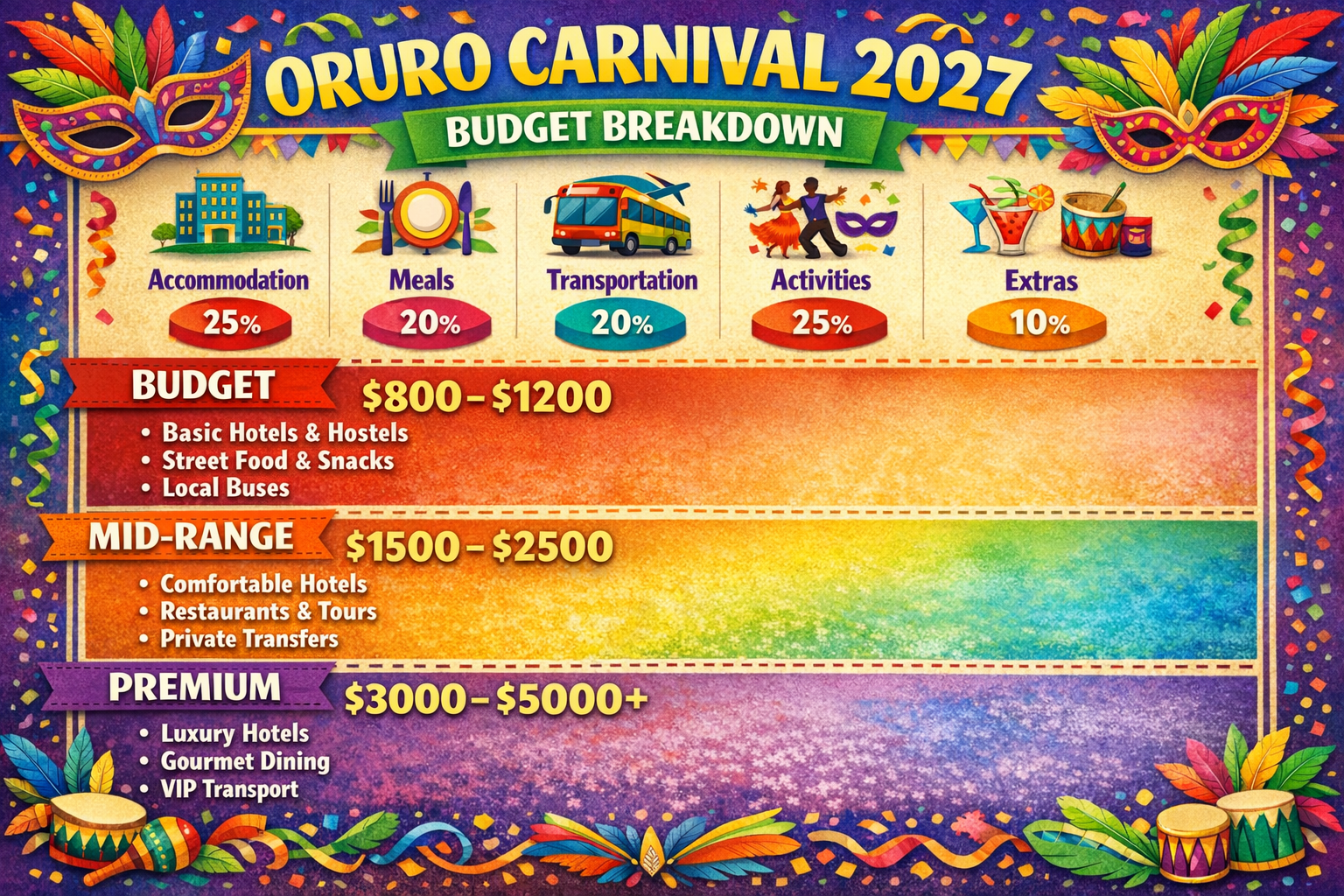
    Comprehensive Budget Planning:

    Budget Traveler ($800-$1,200 total):

  • Accommodation: Hostels or basic hotels ($25-40/night)
  • Meals: Local restaurants and street food ($15-25/day)
  • Transportation: Public buses and shared taxis ($50-100 total)
  • Parade viewing: Free street viewing
  • Activities: Self-guided exploration
  • Mid-Range Experience ($1,500-$2,500 total):

  • Accommodation: Comfortable hotels ($60-100/night)
  • Meals: Mix of local and tourist restaurants ($30-50/day)
  • Transportation: Private transfers and comfortable buses ($150-250)
  • Parade viewing: Tribuna seating ($50-100)
  • Activities: Guided tours and cultural experiences
  • Premium Experience ($3,000-$5,000+ total):

  • Accommodation: Luxury hotels in La Paz with day trips to Oruro ($150-300/night)
  • Meals: High-end restaurants and catered experiences ($75-150/day)
  • Transportation: Private vehicles and first-class services ($400-600)
  • Parade viewing: VIP palcos with amenities ($200-500)
  • Activities: Private guides, exclusive access, costume participation
  • Additional Costs to Consider:

  • Travel insurance: $50-150
  • Visa fees (if required): $30-100
  • Altitude sickness medication: $20-50
  • Souvenirs and crafts: $100-500+
  • Tips and gratuities: $100-300
  • 6.3 Travel Logistics and Requirements

    Getting to Bolivia:
    Most international visitors arrive through:

  • El Alto International Airport (LPB) in La Paz (3.5-hour drive to Oruro)
  • Jorge Wilstermann Airfield (CBB) in Cochabamba (3-hour drive to Oruro)
  • Visa Requirements:

  • US Citizens: 30-day tourist visa available on arrival ($100 USD)
  • EU Citizens: 90-day visa-free entry for most countries
  • Canadian Citizens: 30-day visa on arrival ($85 USD)
  • Other Nationalities: Check with Bolivian consulates for specific requirements
  • Health Preparations:

  • Altitude considerations: Oruro sits at 3,700 meters (12,139 feet)
  • Recommended vaccinations: Yellow fever, hepatitis A/B, typhoid
  • Altitude sickness prevention: Arrive 2-3 days early for acclimatization
  • Travel insurance: Essential for high-altitude activities
  • Currency and Payments:

  • Local currency: Boliviano (BOB)
  • US dollars: Widely accepted but change given in bolivianos
  • Credit cards: Limited acceptance; bring cash for most purchases
  • ATMs: Available in Oruro but may have limited funds during carnival
  • 6.4 Accommodation Strategies

    Oruro Accommodation:
    Staying in Oruro provides the most authentic experience but requires early booking:

    Hotel Options:

  • Hotel Presidente: Historic hotel in city center ($80-120/night)
  • Hotel Repostero: Modern amenities with carnival packages ($60-90/night)
  • Hostal Residencial San Salvador: Budget option near parade route ($25-40/night)
  • La Paz Base Strategy:
    Many visitors prefer staying in La Paz and taking day trips:

    Advantages:

  • More accommodation options and amenities
  • Better restaurants and nightlife
  • Easier international access
  • More tour operator choices
  • Transportation Options:

  • Private day tours: $150-300 per person including transportation and guide
  • Public buses: $5-10 each way but challenging with crowds
  • Rental cars: Not recommended due to parking difficulties and crowds
  • Alternative Accommodation:

  • Homestays: Cultural immersion with local families
  • Camping: Limited options but available for adventurous travelers
  • Nearby towns: Staying in surrounding communities with shuttle services
  • 7. WHAT TO PACK & WEAR

    7.1 Essential Items for Oruro Carnival 2027

    High-Altitude Considerations:
    Oruro’s elevation of 3,700 meters creates unique packing challenges requiring careful preparation:

    Sun Protection (Critical):

  • SPF 50+ sunscreen: UV radiation is intense at high altitude
  • Lip balm with SPF: Prevent painful chapping
  • Sunglasses: High-quality UV protection essential
  • Wide-brimmed hat: Protects face and neck during long parade viewing
  • Lightweight long-sleeved shirts: Protection without overheating
  • Layered Clothing System:
    Oruro’s weather can change dramatically throughout carnival days:

    Base Layer:

  • Moisture-wicking synthetic or merino wool shirts
  • Comfortable underwear suitable for long days
  • Thin wool or synthetic socks
  • Insulation Layer:

  • Fleece or down jacket for early morning and evening
  • Warm sweater or hoodie for variable temperatures
  • Extra layers for altitude-related temperature sensitivity
  • Outer Layer:

  • Waterproof jacket for potential rain showers
  • Windproof layer for altiplano winds
  • Comfortable pants suitable for standing and walking
  • Footwear Strategy:

  • Comfortable walking shoes: Well-broken-in with good support
  • Warm socks: Wool or synthetic for temperature regulation
  • Backup shoes: In case of damage or excessive wear
  • Sandals: For hostel/hotel use and foot relief
  • 7.2 Technology and Documentation

    Essential Electronics:

  • Smartphone: With offline maps, translation apps, and emergency contacts
  • Portable charger/power bank: Essential for long carnival days
  • Camera: With extra batteries and memory cards
  • Adapter/converter: Bolivia uses Type A and C plugs (220V)
  • Important Documents:

  • Passport: With at least 6 months validity
  • Visa documentation: If required for your nationality
  • Travel insurance papers: Including emergency contact numbers
  • Copies of all documents: Stored separately from originals
  • Emergency cash: US dollars in small denominations
  • Credit/debit cards: Notify banks of travel plans
  • Health and Safety Items:

  • First aid kit: Including altitude sickness medication
  • Prescription medications: In original containers with extra supply
  • Hand sanitizer: For crowd situations
  • Tissues/wet wipes: Limited public facilities
  • Whistle: For emergency situations in crowds
  • 7.3 Cultural Considerations and Respect

    Appropriate Attire:
    While carnival is celebratory, respect for local customs remains important:

    Religious Observances:

  • Modest clothing: For church visits and religious ceremonies
  • Head coverings: Available for women visiting certain religious sites
  • Conservative backup outfit: For unexpected formal occasions
  • Photography Equipment:

  • Respectful photography: Ask permission for close-up photos of participants
  • Backup storage: Cloud storage or multiple memory cards
  • Weather protection: Dust and moisture can damage equipment
  • Gift Items:
    Consider bringing small gifts for hosts or new friends:

  • Local items from your country: Postcards, small crafts, or treats
  • School supplies: For children in rural communities
  • Photos: Print and share photos with people you meet
  • 8. FOOD & DRINK EXPERIENCES

    Create a 1024x1024 square image showcasing the intricate details of traditional carnival costumes. Feature close-up shots of elaborately dec

    8.1 Traditional Carnival Foods

    Oruro Carnival 2027 offers incredible opportunities to experience authentic Bolivian cuisine, with special dishes prepared specifically for carnival celebrations.

    Carnival Specialties:

    Anticuchos:
    Grilled beef heart skewers marinated in spicy aji sauce, served hot from street vendors throughout the parade route. This popular carnival snack provides quick energy for long days of celebration.

    Salteñas:
    Bolivia’s answer to empanadas, these baked pastries filled with meat, vegetables, and slightly sweet, spicy broth are perfect carnival breakfast food. Traditional etiquette requires eating them before noon.

    Api con Pastel:
    A warm, purple corn drink served with fried pastries, providing comfort during chilly early morning hours. This traditional combination is especially popular during carnival season.

    Chicharrón:
    Crispy fried pork served with hominy corn and spicy sauce. Street vendors prepare massive quantities during carnival, creating aromatic clouds that drift across the parade route.

    Street Food Safety:

  • Choose vendors with high turnover and fresh preparation
  • Observe local customers as indicators of quality
  • Bring hand sanitizer for pre-meal cleaning
  • Stay hydrated to aid digestion at high altitude
  • 8.2 Beverages and Hydration

    Traditional Drinks:

    Chicha:
    Fermented corn beer with ancient Andean origins, often shared ceremonially during carnival celebrations. Alcohol content varies, and participation in chicha ceremonies shows cultural respect.

    Singani:
    Bolivia’s national spirit, distilled from Muscat grapes grown in high-altitude vineyards. Often mixed with ginger ale or lime juice, singani cocktails are popular during carnival festivities.

    Api Morada:
    Non-alcoholic purple corn drink spiced with cinnamon and cloves, providing warmth and energy during cold carnival mornings.

    Hydration Strategy:

  • Water consumption: Increase intake due to altitude and dry climate
  • Electrolyte replacement: Sports drinks help combat altitude effects
  • Alcohol moderation: High altitude intensifies alcohol effects
  • Coca tea: Traditional remedy for altitude adjustment
  • 8.3 Restaurant Recommendations and Dining

    Oruro Dining Options:

    Traditional Restaurants:

  • Restaurant Nayjama: Authentic Bolivian cuisine with carnival atmosphere
  • Pizzería Italia: International options for dietary variety
  • Mercado Campero: Local market with authentic food stalls
  • Fine Dining in La Paz (for those staying there):

  • Gustu: World-renowned restaurant featuring indigenous ingredients
  • Ali Pacha: Innovative vegetarian cuisine using local products
  • Popular Cocina Boliviana: Upscale traditional Bolivian cooking
  • Dietary Considerations:

  • Vegetarian options: Limited but available, especially quinoa-based dishes
  • Gluten-free: Quinoa prominence makes Bolivia relatively gluten-free friendly
  • Food allergies: Communication can be challenging; bring translation cards
  • Altitude effects: Appetite may be reduced; eat light, frequent meals
  • 9. SAFETY & PRACTICAL TIPS

    9.1 Safety Guidelines for Oruro Carnival 2027

    Crowd Safety:
    With over 400,000 visitors expected for Oruro Carnival 2027, crowd management becomes crucial for personal safety:

    Crowd Navigation:

  • Arrive early: Secure viewing positions before crowds intensify
  • Establish meeting points: Plan reunification spots if groups separate
  • Stay together: Use buddy systems, especially at night
  • Emergency exits: Identify escape routes from crowded areas
  • Phone contacts: Program local emergency numbers and tour guides
  • Personal Security:

  • Valuables: Leave unnecessary items in secure accommodation
  • Money distribution: Carry cash in multiple hidden locations
  • Copies: Keep document copies separate from originals
  • Attention: Stay aware of surroundings and trust instincts
  • Local advice: Follow recommendations from hotel staff and guides
  • Health and Medical Safety:

  • Altitude awareness: Recognize symptoms of altitude sickness
  • Medical facilities: Locate nearest hospitals and clinics
  • Medication: Carry adequate supplies with prescriptions
  • Insurance: Ensure coverage includes high-altitude activities
  • Emergency contacts: Program local medical emergency numbers
  • 9.2 Altitude Considerations

    Understanding High-Altitude Effects:
    Oruro’s 3,700-meter elevation can significantly impact visitors unaccustomed to high altitudes:

    Altitude Sickness Symptoms:

  • Headaches and dizziness
  • Nausea and loss of appetite
  • Fatigue and weakness
  • Difficulty sleeping
  • Shortness of breath
  • Prevention Strategies:

  • Gradual ascent: Spend 2-3 days in La Paz before traveling to Oruro
  • Hydration: Increase water intake significantly
  • Rest: Allow extra time for acclimatization
  • Medication: Consider consulting doctors about altitude sickness prevention
  • Coca leaves: Traditional remedy widely available and culturally accepted
  • Activity Modification:

  • Reduced exertion: Limit strenuous activities initially
  • Frequent breaks: Rest more often than at sea level
  • Alcohol limitation: High altitude intensifies alcohol effects
  • Sleep adjustment: Expect sleep disturbances initially
  • 9.3 Cultural Sensitivity and Respect

    Photography Ethics:
    While Oruro Carnival 2027 offers incredible photo opportunities, respectful photography requires cultural awareness:

    Best Practices:

  • Permission: Ask before photographing individuals closely
  • Sacred moments: Avoid flash during religious ceremonies
  • Children: Extra sensitivity when photographing minors
  • Sharing: Offer to share photos with subjects when possible
  • Commercial use: Understand restrictions on commercial photography
  • Religious Respect:

  • Church etiquette: Remove hats, maintain quiet behavior
  • Sacred spaces: Follow local guidance about restricted areas
  • Ceremonies: Observe without interrupting religious practices
  • Offerings: Respect ch’alla ceremonies and traditional rituals
  • Cultural Interaction:

  • Language effort: Learn basic Spanish or Quechua phrases
  • Patience: Allow extra time for communication barriers
  • Tipping: Understand local customs for service workers
  • Bargaining: Practice respectful negotiation in markets
  • Gifts: Avoid giving money to children; consider school supplies instead
  • 10. BEYOND THE MAIN PARADE

    10.1 Pre-Carnival Activities

    Oruro Carnival 2027 extends far beyond the main parade, offering rich cultural experiences throughout the carnival season:

    Rehearsals and Preparations (February 20-26):

  • Open rehearsals: Many groups practice in public spaces, offering intimate viewing opportunities
  • Costume fittings: Witness final preparations at costume workshops
  • Musical practice: Street corners come alive with bands perfecting their performances
  • Blessing ceremonies: Religious leaders bless dancers and costumes before the main event
  • Cultural Workshops:

  • Mask-making classes: Learn traditional techniques from master craftsmen
  • Dance instruction: Basic steps for popular carnival dances
  • Music lessons: Introduction to traditional Andean instruments
  • Cooking classes: Prepare traditional carnival foods
  • Market Exploration:

  • Mercado Campero: Oruro’s main market buzzing with carnival preparations
  • Artisan workshops: Visit studios where costumes and masks are created
  • Musical instrument shops: Discover traditional Andean instruments
  • Textile vendors: Explore Bolivia’s rich weaving traditions
  • 10.2 Post-Carnival Celebrations

    Extended Festivities (March 1-6):
    The carnival celebration traditionally continues for eight days after the main parade:

    Ch’alla Ceremonies:
    Traditional offerings to Pachamama (Mother Earth) featuring:

  • Coca leaf readings: Traditional fortune-telling practices
  • Alcohol libations: Ceremonial drinks shared with the earth
  • Incense burning: Sacred smoke offerings
  • Community gatherings: Neighborhood celebrations with local families
  • Religious Observances:

  • Masses at the Sanctuary: Special services honoring the Virgin of Socavón
  • Pilgrim processions: Continued religious devotion
  • Blessing ceremonies: Final benedictions for carnival participants
  • Cultural Performances:

  • Intimate concerts: Smaller venues featuring traditional music
  • Storytelling sessions: Oral traditions shared by community elders
  • Art exhibitions: Displays of carnival-related artwork and photography
  • 10.3 Day Trips and Regional Exploration

    Nearby Attractions:
    Use Oruro Carnival 2027 as a base for exploring Bolivia’s incredible diversity:

    Salar de Uyuni (3.5 hours from Oruro):
    The world’s largest salt flat offers:

  • Surreal landscapes: Mirror effects during rainy season
  • Stargazing: Some of the world’s clearest night skies
  • Flamingo colonies: Pink flamingos in high-altitude lakes
  • Unique accommodations: Hotels built entirely from salt blocks
  • Potosí (2.5 hours from Oruro):
    Historic mining city featuring:

  • Colonial architecture: UNESCO World Heritage Site
  • Cerro Rico mine tours: Experience Bolivia’s mining heritage
  • Casa de la Moneda: Former royal mint with fascinating history
  • Traditional markets: Authentic highland commerce
  • La Paz Extensions:

  • Moon Valley: Bizarre lunar-like landscape
  • Witches’ Market: Traditional remedies and spiritual items
  • Cable car system: Modern transportation with spectacular views
  • Indigenous communities: Cultural immersion opportunities
  • 11. PHOTOGRAPHY & MEDIA

    11.1 Photography Tips for Oruro Carnival 2027

    Technical Considerations:
    The unique conditions of Oruro Carnival 2027 require specific photographic approaches:

    High-Altitude Photography:

  • UV filters: Essential protection at 3,700 meters elevation
  • Lens cleaning: Dust and wind require frequent equipment maintenance
  • Battery performance: Cold temperatures drain batteries faster
  • Condensation: Temperature changes can fog lenses
  • Lighting Challenges:

  • Harsh sunlight: Intense UV creates strong shadows and contrast
  • Golden hour: Early morning and late afternoon provide best lighting
  • Flash considerations: Respectful use during performances
  • Night photography: Limited street lighting requires high ISO capabilities
  • Composition Strategies:

  • Wide shots: Capture the scale and grandeur of the parade
  • Detail shots: Focus on intricate costume elements and craftsmanship
  • Action shots: Freeze dynamic dance movements
  • Environmental portraits: Dancers in their cultural context
  • Equipment Recommendations:

  • Versatile zoom lens: 24-105mm or similar for varied situations
  • Fast telephoto: 70-200mm f/2.8 for distant action
  • Wide-angle: 16-35mm for crowd and landscape shots
  • Backup gear: Dust and crowds can damage equipment
  • 11.2 Social Media and Digital Sharing

    Hashtags for Oruro Carnival 2027:

  • #OruroCarnaval2027
  • #DiabladaBolivia
  • #UNESCOCarnival
  • #BolivianCulture
  • #AndeanTraditions
  • #VirgenDelSocavon
  • #CarnavalDeOruro
  • Platform-Specific Strategies:

    Instagram:

  • Stories: Real-time carnival experiences
  • Reels: Short dance videos and costume reveals
  • IGTV: Longer documentary-style content
  • Posts: High-quality images with cultural context
  • Facebook:

  • Live streaming: Share parade moments in real-time
  • Photo albums: Organized collections by dance type or day
  • Check-ins: Help friends follow your carnival journey
  • Event pages: Connect with other carnival attendees
  • TikTok:

  • Dance challenges: Learn and share carnival choreography
  • Behind-the-scenes: Costume preparation and cultural insights
  • Music integration: Use traditional carnival music
  • Educational content: Quick cultural facts and history
  • 11.3 Professional Photography Services

    Hiring Local Photographers:
    Professional documentation of your Oruro Carnival 2027 experience:

    Service Options:

  • Half-day coverage: Focus on main parade highlights ($200-400)
  • Full carnival documentation: Complete experience coverage ($500-1000)
  • Portrait sessions: Professional photos in costume ($100-250)
  • Group photography: Family or friend group documentation ($150-350)
  • What to Look For:

  • Portfolio review: Previous carnival photography experience
  • Cultural knowledge: Understanding of appropriate moments to photograph
  • Equipment quality: Professional gear suitable for challenging conditions
  • Delivery timeline: Clear expectations for photo delivery
  • Usage rights: Understand what you can do with the images
  • DIY Photography Tours:

  • Guided photo walks: Led by local photographers ($50-100)
  • Technical workshops: High-altitude and cultural photography techniques
  • Equipment rental: Professional gear available locally
  • Post-processing classes: Edit your carnival photos professionally
  • 12. EXTENDED BOLIVIA EXPLORATION

    Create a 1536x1024 landscape image showing a budget breakdown infographic for Oruro Carnival 2027. Display cost categories (accommodation, m

    12.1 La Paz Integration

    Using La Paz as Your Base:
    Many visitors to Oruro Carnival 2027 benefit from basing themselves in La Paz, Bolivia’s fascinating de facto capital:

    La Paz Highlights:

  • Historic center: Colonial architecture and indigenous markets
  • Modern cable car system: Spectacular views and efficient transportation
  • Culinary scene: From street food to world-renowned restaurants
  • Cultural attractions: Museums, galleries, and traditional performances
  • Shopping opportunities: Textiles, crafts, and unique souvenirs
  • Day Trip Logistics:

  • Distance: 230 kilometers (3.5 hours by road)
  • Transportation options: Private tours, public buses, or rental cars
  • Timing: Early morning departure for full carnival experience
  • Return flexibility: Some tours include overnight options in Oruro
  • La Paz Accommodation Advantages:

  • Variety: From budget hostels to luxury hotels
  • Amenities: Better restaurant and nightlife options
  • Services: More tour operators and travel services
  • Connectivity: Better internet and international communication
  • Altitude adjustment: Gradual acclimatization at 3,500 meters
  • 12.2 Salar de Uyuni Extension

    The World’s Most Spectacular Salt Flat:
    Combining Oruro Carnival 2027 with Salar de Uyuni creates an unforgettable Bolivian adventure:

    Timing Considerations:

  • Dry season (May-October): Crystalline salt formations and clear skies
  • Wet season (November-April): Mirror effects but challenging access
  • Carnival timing: February offers potential mirror effects but weather variability
  • Tour Options:

  • Day trips: Rushed but possible from Oruro (12+ hours total)
  • 2-3 day tours: Optimal for photography and exploration
  • Luxury options: High-end accommodations and private guides
  • Budget tours: Group travel with basic accommodations
  • Unique Experiences:

  • Sunrise photography: Spectacular colors reflected in salt surface
  • Stargazing: Some of the world’s clearest night skies
  • Flamingo watching: High-altitude lakes with pink flamingo colonies
  • Perspective photography: Creative optical illusions on the salt flat
  • 12.3 Cultural Immersion Opportunities

    Indigenous Community Visits:
    Extend your Oruro Carnival 2027 experience with authentic cultural encounters:

    Tarabuco Sunday Market:

  • Traditional textiles: Witness weaving techniques unchanged for centuries
  • Indigenous dress: Community members in traditional clothing
  • Local products: Authentic crafts and agricultural products
  • Cultural performances: Traditional music and dance demonstrations
  • Island of the Sun (Lake Titicaca):

  • Sacred sites: Ancient Inca ruins and ceremonial locations
  • Traditional communities: Families maintaining ancestral lifestyles
  • Handicraft workshops: Learn traditional weaving and pottery techniques
  • Homestay opportunities: Sleep with local families for cultural immersion
  • Rural Community Projects:

  • School visits: Educational exchanges with rural students
  • Agricultural participation: Learn traditional farming methods
  • Language exchange: Practice Spanish while teaching English
  • Sustainable tourism: Support community-based tourism initiatives
  • 13. CARNIVAL INDUSTRY & ECONOMICS

    13.1 Economic Impact of Oruro Carnival

    Oruro Carnival 2027 represents far more than cultural celebration—it’s a crucial economic engine for Bolivia’s highland region:

    Tourism Statistics:

  • Annual visitors: Over 400,000 domestic and international tourists
  • Economic impact: Approximately $50 million USD annually
  • Employment: Temporary work for over 10,000 people
  • Hotel occupancy: 95%+ during carnival weekend
  • Restaurant revenue: 300-500% increase during carnival period
  • Industry Breakdown:

    Costume Production:

  • Artisan employment: Year-round work for 500+ skilled craftspeople
  • Material suppliers: Textile, metalwork, and decorative element providers
  • Design services: Creative professionals developing new costume concepts
  • Rental services: Growing market for visitor participation
  • Tourism Services:

  • Accommodation: Hotels, hostels, and homestay networks
  • Transportation: Bus companies, taxi services, and tour operators
  • Food service: Restaurants, street vendors, and catering services
  • Guide services: Cultural interpretation and logistical support
  • 13.2 Artisan Communities and Traditional Crafts

    Master Craftspeople:
    The elaborate costumes defining Oruro Carnival 2027 support entire communities of skilled artisans:

    Mask Makers:

  • Traditional techniques: Skills passed through family generations
  • Modern adaptations: Lightweight materials maintaining traditional aesthetics
  • Artistic innovation: New designs respecting cultural boundaries
  • Economic sustainability: Year-round income from carnival production
  • Textile Artists:

  • Weaving traditions: Ancient techniques creating contemporary masterpieces
  • Embroidery specialists: Intricate metallic thread work
  • Beadwork artists: Detailed decoration requiring months of labor
  • Feather specialists: Arrangement and maintenance of elaborate plumage
  • Metalworkers:

  • Traditional smithing: Creating bells, rattles, and decorative elements
  • Modern techniques: Lightweight alloys reducing costume weight
  • Repair services: Maintaining expensive costumes year after year
  • 13.3 Sustainability and Cultural Preservation

    Balancing Growth and Tradition:
    Oruro Carnival 2027 faces the challenge of maintaining authenticity while accommodating growing international interest:

    Cultural Preservation Efforts:

  • UNESCO monitoring: Ensuring traditional elements remain central
  • Education programs: Teaching young people traditional skills
  • Documentation projects: Recording oral histories and techniques
  • Language preservation: Maintaining Quechua and Aymara traditions
  • Environmental Considerations:

  • Waste management: Handling massive crowds responsibly
  • Sustainable materials: Encouraging eco-friendly costume production
  • Transportation impact: Promoting group travel and public transport
  • Local sourcing: Supporting regional suppliers and materials
  • Community Benefits:

  • Profit distribution: Ensuring local communities benefit from tourism
  • Skill development: Training programs for young artisans
  • Cultural pride: Strengthening indigenous identity and traditions
  • Economic diversification: Reducing dependence on mining industry
  • 14. FAMILY-FRIENDLY CARNIVAL

    14.1 Children’s Participation in Oruro Carnival 2027

    Kiddies Carnival:
    Oruro Carnival 2027 includes special provisions for young participants, ensuring cultural transmission across generations:

    Age Categories:

  • Toddlers (3-5 years): Simple costumes and basic movements
  • Children (6-12 years): Modified choreography with full costumes
  • Teenagers (13-17 years): Full participation preparing for adult roles
  • Family groups: Multi-generational participation strengthening bonds
  • Educational Components:

  • Cultural workshops: Teaching children about carnival history and meaning
  • Language preservation: Quechua and Aymara instruction through songs
  • Craft activities: Simplified mask-making and decoration projects
  • Storytelling sessions: Oral traditions shared by community elders
  • Safety Considerations:

  • Reduced distances: Shorter parade routes for younger participants
  • Adult supervision: Organized chaperone systems
  • Medical support: Pediatric medical staff available
  • Hydration stations: Special attention to children’s needs at altitude
  • 14.2 Family Viewing Options

    Child-Friendly Viewing Areas:

  • Covered seating: Protection from sun and weather
  • Bathroom access: Convenient facilities for families
  • Food services: Child-friendly meal options
  • Early positioning: Arriving early to secure optimal spots
  • Educational Opportunities:

  • Cultural guides: Explaining significance to children during parade
  • Activity books: Carnival-themed educational materials
  • Photography projects: Encouraging children to document experiences
  • Souvenir hunting: Age-appropriate carnival memorabilia
  • 14.3 Multigenerational Travel Tips

    Accommodation Strategies:

  • Family rooms: Accommodations suitable for multiple generations
  • Kitchen access: Preparing familiar foods for children
  • Quiet spaces: Areas for rest and recovery
  • Accessibility: Considering mobility needs of elderly family members
  • Activity Pacing:

  • Rest periods: Balancing excitement with necessary downtime
  • Flexible scheduling: Adapting plans based on family energy levels
  • Alternative activities: Options for family members not interested in full carnival experience
  • Cultural sensitivity: Teaching appropriate behavior and respect
  • 15. SUSTAINABILITY & CULTURAL RESPONSIBILITY

    15.1 Environmental Stewardship

    Oruro Carnival 2027 presents opportunities for responsible tourism that supports both cultural preservation and environmental protection:

    Waste Reduction Strategies:

  • Reusable water bottles: Reducing plastic waste at high altitude
  • Digital tickets: Minimizing paper waste for events and transportation
  • Costume care: Proper maintenance extending costume lifespan
  • Recycling programs: Supporting local waste management initiatives
  • Transportation Choices:

  • Group travel: Shared transportation reducing per-person carbon impact
  • Public transport: Using Bolivia’s extensive bus network
  • Local guides: Supporting community-based tourism operators
  • Extended stays: Maximizing cultural impact while minimizing travel frequency
  • Accommodation Responsibility:

  • Local ownership: Choosing locally-owned hotels and hostels
  • Resource conservation: Mindful water and energy use
  • Local employment: Supporting businesses that hire community members
  • Cultural authenticity: Accommodations that reflect local traditions
  • 15.2 Cultural Sensitivity and Respect

    Respectful Participation:
    Engaging with Oruro Carnival 2027 requires understanding the deep spiritual and cultural significance behind the celebration:

    Religious Respect:

  • Sacred spaces: Understanding when photography and participation are inappropriate
  • Ceremonial moments: Recognizing religious observances requiring reverent behavior
  • Traditional protocols: Learning appropriate ways to show respect
  • Spiritual significance: Appreciating carnival as religious expression, not just entertainment
  • Economic Justice:

  • Fair pricing: Paying appropriate prices for artisan work and services
  • Direct support: Purchasing directly from craftspeople when possible
  • Tipping practices: Understanding local customs for service workers
  • Authentic products: Choosing genuine crafts over mass-produced souvenirs
  • Cultural Exchange:

  • Language effort: Learning basic Spanish or indigenous language phrases
  • Active listening: Engaging genuinely with local stories and perspectives
  • Reciprocal sharing: Offering appropriate cultural exchange from your background
  • Long-term relationships: Maintaining connections beyond the carnival experience
  • 15.3 Supporting Local Communities

    Community-Based Tourism:

  • Homestays: Staying with local families for authentic cultural exchange
  • Community guides: Hiring local residents as cultural interpreters
  • Artisan workshops: Participating in traditional craft instruction
  • Agricultural visits: Learning about traditional farming and food production
  • Educational Initiatives:

  • School partnerships: Supporting local educational institutions
  • Scholarship programs: Contributing to student educational opportunities
  • Cultural documentation: Assisting with preservation of traditional knowledge
  • Language programs: Supporting indigenous language education
  • Economic Development:

  • Microenterprise support: Purchasing from small local businesses
  • Skill development: Supporting training programs for tourism services
  • Infrastructure investment: Choosing services that reinvest in community development
  • Sustainable practices: Supporting businesses committed to environmental responsibility
  • 16. RESOURCES & PRACTICAL INFORMATION

    16.1 Official Information Sources

    Government Resources:

  • National Carnival Commission (NCC): Official carnival organization and regulations
  • Ministry of Tourism: Travel advisories and official tourism information
  • Oruro Municipal Government: Local event coordination and city services
  • Bolivian Embassy/Consulates: Visa requirements and travel documentation
  • UNESCO Resources:

  • Intangible Cultural Heritage: Official recognition and preservation efforts
  • Cultural Guidelines: Respectful participation and photography protocols
  • Educational Materials: Background information on carnival significance
  • Transportation Authorities:

  • Airport Information: Flight schedules and ground transportation
  • Bus Companies: Inter-city transportation schedules and booking
  • Local Transit: Urban transportation options within Oruro
  • 16.2 Digital Tools and Applications

    Essential Apps for Oruro Carnival 2027:

    Translation and Communication:

  • Google Translate: Offline Spanish translation capabilities
  • WhatsApp: Primary communication tool in Bolivia
  • Duolingo: Basic Spanish language preparation
  • Maps.me: Offline mapping for areas with limited internet
  • Travel and Navigation:

  • Booking.com: Accommodation reservations and reviews
  • Rome2Rio: Transportation options and route planning
  • Weather Underground: Accurate local weather forecasting
  • XE Currency: Real-time currency conversion
  • Cultural and Educational:

  • Carnival Oruro Official: Event schedules and participant information
  • Bolivia Travel Guide: Comprehensive country information
  • Altitude App: High-altitude health monitoring
  • Local Event Apps: Real-time updates on carnival activities
  • 16.3 Emergency Contacts and Safety Information

    Essential Emergency Numbers:

  • Police: 110
  • Medical Emergency: 118
  • Fire Department: 119
  • Tourist Police: 800-140-081
  • Medical Facilities in Oruro:

  • Hospital General San Juan de Dios: Main public hospital
  • Clínica Boliviano Alemana: Private medical facility
  • Cruz Roja Boliviana: Red Cross emergency services
  • Pharmacies: Multiple locations throughout city center
  • Embassy Contacts:

  • US Embassy La Paz: +591 2 216-8000
  • Canadian Embassy: +591 2 241-5141
  • UK Embassy: +591 2 243-3424
  • German Embassy: +591 2 244-0066
  • 16.4 Frequently Asked Questions

    First-Timer Questions:

    Q: How long should I stay for Oruro Carnival 2027?
    A: Plan minimum 4-5 days (February 25-March 1) to experience pre-carnival activities, main parade, and post-carnival celebrations. Longer stays allow for better acclimatization and regional exploration.

    Q: Can I participate in the parade without being Bolivian?
    A: Yes, some fraternities accept international participants with advance registration, costume purchase, and rehearsal attendance. Contact groups directly by December 2026.

    Q: Is it safe to travel alone to Oruro Carnival?
    A: Solo travel is possible with proper precautions. Stay in well-reviewed accommodations, join group tours, and maintain awareness in crowds. Consider connecting with other travelers online.

    Q: What’s the weather like during carnival?
    A: February is rainy season with temperatures 5-20°C (41-68°F). Expect afternoon showers, intense morning sun, and cold evenings. Pack layers and rain protection.

    Q: How much Spanish do I need to know?
    A: Basic Spanish is helpful but not essential. Many tourism workers speak some English, and translation apps work well. Learning basic phrases shows cultural respect.

    Travel Logistics Questions:

    Q: Should I book accommodations in Oruro or La Paz?
    A: Both options work. Oruro offers authentic experience but limited amenities. La Paz provides more comfort with day-trip options to carnival.

    Q: How far in advance should I book flights?
    A: Book international flights 6-9 months early for best prices. February is peak season with limited availability and higher costs.

    Q: Can I use credit cards in Oruro?
    A: Credit card acceptance is limited. Bring US cash for conversion to bolivianos. ATMs exist but may have limited funds during carnival.

    Cultural Questions:

    Q: Is photography allowed during religious ceremonies?
    A: Photography rules vary by location and ceremony. Ask permission, avoid flash during solemn moments, and respect “no photography” areas.

    Q: What should I wear to show cultural respect?
    A: Dress modestly for religious sites, avoid wearing costume elements casually, and choose comfortable, weather-appropriate clothing for long carnival days.


        Oruro Carnival 2027 Interactive Planner
        
            .cg-element-container {
                max-width: 800px;
                margin: 0 auto;
                font-family: Arial, sans-serif;
                background: linear-gradient(135deg, #ff6b35, #f7931e);
                padding: 20px;
                border-radius: 15px;
                box-shadow: 0 10px 30px rgba(0,0,0,0.2);
            }
            
            .cg-element-header {
                text-align: center;
                color: white;
                margin-bottom: 30px;
            }
            
            .cg-element-header h2 {
                margin: 0;
                font-size: 2.5em;
                text-shadow: 2px 2px 4px rgba(0,0,0,0.3);
            }
            
            .cg-element-header p {
                margin: 10px 0 0 0;
                font-size: 1.2em;
                opacity: 0.9;
            }
            
            .cg-element-form {
                background: white;
                padding: 30px;
                border-radius: 10px;
                margin-bottom: 20px;
            }
            
            .cg-element-form-group {
                margin-bottom: 20px;
            }
            
            .cg-element-label {
                display: block;
                margin-bottom: 8px;
                font-weight: bold;
                color: #333;
                font-size: 1.1em;
            }
            
            .cg-element-select, .cg-element-input {
                width: 100%;
                padding: 12px;
                border: 2px solid #ddd;
                border-radius: 8px;
                font-size: 16px;
                transition: border-color 0.3s;
            }
            
            .cg-element-select:focus, .cg-element-input:focus {
                border-color: #ff6b35;
                outline: none;
            }
            
            .cg-element-checkbox-group {
                display: grid;
                grid-template-columns: repeat(auto-fit, minmax(200px, 1fr));
                gap: 10px;
                margin-top: 10px;
            }
            
            .cg-element-checkbox-item {
                display: flex;
                align-items: center;
                padding: 8px;
                background: #f8f9fa;
                border-radius: 5px;
            }
            
            .cg-element-checkbox-item input {
                margin-right: 8px;
                transform: scale(1.2);
            }
            
            .cg-element-button {
                background: linear-gradient(135deg, #ff6b35, #f7931e);
                color: white;
                padding: 15px 30px;
                border: none;
                border-radius: 8px;
                font-size: 18px;
                font-weight: bold;
                cursor: pointer;
                width: 100%;
                transition: transform 0.2s;
            }
            
            .cg-element-button:hover {
                transform: translateY(-2px);
            }
            
            .cg-element-results {
                background: white;
                padding: 30px;
                border-radius: 10px;
                margin-top: 20px;
                display: none;
            }
            
            .cg-element-budget-breakdown {
                display: grid;
                grid-template-columns: repeat(auto-fit, minmax(250px, 1fr));
                gap: 20px;
                margin-top: 20px;
            }
            
            .cg-element-budget-item {
                background: #f8f9fa;
                padding: 15px;
                border-radius: 8px;
                border-left: 4px solid #ff6b35;
            }
            
            .cg-element-budget-item h4 {
                margin: 0 0 10px 0;
                color: #333;
            }
            
            .cg-element-budget-item .price {
                font-size: 1.5em;
                font-weight: bold;
                color: #ff6b35;
            }
            
            .cg-element-total {
                background: #ff6b35;
                color: white;
                padding: 20px;
                border-radius: 10px;
                text-align: center;
                margin-top: 20px;
            }
            
            .cg-element-total h3 {
                margin: 0 0 10px 0;
                font-size: 1.5em;
            }
            
            .cg-element-total .total-price {
                font-size: 2.5em;
                font-weight: bold;
            }
            
            .cg-element-recommendations {
                background: #e8f5e8;
                padding: 20px;
                border-radius: 8px;
                margin-top: 20px;
                border-left: 4px solid #28a745;
            }
            
            .cg-element-timeline {
                margin-top: 20px;
            }
            
            .cg-element-timeline-item {
                display: flex;
                margin-bottom: 15px;
                padding: 15px;
                background: #f8f9fa;
                border-radius: 8px;
            }
            
            .cg-element-timeline-date {
                background: #ff6b35;
                color: white;
                padding: 5px 10px;
                border-radius: 5px;
                margin-right: 15px;
                min-width: 120px;
                text-align: center;
                font-weight: bold;
            }
            
            @media (max-width: 768px) {
                .cg-element-container {
                    margin: 10px;
                    padding: 15px;
                }
                
                .cg-element-header h2 {
                    font-size: 2em;
                }
                
                .cg-element-form {
                    padding: 20px;
                }
                
                .cg-element-checkbox-group {
                    grid-template-columns: 1fr;
                }
            }


    🎭 Oruro Carnival 2027 Planner

    Plan your perfect carnival experience with personalized recommendations

    3 days (Carnival weekend only) 5 days (Recommended) 7 days (Extended experience) 10+ days (Full cultural immersion)
    Budget (Hostels, basic hotels) - $25-40/night Mid-range (Comfortable hotels) - $60-100/night Luxury (Premium hotels in La Paz) - $150-300/night
    Oruro (Authentic experience, limited amenities) La Paz (More comfort, day trips to carnival) Split stay (Both locations)

    Your Personalized Oruro Carnival 2027 Plan

    document.getElementById('cg-element-carnival-form').addEventListener('submit', function(e) { e.preventDefault(); const budget = parseInt(document.getElementById('budget').value); const duration = parseInt(document.getElementById('duration').value); const accommodation = document.getElementById('accommodation').value; const base = document.getElementById('base').value; const interests = []; document.querySelectorAll('input[type="checkbox"]:checked').forEach(checkbox => { interests.push(checkbox.value); }); // Calculate costs let costs = calculateCosts(budget, duration, accommodation, base, interests); // Display results displayResults(costs, interests, duration, base); // Show results section document.getElementById('cg-element-results').style.display = 'block'; document.getElementById('cg-element-results').scrollIntoView({ behavior: 'smooth' }); }); function calculateCosts(budget, duration, accommodation, base, interests) { let costs = { accommodation: 0, meals: 0, transportation: 0, activities: 0, extras: 0 }; // Accommodation costs const accommodationRates = { budget: 32, mid: 80, luxury: 225 }; costs.accommodation = accommodationRates[accommodation] * duration; // Meal costs const mealRates = { budget: 20, mid: 40, luxury: 100 }; costs.meals = mealRates[accommodation] * duration; // Transportation if (base === 'oruro') { costs.transportation = 150; } else if (base === 'lapaz') { costs.transportation = 200; } else { costs.transportation = 250; } // Activities let activityCost = 0; if (interests.includes('parade')) activityCost += 75; if (interests.includes('participate')) activityCost += 800; if (interests.includes('photography')) activityCost += 200; if (interests.includes('cultural')) activityCost += 150; if (interests.includes('uyuni')) activityCost += 400; if (interests.includes('religious')) activityCost += 50; costs.activities = activityCost; // Extras (souvenirs, tips, etc.) costs.extras = Math.max(200, budget * 0.15); return costs; } function displayResults(costs, interests, duration, base) { // Budget breakdown const breakdownHTML = `

    🏨 Accommodation

    $${costs.accommodation}
    ${duration} nights

    🍽️ Meals & Dining

    $${costs.meals}
    Daily meal budget

    🚌 Transportation

    $${costs.transportation}
    Local transport & transfers

    🎭 Activities & Tours

    $${costs.activities}
    Based on your interests

    🛍️ Extras & Souvenirs

    $${costs.extras}
    Tips, souvenirs, misc.
    `; document.getElementById('cg-element-budget-breakdown').innerHTML = breakdownHTML; // Total cost const total = Object.values(costs).reduce((sum, cost) => sum + cost, 0); const totalHTML = `

    Estimated Total Cost

    $${total.toLocaleString()}

    For ${duration} days in Bolivia

    `; document.getElementById('cg-element-total').innerHTML = totalHTML; // Recommendations let recommendations = generateRecommendations(interests, base, total); document.getElementById('cg-element-recommendations').innerHTML = recommendations; // Timeline let timeline = generateTimeline(duration, interests); document.getElementById('cg-element-timeline').innerHTML = timeline; } function generateRecommendations(interests, base, total) { let recs = ['

    💡 Personalized Recommendations:

      ']; if (interests.includes('participate')) { recs.push('
    • Dance Participation: Contact fraternities by December 2026 for costume reservations
    • '); } if (interests.includes('photography')) { recs.push('
    • Photography: Bring UV filters and extra batteries for high-altitude conditions
    • '); } if (base === 'lapaz') { recs.push('
    • La Paz Base: Book day tour to Oruro early, as they sell out quickly
    • '); } if (interests.includes('uyuni')) { recs.push('
    • Salar de Uyuni: February is wet season - perfect for mirror effects but bring waterproof gear
    • '); } recs.push('
    • Altitude Prep: Arrive 2-3 days early to acclimatize at 3,700m elevation
    • '); recs.push('
    • Booking Timeline: Reserve accommodations by October 2026 for best availability
    • '); if (total > 3000) { recs.push('
    • Premium Experience: Consider hiring a private guide for exclusive cultural access
    • '); } recs.push('
    '); return recs.join(''); } function generateTimeline(duration, interests) { let timeline = '

    📅 Your Carnival Timeline:

    '; const timelineItems = [ { date: 'Feb 25', activity: 'Arrive in Bolivia, acclimatization day' }, { date: 'Feb 26', activity: 'Pre-carnival workshops and rehearsals' }, { date: 'Feb 27', activity: 'MAIN CARNIVAL PARADE - Full day celebration' }, { date: 'Feb 28', activity: 'Continued festivities and religious ceremonies' } ]; if (duration >= 5) { timelineItems.push({ date: 'Mar 1', activity: 'Post-carnival cultural activities' }); } if (duration >= 7) { timelineItems.push({ date: 'Mar 2-3', activity: 'Regional exploration or Salar de Uyuni' }); } if (interests.includes('uyuni')) { timelineItems.push({ date: 'Mar 4-5', activity: 'Salar de Uyuni salt flat adventure' }); } timelineItems.forEach(item => { timeline += `
    ${item.date}
    ${item.activity}
    `; }); return timeline; }

    Conclusion

    Oruro Carnival 2027 represents far more than a spectacular cultural event—it’s a transformative journey into the heart of Bolivian identity, where ancient traditions dance with modern celebration under the vast Andean sky. This UNESCO-recognized masterpiece offers visitors an unparalleled opportunity to witness living history, where every mask tells a story, every dance step carries meaning, and every moment connects you to centuries of cultural preservation.

    The magic of Oruro Carnival 2027 lies not just in its visual splendor—the swirling devils, elaborate costumes, and thunderous music—but in its authentic spiritual significance. This is not a performance created for tourists; it’s a genuine expression of faith, community, and cultural identity that has survived colonization, modernization, and globalization while maintaining its essential character.

    As you plan your journey to Oruro Carnival 2027, remember that you’re not just attending a festival—you’re participating in a sacred tradition that connects you to the indigenous peoples of the Andes, the colonial history of Bolivia, and the ongoing struggle to preserve cultural heritage in an increasingly homogenized world. Your respectful participation and cultural sensitivity contribute to the carnival’s continued vitality and authenticity.

    Your Next Steps for Oruro Carnival 2027:

    Immediate Actions (2025):

  • Research and Budget: Use our interactive planner to estimate costs and preferences
  • Passport Preparation: Ensure your passport has at least 6 months validity
  • Health Consultation: Discuss high-altitude travel with your healthcare provider
  • Language Learning: Begin basic Spanish lessons for enhanced cultural connection
  • 6-9 Months Before (Mid-2026):

  • Book Flights: Secure international travel to Bolivia for best prices
  • Reserve Accommodation: Oruro hotels fill up quickly; La Paz offers more options
  • Research Fraternities: If interested in participation, begin contacting dance groups
  • Travel Insurance: Purchase comprehensive coverage including high-altitude activities
  • 3-6 Months Before (Late 2026):

  • Finalize Itinerary: Confirm all bookings and create detailed daily plans
  • Purchase Gear: Acquire high-altitude appropriate clothing and equipment
  • Cultural Preparation: Read about Bolivian history and carnival significance
  • Physical Conditioning: Prepare for high-altitude activities and long festival days
  • Final Month (January 2027):

  • Pack Strategically: Layer-appropriate clothing, sun protection, and cultural respect items
  • Download Apps: Offline maps, translation tools, and emergency information
  • Confirm Details: Verify all reservations and transportation arrangements
  • Set Intentions: Prepare mentally for a transformative cultural experience
  • The Oruro Carnival 2027 awaits with open arms, ready to share its ancient wisdom, spectacular beauty, and profound spiritual significance with those who approach it with respect, curiosity, and genuine appreciation for Bolivia’s remarkable cultural heritage. This carnival will change how you understand the power of tradition, the importance of cultural preservation, and the universal human need for celebration, community, and spiritual connection.

    Your journey to Oruro Carnival 2027 begins now—not with your flight to Bolivia, but with your commitment to approaching this sacred celebration with the respect, preparation, and open heart it deserves. ¡Viva el Carnaval de Oruro!

    SEO Meta Title: Oruro Carnival 2027: Complete Guide to Bolivia’s UNESCO Heritage Festival

    SEO Meta Description: Plan your Oruro Carnival 2027 experience with our comprehensive guide. Dates, costs, cultural insights, and practical tips for Bolivia’s spectacular UNESCO carnival celebration.

    Image Prompts:

    Leave a Reply