Barranquilla Carnival 2027: Your Complete Guide to Colombia’s Greatest Cultural Celebration
Picture this: a million people dancing in the streets, vibrant costumes that rival any runway show, and music so infectious it moves your soul before your feet even realize they’re dancing. Welcome to Barranquilla Carnival, Colombia’s most spectacular cultural celebration and one of the world’s greatest street parties. As we look ahead to Barranquilla Carnival 2027, this UNESCO-recognized festival continues to captivate visitors from around the globe with its unique blend of indigenous, African, and Spanish traditions.
Unlike other South American carnivals, Barranquilla offers an authentic, community-driven experience where locals and visitors dance side by side through the historic streets of Colombia’s Golden Gate. From the crowning of the Carnival Queen to the burial of Joselito Carnaval, every moment pulses with centuries-old traditions and modern celebration.
Key Takeaways
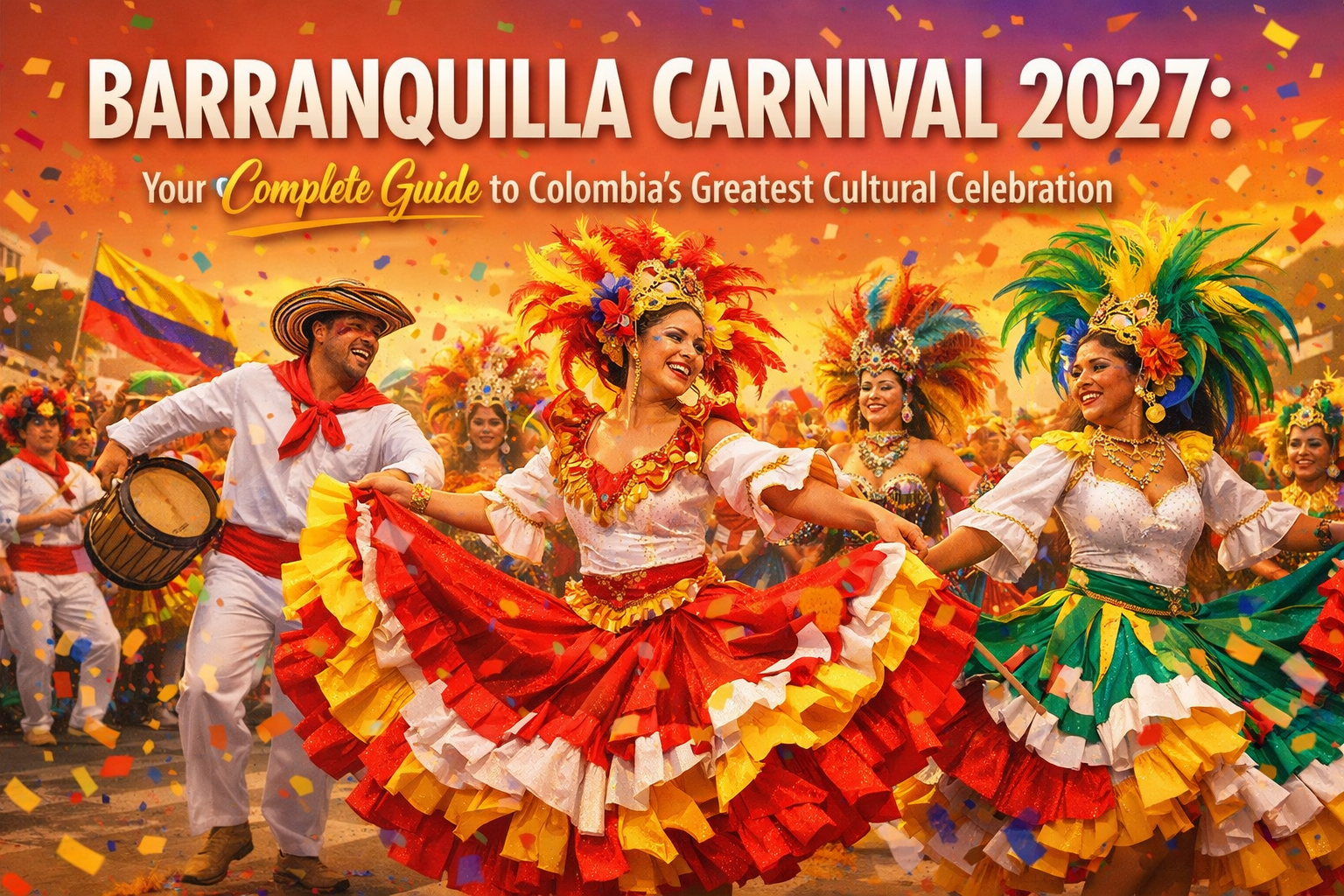
• Barranquilla Carnival 2027 takes place February 27 – March 2, featuring four days of parades, competitions, and street parties
• The festival combines indigenous, African, and Spanish cultural elements in a UNESCO World Heritage celebration
• Main events include the Battle of Flowers parade, Grand Parade, and the famous burial of Joselito Carnaval
• Visitors can participate through costume rentals, dance workshops, and joining local comparsa groups
• Early planning is essential – book accommodations and purchase tickets by November 2026 for the best experience
1. CARNIVAL BASICS
1.1 What is Barranquilla Carnival
Barranquilla Carnival stands as Colombia’s most important folkloric celebration, a four-day explosion of music, dance, and cultural expression that transforms the entire city into a living stage. Born from the fusion of indigenous, African, and Spanish traditions, this carnival has evolved from humble 19th-century celebrations into a UNESCO Masterpiece of Oral and Intangible Heritage of Humanity.
The carnival’s roots trace back to the 1800s when Barranquilla emerged as Colombia’s principal port city. Unlike rigid colonial celebrations, this carnival developed organically from the streets up, allowing working-class communities to express their cultural identity through dance, music, and elaborate costumes. The indigenous Momotombo traditions merged with African cumbia rhythms and Spanish colonial pageantry to create something entirely unique.
What sets Barranquilla apart from Rio’s Carnival or Trinidad’s festivities is its authentic community spirit. Here, neighborhoods organize their own comparsas (dance groups), families pass down traditional dances through generations, and local artisans craft costumes by hand. The carnival doesn’t just happen in Barranquilla – it is Barranquilla, woven into the city’s DNA.
The festival gained UNESCO recognition in 2003, acknowledging its role in preserving traditional Colombian culture while adapting to modern times. Today’s Barranquilla Carnival 2027 will showcase over 200 different folkloric expressions, from the ancient Danza de los Goleros to contemporary urban interpretations of classic rhythms.
1.2 When is Carnival
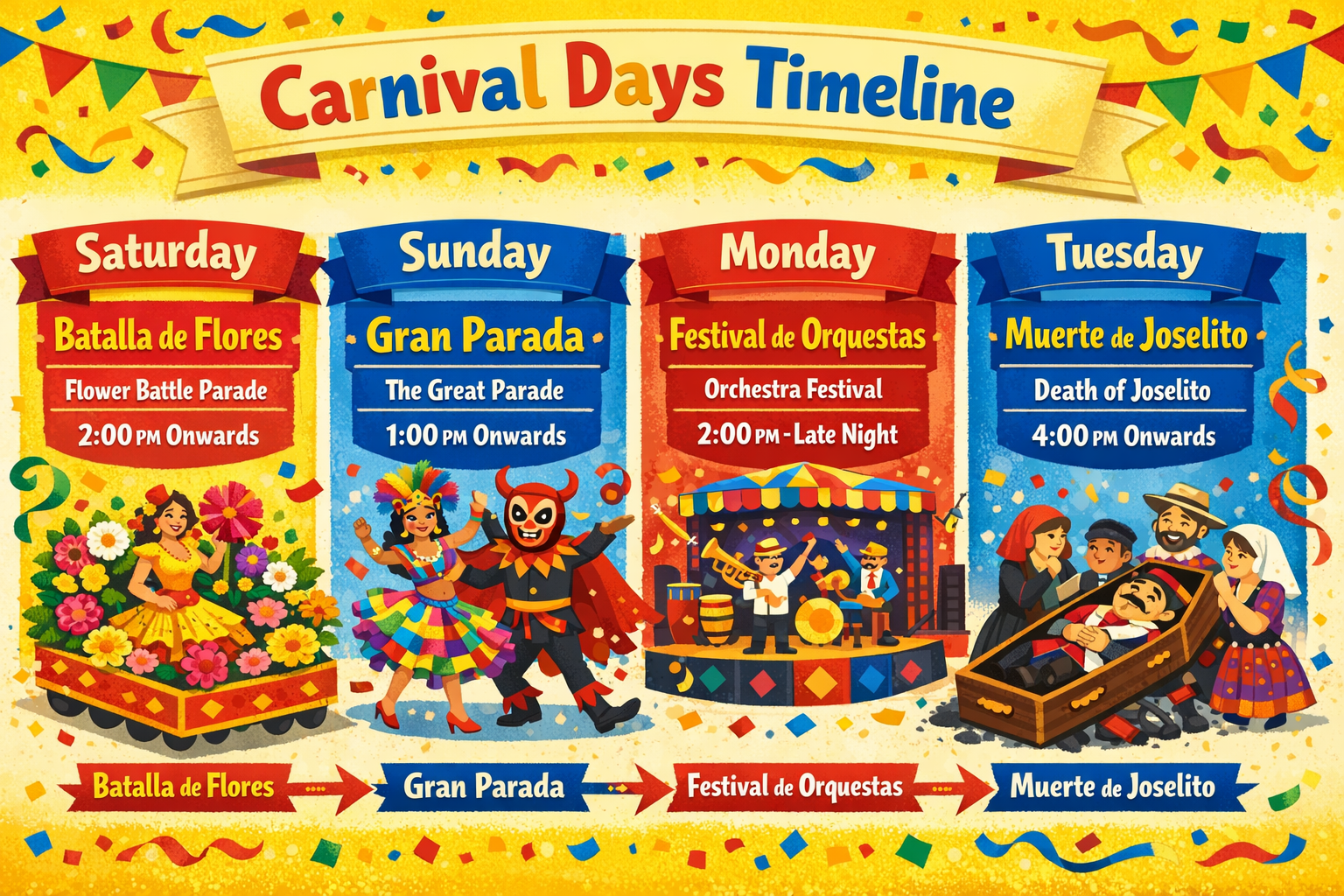
Barranquilla Carnival 2027 officially runs from Saturday, February 27 through Tuesday, March 2, 2027, though the celebration actually begins weeks earlier with pre-carnival events. The dates follow the Catholic calendar, ending on Shrove Tuesday (the day before Ash Wednesday), making it a moveable feast that changes annually.
The four official days each have distinct personalities:
Pre-carnival season kicks off in January with the Lectura del Bando (reading of the carnival decree) and Toma de la Ciudad (taking of the city), where carnival groups symbolically claim Barranquilla for the celebration. Smart visitors arrive during this period to experience the building excitement and attend smaller, more intimate events.
The best time to visit depends on your priorities. Weekend warriors can experience the major parades, but staying for all four days allows deeper cultural immersion. Tuesday’s Joselito funeral is particularly moving – a mock funeral procession where carnival “dies” until next year, complete with genuine tears and dramatic mourning.
1.3 Carnival Season Timeline
The carnival season follows a carefully orchestrated timeline that builds excitement from Christmas through Ash Wednesday:
December – January: Costume workshops begin, neighborhood groups start rehearsals, and the Carnival Queen competition launches with preliminary rounds.
Late January: Lectura del Bando officially opens carnival season, followed by pre-carnival parties in neighborhoods throughout the city.
February (Pre-Carnival Week): Daily events include children’s parades, senior citizen celebrations, and the Coronación de la Reina (Queen’s Coronation) – a spectacular show rivaling any Vegas production.
Carnival Weekend: The main event unfolds with mathematical precision, each day building toward Tuesday’s emotional finale.
2. CARNIVAL EVENTS & ACTIVITIES
2.1 Major Events
Batalla de Flores (Battle of Flowers) opens Barranquilla Carnival 2027 on Saturday with the most elegant parade of the festival. Dating to 1903, this parade features elaborate floats covered in fresh flowers, beauty queens from across Colombia, and the finest folkloric groups. The “battle” refers to spectators throwing flowers at participants – a tradition that creates a fragrant carpet along the Vía 40 parade route.
What to expect: Over 150 floats, 200 dance groups, and 15,000 participants parade for six hours. The Carnival Queen makes her grand debut, while comparsas perform traditional dances like cumbia, mapalé, and congo. Arrive early to secure good viewing spots along the route.
Safety tips for major parades: Stay hydrated with sealed water bottles, keep valuables in front pockets, and designate meeting points if separated from your group. The crowds are friendly but intense – over 500,000 people line the parade route.
Gran Parada de Tradición on Sunday showcases the carnival’s folkloric heart. Every major cultural group participates, from traditional negritas puloy to contemporary hip-hop cumbia fusion groups. This parade moves slower than Saturday’s, allowing better appreciation of intricate costumes and choreography.
Festival de Orquestas on Monday transforms the Estadio Romelio Martínez into Colombia’s biggest concert venue. Cumbia, vallenato, and salsa orchestras compete for prestigious titles while thousands dance in the stands. This indoor event offers relief from the Caribbean sun while showcasing musical traditions.
Muerte de Joselito on Tuesday provides the carnival’s most emotional moment. Joselito Carnaval, a symbolic figure representing the festival’s spirit, “dies” from too much partying and is buried in elaborate funeral processions throughout the city. Groups perform lamentaciones (lamentations) with genuine theatrical grief, creating a cathartic end to four days of celebration.
2.2 Competitions
The Rey Momo and Reina del Carnaval competitions represent the carnival’s most prestigious titles. Rey Momo, the carnival’s male sovereign, must demonstrate extensive knowledge of carnival traditions, while the Reina embodies grace, beauty, and cultural ambassadorship.
Reina del Carnaval competition begins in November with candidates from across the Caribbean coast. The selection process includes interviews about carnival history, public appearances, and the spectacular Coronación gala in February. The 2027 queen will reign for an entire year, promoting Colombian culture internationally.
Dance competitions occur throughout carnival weekend, with categories for traditional and contemporary interpretations. Cumbia competitions are particularly fierce, with groups judged on authenticity, choreography, and costume quality. Winners gain prestige that lasts generations within their communities.
Costume contests celebrate individual creativity alongside group presentations. Categories include traditional characters (like Marimonda and Hombre Caimán), innovative interpretations, and children’s costumes. Prizes range from cash awards to international cultural exchange opportunities.
2.3 Pre-Carnival Parties
Guacherna, held the Saturday before carnival, serves as the official warm-up party. This nighttime parade features cumbia groups dancing by candlelight through the historic center, recreating how carnival was celebrated in the early 1900s. The intimate scale allows closer interaction with performers and a more authentic experience than the massive weekend parades.
Private parties versus public events offer different experiences. Casa de Carnaval hosts exclusive parties for international visitors, featuring premium bar service, air conditioning, and guaranteed seating for parades. Public celebrations in neighborhoods like Barrio Abajo and San Nicolás provide authentic local atmosphere but require more cultural navigation.
Fandango parties occur nightly during pre-carnival week, featuring live cumbia orchestras and traditional dancing. These events, often held in neighborhood plazas, welcome visitors willing to learn basic dance steps and embrace the communal spirit.
3. MUSIC & CULTURE
3.1 Music Genres
Cumbia forms the backbone of Barranquilla Carnival, a rhythm born from the fusion of indigenous gaita flutes, African drums, and Spanish guitars. Traditional cumbia tells stories of courtship, with women’s circular skirts representing the full moon and men’s white clothing symbolizing spiritual purity. Barranquilla Carnival 2027 will feature both traditional cumbia groups maintaining ancestral choreography and modern interpretations incorporating contemporary instruments.
The evolution of cumbia reflects Colombia’s social history. Cumbia sabanera from the coastal plains differs from cumbia urbana developed in Barranquilla’s working-class neighborhoods. Cumbia rap and cumbia electrónica represent modern fusion, proving this traditional rhythm’s adaptability to contemporary expression.
Mapalé brings African heritage to the forefront with sensual, earth-connected movements mimicking fish caught in nets. This dance originated among enslaved Africans working Caribbean coastal fisheries, transforming labor movements into artistic expression. Mapalé groups at carnival perform with minimal clothing and maximum energy, their bodies glistening with sweat as they recreate ancestral connections to nature.
Vallenato, though originating in Colombia’s interior, has become integral to carnival celebrations. Accordion, caja (drum), and guacharaca (scraper) create the distinctive sound that tells stories of love, loss, and regional pride. Vallenato competitions during carnival showcase both traditional paseo, merengue, and puya rhythms alongside contemporary interpretations.
3.2 Dance & Movement
Traditional carnival dances require specific techniques passed down through generations. Cumbia dancers maintain constant motion while appearing effortless, women manipulating heavy skirts with precise hip movements, men pursuing with stylized courtship gestures. Learning basic cumbia steps enhances carnival appreciation – many hotels offer pre-carnival workshops for international visitors.
Mapalé demands physical conditioning and cultural sensitivity. The dance’s sensual nature comes from spiritual connection to African ancestors, not mere entertainment. Authentic mapalé groups train year-round, developing the stamina and flexibility required for performances that can last hours.
Contemporary fusion dances reflect Barranquilla’s position as Colombia’s cultural melting pot. Hip-hop cumbia groups incorporate breakdancing with traditional rhythms, while salsa cumbia fusion attracts younger participants. These innovations ensure carnival’s evolution while respecting traditional foundations.
4. MASQUERADE BANDS
4.1 Choosing a Band
Large established groups like Congo Grande and Cumbia Soledeña offer structured experiences perfect for first-time visitors. These organizations provide costume rentals, dance instruction, and organized participation in major parades. Membership fees typically range from $150-$400 USD, including basic costume, parade entry, and group activities.
Small neighborhood groups provide more intimate cultural immersion but require Spanish language skills and cultural sensitivity. Barrio Abajo’s traditional groups welcome respectful visitors willing to attend rehearsals and learn proper dance techniques. These experiences cost less monetarily but demand greater time investment and cultural engagement.
Band reputations matter significantly in Barranquilla’s close-knit carnival community. La Cumbiamba eNeYé has international recognition for preserving traditional cumbia, while Danza Negra specializes in African-heritage expressions. Research groups’ histories and specialties to find the best cultural fit.
Price ranges vary dramatically based on group size, costume quality, and included services. Budget $200-$600 USD for complete participation, including costume, rehearsals, and parade entries. Premium groups charge more but provide superior costumes, professional instruction, and exclusive party access.
4.2 Band Participation Requirements
Most comparsas require attendance at weekly rehearsals beginning in December. These sessions teach specific choreography, costume care, and group protocols. Punctuality and respect for traditional forms are essential – carnival groups take their cultural preservation role seriously.
Physical requirements vary by dance style. Mapalé groups expect athletic conditioning, while cumbia groups accommodate various fitness levels. Age restrictions apply to certain traditional groups maintaining historical accuracy, though most welcome participants of all ages in appropriate categories.
Cultural sensitivity training helps international visitors understand the deeper meanings behind carnival expressions. Many groups offer orientation sessions explaining the historical significance of costumes, movements, and musical elements. This education enhances both participant experience and cultural preservation.
4.3 Alternative Mas
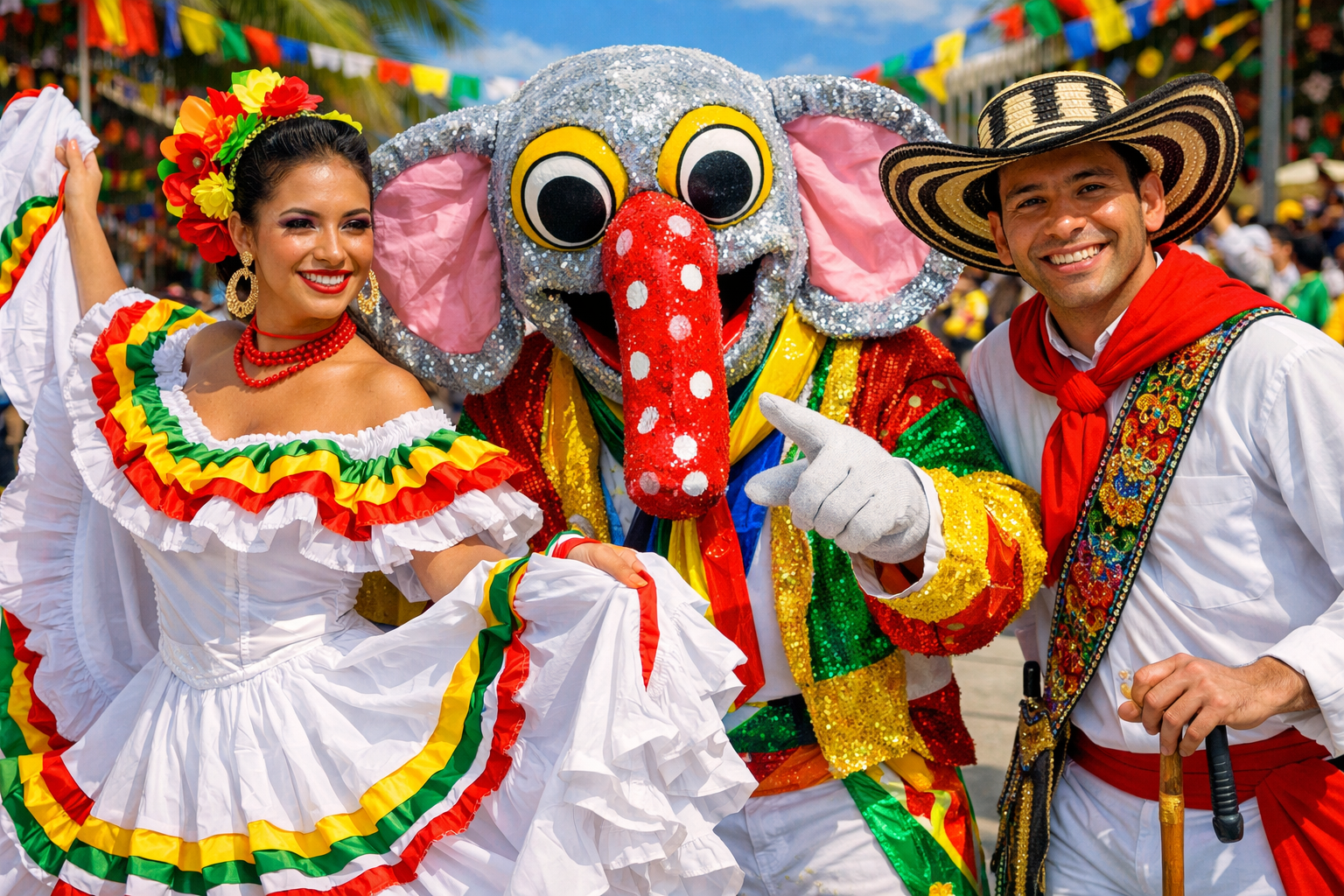
Individual mas allows independent participation without group membership. Rent traditional character costumes like Marimonda (colorful elephant-like mask), Hombre Caimán (alligator man), or Monocuco (individual cumbia dancer) from costume shops throughout the city. This option provides flexibility but less cultural guidance.
Traditional character presentations showcase carnival’s most iconic figures. Marimonda satirizes social pretensions with exaggerated movements and colorful patches, while Hombre Caimán tells the legend of a fisherman transformed into an alligator. Learning these characters’ stories enhances appreciation for their carnival appearances.
Historical presentations recreate specific moments in Colombian history through elaborate tableaux. Groups might portray indigenous resistance, colonial encounters, or independence battles with historically accurate costumes and choreography. These presentations require extensive research and preparation but offer profound cultural education.
5. COSTUMES
5.1 Costume Selection
Traditional costume categories reflect carnival’s cultural diversity. Cumbia costumes feature flowing white skirts with colorful trim for women, white pants and shirts for men, plus distinctive sombrero vueltiao (traditional Colombian hats). Mapalé costumes are minimal – colorful shorts or skirts allowing maximum movement freedom.
Contemporary interpretations blend traditional elements with modern design. Urban cumbia costumes might incorporate LED lights or contemporary fabrics while maintaining classic silhouettes. Fusion costumes combine multiple traditions – perhaps cumbia skirts with mapalé tops or vallenato accessories.
Rental versus purchase decisions depend on participation level. Costume rental ($50-$150 USD) suits casual participants, while custom creation ($200-$800 USD) appeals to serious enthusiasts planning multiple years of participation. Many international visitors rent for their first carnival, then commission custom pieces for return visits.
Sizing and fitting require multiple appointments with costume creators. Traditional cumbia skirts must be precisely measured for proper movement, while mapalé costumes need perfect fit for athletic dancing. Schedule fittings well in advance – popular costume makers book months ahead.
5.2 Costume Elements
Headpieces vary dramatically by dance style and character. Cumbia dancers wear flores (flower crowns) or cintas (ribbon headbands), while mapalé performers often go bareheaded to showcase natural hair movement. Character costumes like Marimonda feature elaborate masks requiring proper ventilation and vision considerations.
Fabric choices must withstand Caribbean heat and intense physical activity. Traditional cotton breathes well but wrinkles easily, while modern synthetic blends maintain appearance but may trap heat. Natural fibers like linen and cotton work best for extended wear during long parade days.
Color symbolism carries cultural significance beyond aesthetic appeal. White represents spiritual purity in cumbia, red symbolizes passion in mapalé, and yellow honors indigenous sun worship. Understanding these meanings enhances costume selection and cultural appreciation.
Embellishments range from simple trim to elaborate beadwork. Traditional costumes feature encajes (lace), cintas (ribbons), and flores (flowers), while contemporary versions might include sequins, mirrors, or LED elements. Balance visual impact with comfort – heavy embellishments become burdensome during long parade participation.
5.3 Costume Preparation
Fitting appointments begin in December for Barranquilla Carnival 2027 participation. Professional costume makers require multiple sessions to ensure proper fit and movement. Amateur seamstresses offer budget alternatives but may lack experience with carnival-specific requirements.
Customization options allow personal expression within traditional frameworks. Add family colors, personal symbols, or regional elements while respecting cultural authenticity. Costume makers guide appropriate modifications that honor tradition while reflecting individual personality.
Costume collection typically occurs the week before carnival, allowing final adjustments and care instruction. Professional costumers provide care packages with cleaning supplies, repair materials, and storage guidance. Rental costumes include damage deposits and return procedures.
Road day preparation requires specific protocols. Undergarments must prevent chafing during hours of dancing, shoe selection balances authenticity with comfort, and backup accessories replace items lost during celebration. Experienced participants recommend baby powder, band-aids, and safety pins as essential carnival survival tools.
6. PLANNING YOUR CARNIVAL
6.1 When to Book
Costume reservations for Barranquilla Carnival 2027 open in October 2026, with popular groups and costume makers booking completely by December. Early booking ensures better costume selection, preferred group placement, and lower prices. Last-minute costume rentals are possible but offer limited choices and higher costs.
Accommodation booking should occur by September 2026 for best selection and rates. Hotel prices increase 300-500% during carnival week, and quality properties sell out entirely. Alternative accommodations like Airbnb and hostels offer budget options but book quickly as word spreads.
Flight booking follows similar patterns – early booking saves money and ensures preferred arrival/departure times. Barranquilla’s Ernesto Cortissoz Airport receives additional flights during carnival but still experiences capacity constraints. Cartagena offers alternative arrival options with two-hour ground transfer to Barranquilla.
Event ticket purchasing begins in November for major venues like Festival de Orquestas. Parade viewing is free along most routes, but premium seating in grandstands requires advance purchase. VIP packages include seating, refreshments, and bathroom access but cost significantly more.
6.2 Budgeting
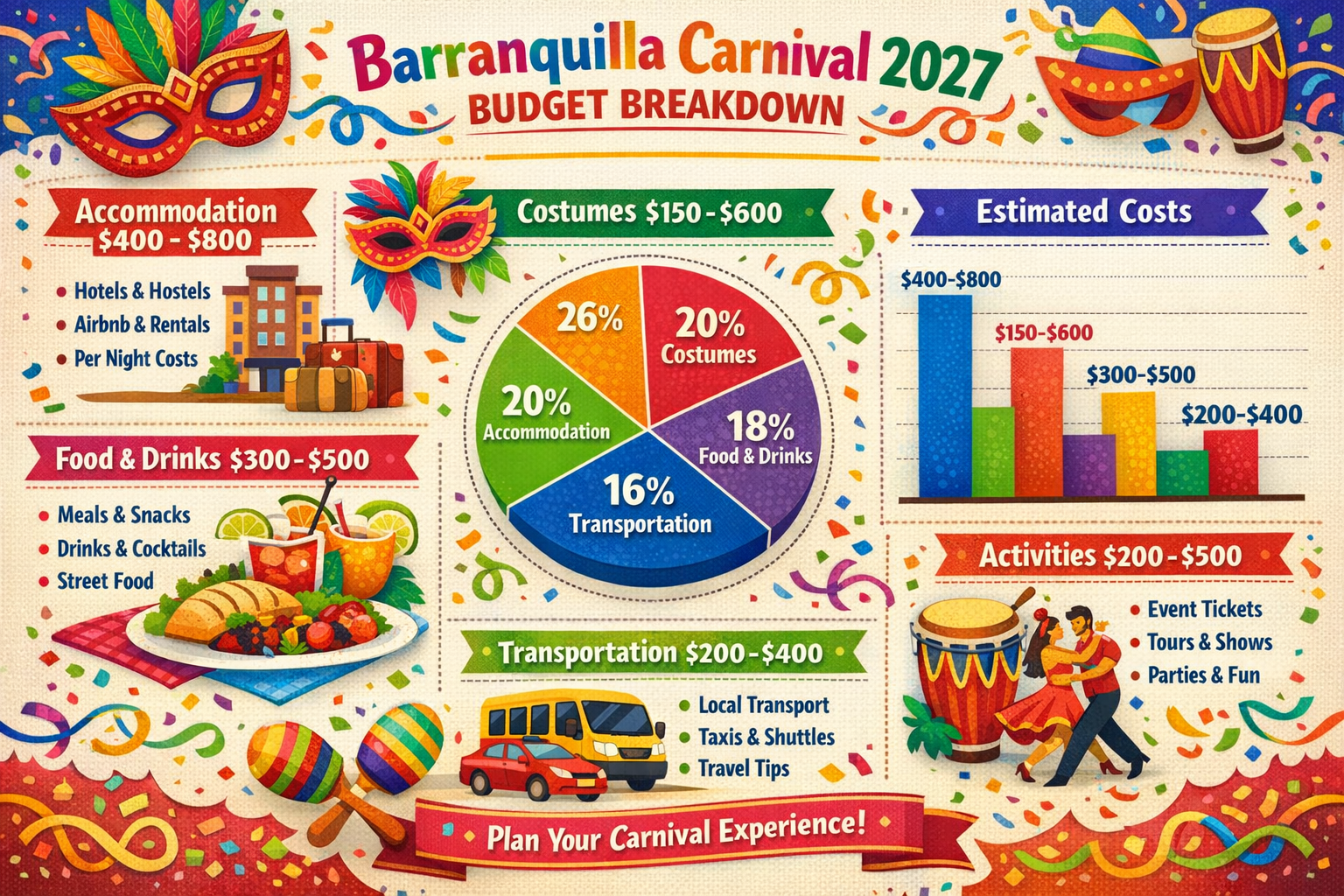
Costume costs range from $50 (basic rental) to $800+ (custom creation with premium materials). Group participation fees add $100-$400 for rehearsals, parade entries, and group activities. Total costume budget should include accessories, shoes, undergarments, and care supplies.
Accommodation costs during Barranquilla Carnival 2027 will range from $200-$300/night for budget hotels to $800+/night for luxury properties. Airbnb alternatives cost $100-$250/night but may lack carnival-specific services like costume storage and late-night security.
Food and beverage expenses vary by dining choices. Street food costs $3-$8 per meal, mid-range restaurants charge $15-$30, and hotel dining ranges $40-$80. Alcohol is expensive – budget $10-$15 for cocktails, $5-$8 for beer. Hydration is crucial – buy water in advance to avoid inflated street prices.
Transportation budgets should include airport transfers ($20-$40), daily taxis ($5-$15 per ride), and parade route transportation ($10-$20). Rental cars are not recommended due to traffic congestion and parking limitations during carnival.
Total estimated budget for international visitors ranges from $1,500-$4,000 per person for four days, including flights, accommodation, costumes, meals, and activities. Budget travelers can manage with $800-$1,200 by choosing hostels, street food, and costume rentals.
6.3 Travel Logistics
Visa requirements for Colombia vary by nationality. US citizens need only a passport for stays under 90 days, while European visitors enjoy similar access. Canadian and Australian citizens should verify current requirements, as policies change periodically. Tourist visas are free for most nationalities.
Flights to Barranquilla connect through Bogotá, Miami, Panama City, or Cartagena. Direct international service is limited, so plan for connections and potential delays. Carnival week flights book early and cost premium rates – consider arriving several days early and departing midweek for better prices.
Currency and payments in Colombia use Colombian pesos (COP). Credit cards work in hotels and restaurants but cash is essential for street vendors, taxis, and tips. ATMs are widely available but may have daily limits and international fees. Bring US dollars for favorable exchange rates.
Travel insurance is highly recommended for carnival travel. Medical coverage handles heat exhaustion, dehydration, and minor injuries common during intense celebration. Trip cancellation protection covers costume deposits and non-refundable bookings if plans change.
6.4 Accommodation
Hotels in Barranquilla’s Zona Norte offer luxury amenities and carnival packages but command premium prices. Hotel Dann Carlton and GHL Collection Barranquilla provide costume storage, late checkout, and carnival shuttle services. Boutique hotels like Hotel Majestic offer character and central location.
Airbnb options in El Prado and Alto Prado neighborhoods provide apartment-style accommodations with kitchens, laundry, and local atmosphere. Entire apartments cost less than hotel suites and accommodate groups better. Verify air conditioning, hot water, and WiFi before booking.
Areas to stay should balance safety, convenience, and atmosphere. Zona Norte offers luxury and security but feels isolated from carnival energy. Centro Histórico provides cultural immersion but requires street awareness. El Prado balances accessibility with local character.
Safety considerations include secure parking (if renting a car), 24-hour reception, safe deposit boxes, and reliable transportation to carnival events. Hotel concierges familiar with carnival can arrange costume fittings, group participation, and local guides.
7. WHAT TO PACK & WEAR
7.1 Carnival Day Essentials
Comfortable shoes are paramount for carnival survival. Athletic sneakers with good support work better than sandals or dress shoes for hours of dancing on hot pavement. Broken-in footwear prevents blisters that can ruin carnival experience. Pack backup shoes in case of loss or damage.
Hydration systems become lifesavers during Caribbean heat and intense physical activity. Hydration backpacks allow hands-free water access while dancing, while insulated water bottles keep drinks cool longer. Electrolyte supplements help maintain energy during long parade days.
Sun protection requires multiple approaches. Waterproof sunscreen SPF 30+ needs reapplication every two hours, especially after sweating. Wide-brimmed hats protect face and neck, while UV-protective clothing covers arms and shoulders. Sunglasses with UV protection are essential.
Portable phone chargers keep devices powered for photos, group coordination, and emergency contact. Waterproof phone cases protect against sweat, drinks, and occasional rain. Backup batteries or solar chargers provide extended power for multi-day events.
Small backpacks or fanny packs carry essentials without interfering with costume or dancing. Anti-theft designs with hidden zippers and RFID blocking protect valuables. Waterproof materials handle sweat and spilled drinks.
7.2 Climate Considerations
Barranquilla’s February climate averages 85-90°F (29-32°C) with high humidity and occasional afternoon showers. Lightweight, breathable fabrics like cotton and linen work best for non-costume wear. Moisture-wicking athletic wear helps manage sweat during intense dancing.
Rain preparation includes compact umbrellas or ponchos that don’t interfere with costumes. Waterproof bags protect phones, cameras, and documents. Quick-dry clothing recovers faster from unexpected downpours.
Heat management strategies include cooling towels, portable fans, and frozen water bottles that provide cooling as they melt. Light-colored clothing reflects heat better than dark colors. Loose-fitting garments allow air circulation.
7.3 Fete Attire
Festival wear for pre-carnival parties and evening events should be colorful, comfortable, and dance-friendly. Flowing skirts and breathable shirts work well for cumbia dancing, while fitted clothing suits salsa and reggaeton events.
Themed outfit requirements vary by event. Guacherna traditionally features white clothing to reflect candlelight, while Batalla de Flores after-parties welcome floral patterns and bright colors. Check event requirements to avoid feeling underdressed.
Comfortable dancing shoes with good grip prevent slips on crowded dance floors. Closed-toe shoes protect feet from being stepped on, while breathable materials reduce odor after long dancing sessions. Backup footwear handles shoe emergencies.
8. FOOD & DRINK
8.1 Carnival Food
Traditional carnival foods reflect Caribbean coastal cuisine with African, indigenous, and Spanish influences. Arepa de huevo (corn cakes with fried egg) provide portable protein perfect for parade days. Carimañolas (fried yuca filled with meat) offer hearty sustenance during long celebrations.
Street food vendors throughout Barranquilla serve authentic flavors at budget prices. Raspao (shaved ice with fruit syrups) provides cooling relief from Caribbean heat. Patacones (twice-fried plantains) with hogao (Colombian salsa) offer vegetarian options with local flavors.
Sancocho, a hearty soup with chicken, beef, pork, vegetables, and plantains, serves as carnival’s signature dish. Family recipes passed down through generations create unique variations. Restaurant versions range from simple to elaborate, but home-cooked sancocho at neighborhood parties provides the most authentic experience.
Seafood specialties take advantage of Barranquilla’s coastal location. Pescado frito (fried fish) with coconut rice and patacones represents classic Caribbean combination. Ceviche offers light, refreshing option during hot afternoons.
8.2 Drinks
Rum cocktails dominate carnival drinking culture, with aguardiente (Colombian anise-flavored spirit) running close second. Cuba libres, mojitos, and piña coladas provide tropical refreshment. Local rum brands like Ron Viejo de Caldas offer authentic Colombian flavors.
Beer consumption peaks during carnival, with Águila, Club Colombia, and Poker representing national favorites. Ice-cold beer vendors work parade routes, though prices increase significantly during peak events. Hydration balance requires alternating alcoholic drinks with water.
Traditional beverages include chicha, a fermented corn drink with indigenous origins, and champús, made with corn, pineapple, and spices. Agua de panela (sugarcane water) provides natural energy and electrolyte replacement.
Staying hydrated becomes critical during Caribbean heat and alcohol consumption. Coconut water offers natural electrolytes, while fresh fruit juices provide vitamins and hydration. Water quality in Barranquilla is generally safe, but bottled water reduces any digestive concerns.
8.3 Restaurants & Cuisine
La Cueva restaurant has served traditional Caribbean cuisine since 1952, making it a carnival institution. Sancocho trifásico (three-meat sancocho) and mojarra frita (fried fish) represent menu highlights. Reservations are essential during carnival week.
Restaurante 1621 offers upscale Colombian cuisine in elegant atmosphere. Creative interpretations of traditional dishes appeal to international palates while maintaining authentic flavors. Wine list features Colombian and international selections.
Mercado de Bazurto provides authentic street food experience but requires cultural navigation and Spanish language skills. Fresh seafood, tropical fruits, and traditional snacks offer genuine local flavors at budget prices.
Hotel restaurants during carnival provide convenience and air conditioning but often lack cultural authenticity. International chains serve familiar foods for homesick travelers but miss carnival’s culinary adventure.
9. SAFETY & TIPS
9.1 Safety Guidelines
Travel in groups especially during evening events and late-night transportation. Buddy systems ensure no one gets separated in massive crowds, while group coordination via WhatsApp helps maintain contact. Solo travelers should connect with carnival groups or hotel tours for safety and social connection.
Valuables security requires strategic planning. Hotel safes store passports, extra cash, and jewelry during carnival events. Money belts or hidden pouches carry daily cash and copies of documents. Expensive phones and cameras need secure storage when not actively used.
Crowd awareness helps navigate dense parade areas safely. Emergency exits and meeting points should be identified before events begin. Medical conditions like claustrophobia or anxiety may be triggered by intense crowds – plan accordingly.
Authorized transportation includes registered taxis, ride-sharing apps, and hotel shuttles. Unofficial taxis may lack insurance and safety standards. Walking during carnival is generally safe in main areas but requires street awareness and group travel.
9.2 Health Considerations
Heat exhaustion prevention requires consistent hydration, regular shade breaks, and recognition of warning signs like dizziness, nausea, or excessive fatigue. Electrolyte replacement through sports drinks or coconut water helps maintain energy levels.
Foot care becomes critical during multi-day dancing and long parade participation. Blister prevention through proper footwear, moisture-wicking socks, and preventive bandaging of hot spots. Foot powder reduces friction and odor.
Medical facilities in Barranquilla include Hospital Universidad del Norte and Clínica General del Norte for serious emergencies. Pharmacies throughout the city stock basic medications, sunscreen, and first aid supplies. Travel insurance should cover medical evacuation if needed.
Prescription medications should be brought in original containers with doctor’s letters explaining medical necessity. Extra supplies account for travel delays or lost luggage. Common medications like pain relievers and anti-diarrheal drugs are widely available.
9.3 First-Timer Tips
Start with smaller events before attempting major parades. Pre-carnival parties and neighborhood celebrations provide cultural introduction without overwhelming crowds. Guacherna offers perfect first-timer experience with manageable size and authentic atmosphere.
Pace yourself across four carnival days to avoid burnout or exhaustion. Rest periods, air-conditioned breaks, and adequate sleep maintain energy levels. Alcohol moderation prevents dehydration and poor decision-making.
Local connections enhance carnival experience significantly. Hotel concierges, tour guides, and carnival group leaders provide cultural context and practical assistance. Spanish language basics help with navigation and social interaction.
Cultural respect includes understanding traditions, appropriate photography, and respectful participation. Carnival is cultural celebration, not tourist performance – genuine interest and respect are appreciated by local participants.
10. GETTING AROUND
10.1 Transportation Options
Transmetro, Barranquilla’s bus rapid transit system, provides efficient transportation between major carnival venues and hotel zones. Special carnival schedules extend service hours and increase frequency during festival days. Prepaid cards available at stations cost approximately $1 USD per ride.
Taxi services multiply during carnival but demand exceeds supply during peak hours. Hotel taxis offer reliability and safety but cost premium rates. Street taxis require negotiation and cash payment – agree on fares before departure to avoid disputes.
Ride-sharing apps like Uber operate in Barranquilla but availability decreases during high-demand periods. Surge pricing can increase costs significantly during parade times. Pre-booking when possible helps secure transportation.
Walking between nearby venues often proves faster than vehicular transportation during carnival traffic. Comfortable shoes and heat protection are essential for extended walking. Group walking provides safety and social interaction.
Rental cars are not recommended for carnival visitors due to extreme traffic congestion, limited parking, and local driving customs. Hotel shuttles and organized tours provide better alternatives for transportation.
10.2 Parade Routes
Vía 40 serves as the primary parade route for major events like Batalla de Flores and Gran Parada. The route extends from Country Club to Plaza de la Paz, covering approximately 6 kilometers through Barranquilla’s most important neighborhoods.
Viewing locations vary in crowd density, shade availability, and amenities. Country Club area offers upscale atmosphere with nearby restaurants and parking, while Plaza de la Paz provides traditional carnival energy with local vendors and authentic crowds.
Grandstand seating along the route provides guaranteed views, shade, and bathroom access but requires advance purchase and higher costs. Street viewing is free but involves standing for hours in Caribbean sun with limited amenities.
Alternative viewing at secondary routes like Carrera 46 and Calle 84 offers less crowded experience with easier access to food and facilities. Local neighborhoods often have smaller parades with more intimate atmosphere.
10.3 Parking & Traffic
Traffic congestion during carnival can triple normal travel times between major venues. Street closures for parades and security create complex detours requiring local knowledge. Public transportation often proves faster than private vehicles.
Parking availability near carnival events is extremely limited and expensive. Hotel parking should be confirmed during booking – many properties have limited spaces. Street parking in carnival areas is restricted or unavailable.
Security concerns for parked vehicles include break-ins and vandalism in unattended areas. Paid parking lots with security guards offer better protection but fill quickly during major events.
Walking distances from available parking to carnival events can exceed one kilometer during peak times. Physical preparation and appropriate footwear are essential for extended walking on hot pavement.
11. PHOTOGRAPHY & MEDIA
11.1 Photography Tips
Golden hour photography during early morning and late afternoon provides optimal lighting for costume details and skin tones. Harsh midday sun creates unflattering shadows and overexposed highlights. Shade photography under buildings or umbrellas offers even lighting.
Action shots during parades require fast shutter speeds (1/250s or faster) to freeze movement. Continuous autofocus and burst mode increase success rates with moving subjects. Anticipating movements rather than reacting improves composition.
Portrait photography with carnival participants requires permission and cultural sensitivity. Costume details and traditional characters make excellent subjects, but respect personal space and cultural significance. Tipping for posed photos is appreciated but not required.
Equipment protection from heat, humidity, sweat, and spilled drinks requires waterproof bags and lens cloths. Backup batteries drain quickly in hot weather, while memory cards should have ample capacity for multi-day shooting.
11.2 Social Media
Instagram hashtags like #CarnavalDeBarranquilla2027, #QuienLoVive, and #CarnavalDeTodos connect posts with global carnival community. Location tags help document specific venues and neighborhoods. Story highlights preserve temporary content for future reference.
Facebook groups like “Carnaval de Barranquilla Oficial” provide real-time updates, event changes, and community discussions. Local groups offer insider information about transportation, weather, and last-minute events.
Live streaming capabilities allow sharing experiences with friends and family unable to attend. Battery management and data usage become critical considerations during extended live sessions. WiFi availability at hotels and restaurants helps conserve cellular data.
Content creation opportunities include costume tutorials, dance lessons, food reviews, and cultural education. Authentic storytelling about carnival traditions and personal experiences engages audiences better than simple documentation.
11.3 Capturing Memories
Professional photography packages offered by local photographers provide high-quality images without personal equipment concerns. Carnival specialists know optimal locations, timing, and cultural protocols. Packages typically range from $200-$800 depending on coverage duration and deliverables.
Video highlights using smartphones or action cameras capture movement and atmosphere that still photography cannot. Stabilization through gimbals or electronic systems improves video quality. Short clips work better than long recordings for social media sharing.
GoPro cameras excel in carnival environments due to compact size, durability, and wide-angle perspective. Chest mounts or head mounts provide hands-free recording while dancing or participating in parades. Waterproof housing protects against sweat and drinks.
Photo organization during multi-day events prevents confusion and lost memories. Daily backup to cloud storage protects against device loss or damage. Descriptive filenames and location data help identify specific events and locations later.
12. EXTENDED STAY
12.1 Pre and Post Carnival
Pre-carnival exploration of Barranquilla reveals the city’s character beyond festival excitement. Museo del Caribe provides cultural context for carnival traditions, while Casa del Carnaval offers year-round exhibits and costume workshops. Malecón riverside promenade showcases urban development and Magdalena River views.
Cultural preparation through museum visits, dance classes, and historical tours enhances carnival appreciation. Universidad del Norte’s cultural programs often welcome international visitors for lectures and workshops about Caribbean culture.
Post-carnival recovery requires gradual transition from intense celebration to normal activities. Spa treatments, beach relaxation, and quiet cultural activities help process the overwhelming sensory experience of four-day celebration.
Reflection time allows deeper understanding of cultural significance and personal impact. Journaling, photo organization, and cultural reading help integrate the carnival experience into broader understanding of Colombian culture.
12.2 Nearby Attractions
Cartagena, two hours from Barranquilla, offers colonial architecture, Caribbean beaches, and UNESCO World Heritage sites. Walled city exploration, Rosario Islands day trips, and gourmet dining provide contrasting experiences to carnival’s intensity.
Santa Marta and Tayrona National Park showcase Colombia’s natural beauty with pristine beaches, jungle hiking, and indigenous culture. Ciudad Perdida (Lost City) multi-day treks appeal to adventurous travelers seeking physical challenges and archaeological wonders.
Mompox, a colonial river town, represents authentic Colombian culture without tourist crowds. UNESCO recognition for preserved architecture and traditional crafts makes it ideal for cultural enthusiasts seeking deeper understanding of Colombian history.
Magdalena River boat trips from Barranquilla explore wetland ecosystems, bird watching, and fishing communities. Day trips or overnight excursions provide nature experiences and rural culture exposure.
12.3 Post-Carnival Activities
Beach relaxation at Puerto Colombia or Sabanilla helps recover from carnival’s physical demands. Fresh seafood, ocean swimming, and sunset views provide peaceful transition from urban celebration to natural tranquility.
Cultural workshops in traditional crafts like costume making, mask creation, or musical instruments allow hands-on learning about carnival arts. Local artisans often offer private instruction for interested visitors.
Gastronomic tours exploring Barranquilla’s culinary scene beyond carnival street food reveal sophisticated Caribbean cuisine. Cooking classes, market tours, and restaurant experiences provide cultural education through food.
Music and dance lessons in cumbia, vallenato, and salsa help maintain connections to carnival culture after returning home. Professional instructors offer intensive workshops for serious students.
13. CARNIVAL INDUSTRY
13.1 Costume Creation
Artisan workshops throughout Barranquilla employ hundreds of craftspeople creating costumes, floats, and decorations for carnival. Traditional techniques passed through family generations combine with modern materials and design innovations. Workshop visits during pre-carnival months reveal intricate creation processes.
Design evolution reflects changing tastes while respecting traditional forms. Contemporary materials like LED lights, synthetic fabrics, and lightweight composites enhance visual impact without compromising cultural authenticity. Innovation focuses on comfort, durability, and spectacular visual effects.
Economic impact of costume creation supports thousands of families throughout the Caribbean coast. Seasonal employment peaks during pre-carnival months, with skilled artisans commanding premium wages for specialized techniques. International orders from diaspora communities extend economic benefits beyond local celebration.
Apprenticeship programs ensure traditional knowledge transfer to younger generations. Master craftspeople teach complex techniques like wire bending, feather work, and traditional embroidery. Cultural preservation through economic opportunity maintains carnival’s authenticity.
13.2 Economic Impact
Tourism revenue during Barranquilla Carnival 2027 is projected to exceed $200 million USD, supporting hotels, restaurants, transportation, and local businesses. International visitors spend significantly more than domestic tourists, making global promotion essential for economic success.
Employment generation includes temporary positions in hospitality, security, transportation, and event management. Permanent jobs in carnival organizations, cultural institutions, and tourism services provide year-round economic benefits.
Infrastructure investment for carnival includes street improvements, security systems, sanitation facilities, and transportation upgrades. Public-private partnerships fund major projects that benefit both carnival and daily city life.
Brand value of Barranquilla Carnival as cultural export promotes Colombian tourism, cultural products, and international relations. UNESCO recognition enhances global prestige and cultural diplomacy opportunities.
13.3 Carnival Arts
Traditional crafts including mask making, costume design, and float construction represent sophisticated artistic traditions. Marimonda masks require specific proportions and color combinations that identify authentic versus commercial versions. Master craftspeople guard traditional techniques while teaching respectful innovations.
Musical instrument creation for carnival includes traditional drums, gaitas (indigenous flutes), and modern adaptations. Artisan workshops create authentic instruments used by professional groups and cultural preservationists. Sound quality and cultural accuracy determine instrument value.
Float construction combines engineering, artistry, and cultural knowledge. Large floats require structural engineering for safety while maintaining aesthetic impact. Collaborative teams include artists, engineers, cultural advisors, and construction specialists.
Innovation in carnival arts includes sustainable materials, LED integration, and interactive elements. Environmental consciousness drives experimentation with recyclable materials and reusable components. Technology integration enhances visual impact without overwhelming traditional elements.
14. FAMILY CARNIVAL
14.1 Kiddies Carnival
Children’s participation in Barranquilla Carnival includes age-appropriate competitions, parades, and educational programs. Kiddies Carnival events typically occur weekends before main carnival, allowing family participation without overwhelming young children with intense crowds.
Age categories range from toddlers (2-4 years) through teenagers (15-17 years), with appropriate costume requirements, performance expectations, and safety protocols. Younger children participate in simple dances and costume displays, while older kids learn complex choreography and cultural significance.
Educational components teach children about Colombian history, cultural diversity, and artistic expression through hands-on activities. Schools throughout the region incorporate carnival education into regular curriculum, making festival an important learning opportunity.
Safety measures for children’s events include medical stations, lost child protocols, hydration stations, and age-appropriate performance schedules. Parent participation is encouraged but not required – many children participate through school groups or community organizations.
14.2 Family-Friendly Options
Daytime events provide family-appropriate carnival experiences without late-night adult party atmosphere. Morning parades, cultural workshops, and educational tours allow children to experience carnival culture while maintaining regular sleep schedules.
Viewing areas designated for families offer better sightlines for children, nearby restrooms, and food vendors with kid-friendly options. Grandstand seating with family sections provides comfort and safety for extended parade viewing.
Interactive activities like costume workshops, dance lessons, and musical instrument demonstrations engage children actively rather than passive observation. Hands-on learning about cultural traditions creates lasting memories and cultural appreciation.
Accommodation considerations for families include connecting rooms, cribs/rollaway beds, refrigeration for snacks and medications, and swimming pools for relaxation between carnival events. Family-friendly hotels often provide babysitting services for parents wanting adult-only evening events.
15. SUSTAINABILITY & RESPONSIBILITY
15.1 Environmental Considerations
Waste management during Barranquilla Carnival presents significant challenges with over one million participants generating massive amounts of trash, costume materials, and food waste. Recycling programs for costume components like plastic decorations, metal frameworks, and fabric elements reduce environmental impact.
Sustainable costume creation using biodegradable materials, natural dyes, and locally-sourced components appeals to environmentally conscious participants. Rental programs for costumes reduce individual consumption while maintaining participation access for budget-conscious visitors.
Transportation impact from increased flights, ground transportation, and local traffic contributes to carbon emissions. Group transportation, public transit use, and carbon offset programs help minimize individual environmental footprints.
Beach and street cleanup initiatives during and after carnival involve community groups, schools, and volunteer organizations. International visitors can participate in cleanup activities as meaningful cultural exchange and environmental responsibility.
15.2 Cultural Respect
Cultural appropriation awareness helps international visitors participate respectfully in traditional celebrations without exploiting or misrepresenting cultural elements. Education about costume significance, dance meanings, and historical context promotes respectful participation.
Photography ethics include seeking permission for portraits, respecting sacred or private moments, and avoiding stereotypical or exploitative imagery. Cultural sensitivity in social media sharing prevents misrepresentation of complex traditions.
Supporting authentic culture through purchases from local artisans, participation in traditional groups, and learning from cultural practitioners benefits community members who maintain carnival traditions. Authentic experiences cost more but provide genuine cultural exchange.
Language respect includes learning basic Spanish phrases, understanding cultural communication styles, and showing appreciation for local customs. Cultural humility and genuine interest in learning create positive interactions with local communities.
15.3 Community Impact
Local business support through shopping, dining, and service use provides direct economic benefits to Barranquilla residents. Small businesses and family operations often benefit more from tourist spending than large international chains.
Tipping practices in Colombia vary by service type and quality. Restaurant tips of 10% are standard for good service, while taxi drivers, hotel staff, and tour guides appreciate small tips for exceptional service. Costume makers and cultural teachers value recognition through appropriate compensation.
Volunteer opportunities with local organizations working on education, environmental protection, or cultural preservation allow meaningful community contribution. International skills in marketing, language instruction, or professional development can benefit local groups.
Cultural exchange through genuine interest in local perspectives, sharing home cultures, and maintaining post-carnival connections creates lasting benefits beyond economic transactions. Sister city relationships and cultural partnerships often develop from positive carnival experiences.
16. RESOURCES
16.1 Official Information
Carnaval de Barranquilla S.A.S. serves as the official organization managing carnival operations, permits, security, and cultural programming. Their website (carnavaldebarranquilla.org) provides official schedules, route maps, safety information, and cultural education resources in Spanish and English.
Barranquilla Mayor’s Office coordinates municipal services, traffic management, security, and infrastructure during carnival. Official communications about street closures, emergency procedures, and public services come through municipal channels.
Colombian Ministry of Culture supports carnival through funding, international promotion, and cultural preservation programs. UNESCO liaison activities and cultural diplomacy initiatives operate through ministry programs.
Embassy contacts for international visitors include consular services for emergency assistance, document replacement, and legal support. Major embassies in Bogotá maintain emergency contact 24-hour hotlines for citizen assistance.
16.2 Carnival Apps & Tools
Official carnival apps provide real-time schedule updates, route maps, emergency contacts, and cultural information. Push notifications alert users to schedule changes, weather updates, and safety information. Offline functionality works when cellular networks become congested.
Navigation apps like Google Maps and Waze include carnival-specific route closures and traffic updates during festival periods. Public transportation apps show Transmetro schedules and route changes.
Translation apps help non-Spanish speakers communicate with vendors, taxi drivers, and local participants. Offline translation capabilities work without internet connection when networks become overwhelmed.
Weather apps with hourly forecasts and radar help plan daily activities and prepare for afternoon thunderstorms common during Caribbean rainy season.
16.3 Community Resources
Facebook groups like “Carnaval de Barranquilla Internacional” connect international visitors with local guides, cultural experts, and fellow travelers. Group administrators often provide verified information and moderate discussions for helpful content.
WhatsApp communities organized by hotels, tour companies, and carnival groups provide real-time coordination for group activities, transportation sharing, and emergency communication. Group chats help coordinate meeting points and share practical information.
Reddit communities like r/Colombia and r/Barranquilla offer traveler advice, local perspectives, and cultural discussions from residents and experienced visitors. Search functions help find previous discussions about specific topics.
Cultural centers and universities often host pre-carnival educational events, language exchange, and cultural workshops open to international visitors. Universidad del Norte and Universidad del Atlántico frequently organize cultural programming.
16.4 Frequently Asked Questions
First-timer FAQs address common concerns about safety, cultural participation, language barriers, and logistics. Experienced participants recommend starting with smaller events, learning basic Spanish phrases, and connecting with local guides for cultural context.
Costume FAQs cover rental versus purchase decisions, sizing procedures, care instructions, and cultural appropriateness. Costume makers provide detailed care instructions and repair services for rented items.
Travel FAQs include visa requirements, vaccination recommendations, currency exchange, tipping practices, and emergency procedures. Colombian consulates provide official information about entry requirements and travel advisories.
Safety FAQs address crowd management, valuables security, medical facilities, emergency contacts, and transportation safety. Local police and tourist police provide specialized assistance for international visitors during carnival.
Conclusion
Barranquilla Carnival 2027 represents far more than a spectacular party – it’s a living celebration of Colombian cultural identity, a UNESCO-recognized treasure that transforms an entire city into a stage for centuries-old traditions. From the elegant Batalla de Flores parade to the emotional burial of Joselito Carnaval, every moment pulses with authentic cultural expression that welcomes visitors into Colombia’s heart.
The magic of Barranquilla lies not just in its colorful costumes or infectious rhythms, but in its community spirit that embraces everyone willing to dance, learn, and celebrate. Whether you’re joining a traditional comparsa, learning cumbia steps from local dancers, or simply absorbing the incredible energy from parade sidelines, you’ll experience cultural immersion that changes your understanding of Colombian heritage.
Planning ahead is essential for maximizing your carnival experience. Book accommodations by September 2026, secure costume reservations by December, and begin learning about the cultural significance of what you’ll witness. This preparation transforms you from tourist to participant, allowing deeper appreciation of the traditions you’ll encounter.
Take action now to make Barranquilla Carnival 2027 your most memorable cultural adventure:
• Research and contact carnival groups that match your interests and Spanish language level
• Book accommodations in your preferred neighborhood while selection and rates are optimal
• Connect with local cultural organizations through social media for authentic experiences
• Begin learning basic cumbia dance steps and Spanish phrases to enhance your participation
• Plan your extended stay to include pre-carnival cultural preparation and post-carnival recovery
The streets of Barranquilla await your arrival, ready to welcome you into a celebration that will forever change how you understand the power of cultural tradition and community joy. ¡Quien lo vive es quien lo goza! – Those who live it are those who truly enjoy it.
Barranquilla Carnival 2027 Event Planner
.cg-element-container {
max-width: 900px;
margin: 20px auto;
font-family: 'Segoe UI', Tahoma, Geneva, Verdana, sans-serif;
background: linear-gradient(135deg, #ff6b35, #f7931e, #ffd23f);
border-radius: 15px;
padding: 25px;
box-shadow: 0 10px 25px rgba(0,0,0,0.1);
}
.cg-element-header {
text-align: center;
margin-bottom: 25px;
}
.cg-element-title {
font-size: 28px;
font-weight: bold;
color: #2c3e50;
margin: 0 0 10px 0;
text-shadow: 1px 1px 2px rgba(255,255,255,0.8);
}
.cg-element-subtitle {
font-size: 16px;
color: #34495e;
margin: 0;
}
.cg-element-planning-grid {
display: grid;
grid-template-columns: 1fr 1fr;
gap: 20px;
margin-bottom: 25px;
}
.cg-element-section {
background: rgba(255,255,255,0.9);
padding: 20px;
border-radius: 10px;
box-shadow: 0 4px 8px rgba(0,0,0,0.1);
}
.cg-element-section-title {
font-size: 18px;
font-weight: bold;
color: #e74c3c;
margin-bottom: 15px;
border-bottom: 2px solid #f39c12;
padding-bottom: 5px;
}
.cg-element-form-group {
margin-bottom: 15px;
}
.cg-element-label {
display: block;
font-weight: 600;
color: #2c3e50;
margin-bottom: 5px;
font-size: 14px;
}
.cg-element-input, .cg-element-select {
width: 100%;
padding: 10px;
border: 2px solid #bdc3c7;
border-radius: 6px;
font-size: 14px;
transition: border-color 0.3s;
box-sizing: border-box;
}
.cg-element-input:focus, .cg-element-select:focus {
outline: none;
border-color: #e74c3c;
}
.cg-element-checkbox-group {
display: grid;
grid-template-columns: 1fr 1fr;
gap: 10px;
margin-top: 10px;
}
.cg-element-checkbox-item {
display: flex;
align-items: center;
font-size: 14px;
color: #2c3e50;
}
.cg-element-checkbox {
margin-right: 8px;
transform: scale(1.2);
}
.cg-element-budget-display {
background: #2c3e50;
color: white;
padding: 20px;
border-radius: 10px;
text-align: center;
margin-top: 20px;
}
.cg-element-budget-title {
font-size: 20px;
font-weight: bold;
margin-bottom: 10px;
}
.cg-element-budget-amount {
font-size: 36px;
font-weight: bold;
color: #f39c12;
}
.cg-element-budget-breakdown {
margin-top: 15px;
text-align: left;
background: rgba(255,255,255,0.1);
padding: 15px;
border-radius: 8px;
}
.cg-element-budget-item {
display: flex;
justify-content: space-between;
margin-bottom: 8px;
font-size: 14px;
}
.cg-element-recommendations {
background: rgba(255,255,255,0.9);
padding: 20px;
border-radius: 10px;
margin-top: 20px;
}
.cg-element-rec-title {
font-size: 18px;
font-weight: bold;
color: #27ae60;
margin-bottom: 15px;
}
.cg-element-rec-list {
list-style: none;
padding: 0;
margin: 0;
}
.cg-element-rec-item {
background: #ecf0f1;
padding: 12px;
margin-bottom: 10px;
border-radius: 6px;
border-left: 4px solid #27ae60;
font-size: 14px;
color: #2c3e50;
}
@media (max-width: 768px) {
.cg-element-planning-grid {
grid-template-columns: 1fr;
}
.cg-element-checkbox-group {
grid-template-columns: 1fr;
}
.cg-element-title {
font-size: 24px;
}
}
Barranquilla Carnival 2027 Planner
Plan your perfect carnival experience with personalized recommendations and budget estimates
🎭 Experience Preferences
Solo Traveler
Couple
Small Group (3-4)
Large Group (5-8)
Family Group (8+)
Budget ($800-1200 per person)
Mid-range ($1200-2500 per person)
Luxury ($2500+ per person)
No Spanish
Basic Spanish
Intermediate
Fluent
🎉 Interests & Activities
Estimated Total Cost
$1,500
Accommodation:
$400
Costumes & Activities:
$300
Food & Drinks:
$350
Transportation:
$200
Miscellaneous:
$250
📋 Personalized Recommendations
- Start planning: Book accommodations by September 2026 for best rates and selection
- Consider staying in El Prado neighborhood for authentic local experience
- Join a cumbia dance workshop before carnival to enhance your participation
function updatePlan() {
const groupSize = parseInt(document.getElementById('groupSize').value);
const budgetLevel = document.getElementById('budgetLevel').value;
const duration = parseInt(document.getElementById('duration').value);
const spanishLevel = document.getElementById('spanishLevel').value;
// Get
javascript
// Get selected interests
const interests = {
parades: document.getElementById(‘parades’).checked,
costume: document.getElementById(‘costume’).checked,
dance: document.getElementById(‘dance’).checked,
nightlife: document.getElementById(‘nightlife’).checked,
culture: document.getElementById(‘culture’).checked,
food: document.getElementById(‘food’).checked,
photography: document.getElementById(‘photography’).checked,
family: document.getElementById(‘family’).checked
};
// Calculate budget based on selections
let baseCosts = {
budget: { accommodation: 60, activities: 40, food: 50, transport: 25, misc: 35 },
mid: { accommodation: 120, activities: 80, food: 80, transport: 40, misc: 55 },
luxury: { accommodation: 250, activities: 150, food: 120, transport: 60, misc: 95 }
};
const costs = baseCosts[budgetLevel];
let accommodationCost = costs.accommodation * duration;
let activitiesCost = costs.activities * duration;
let foodCost = costs.food * duration;
let transportCost = costs.transport * duration;
let miscCost = costs.misc * duration;
// Adjust costs based on interests
if (interests.costume) activitiesCost += budgetLevel === ‘luxury’ ? 400 : budgetLevel === ‘mid’ ? 250 : 150;
if (interests.dance) activitiesCost += 80;
if (interests.nightlife) {
foodCost += budgetLevel === ‘luxury’ ? 200 : budgetLevel === ‘mid’ ? 120 : 80;
activitiesCost += 100;
}
if (interests.culture) activitiesCost += 150;
if (interests.food) foodCost += budgetLevel === ‘luxury’ ? 300 : budgetLevel === ‘mid’ ? 200 : 120;
if (interests.photography) activitiesCost += 200;
if (interests.family) {
activitiesCost += 100;
accommodationCost *= 1.2;
}
// Group size adjustments
if (groupSize > 4) {
accommodationCost *= 0.85; // Group discounts
transportCost *= 0.9;
}
const totalCost = accommodationCost + activitiesCost + foodCost + transportCost + miscCost;
// Update display
document.getElementById(‘accommodationCost’).textContent = $${Math.round(accommodationCost)};
document.getElementById(‘activitiesCost’).textContent = $${Math.round(activitiesCost)};
document.getElementById(‘foodCost’).textContent = $${Math.round(foodCost)};
document.getElementById(‘transportCost’).textContent = $${Math.round(transportCost)};
document.getElementById(‘miscCost’).textContent = $${Math.round(miscCost)};
document.getElementById(‘totalBudget’).textContent = $${Math.round(totalCost).toLocaleString()};
// Generate recommendations
const recommendations = [];
if (duration < 4) {
recommendations.push("Consider extending your stay to 4-5 days to fully experience all carnival events");
}
if (budgetLevel === 'budget') {
recommendations.push("Book accommodations in El Prado or Alto Prado for good value near carnival routes");
recommendations.push("Consider costume rental instead of purchase to save money");
} else if (budgetLevel === 'luxury') {
recommendations.push("Book premium hotels in Zona Norte with carnival packages and concierge services");
recommendations.push("Consider hiring a private guide for exclusive cultural experiences");
}
if (spanishLevel === ‘none’) {
recommendations.push(“Download a translation app and learn basic Spanish phrases before traveling”);
recommendations.push(“Consider joining organized tour groups for better cultural guidance”);
} else if (spanishLevel === ‘fluent’) {
recommendations.push(“Connect directly with local comparsa groups for authentic participation”);
recommendations.push(“Consider staying with local families through cultural exchange programs”);
}
if (interests.costume) {
recommendations.push(“Contact costume makers by November 2026 for custom creations”);
recommendations.push(“Attend fitting sessions in December and January for proper costume preparation”);
}
if (interests.dance) {
recommendations.push(“Start cumbia and mapalé lessons 2-3 months before carnival”);
recommendations.push(“Join local dance groups’ WhatsApp communities for practice sessions”);
}
if (interests.nightlife) {
recommendations.push(“Purchase pre-carnival party tickets early as popular events sell out”);
recommendations.push(“Plan for late nights – many events run until sunrise”);
}
if (interests.culture) {
recommendations.push(“Visit Museo del Caribe and Casa del Carnaval before main events”);
recommendations.push(“Book cultural workshops with local artisans during pre-carnival week”);
}
if (interests.food) {
recommendations.push(“Take a culinary tour to learn about Caribbean coastal cuisine”);
recommendations.push(“Make reservations at traditional restaurants like La Cueva well in advance”);
}
if (interests.photography) {
recommendations.push(“Hire a local photographer familiar with best carnival locations”);
recommendations.push(“Bring extra batteries and waterproof gear for equipment protection”);
}
if (interests.family) {
recommendations.push(“Participate in Kiddies Carnival events the weekend before main carnival”);
recommendations.push(“Choose family-friendly viewing areas with shade and nearby facilities”);
}
if (groupSize > 6) {
recommendations.push(“Book group accommodations early – large spaces fill quickly during carnival”);
recommendations.push(“Designate group leaders and establish meeting points for safety”);
}
// Update recommendations display
const recList = document.getElementById(‘recommendationsList’);
recList.innerHTML = ”;
recommendations.forEach(rec => {
const li = document.createElement(‘li’);
li.className = ‘cg-element-rec-item’;
li.textContent = rec;
recList.appendChild(li);
});
}
// Add event listeners
document.getElementById(‘groupSize’).addEventListener(‘change’, updatePlan);
document.getElementById(‘budgetLevel’).addEventListener(‘change’, updatePlan);
document.getElementById(‘duration’).addEventListener(‘input’, updatePlan);
document.getElementById(‘spanishLevel’).addEventListener(‘change’, updatePlan);
// Add listeners for checkboxes
[‘parades’, ‘costume’, ‘dance’, ‘nightlife’, ‘culture’, ‘food’, ‘photography’, ‘family’].forEach(id => {
document.getElementById(id).addEventListener(‘change’, updatePlan);
});
// Initial calculation
updatePlan();
`
—
SEO Meta Information:
Meta Title: Barranquilla Carnival 2027: Complete Guide to Colombia’s Greatest Festival
Meta Description: Plan your perfect Barranquilla Carnival 2027 experience with our comprehensive guide covering dates, events, costumes, safety tips, and cultural insights for Colombia’s UNESCO celebration.
—