Toronto Carnival 2026: Your Complete Guide to Canada’s Biggest Caribbean Festival
Picture this: the streets of Toronto pulsing with infectious soca rhythms, thousands of revelers adorned in spectacular feathered costumes dancing through the city, and the irresistible energy of Caribbean culture taking over Canada’s largest metropolis. Welcome to Toronto Caribbean Carnival, formerly known as Caribana – a celebration so vibrant and magnificent that it transforms the entire city into a tropical paradise for one unforgettable weekend.
As we look ahead to Toronto Carnival 2026, this iconic festival continues to grow as one of North America’s largest cultural celebrations, attracting over 1.3 million visitors annually and generating more than $400 million in economic impact. Whether you’re a first-time masquerader or a seasoned carnival veteran, this comprehensive guide will help you navigate every aspect of Toronto’s most spectacular summer event.
Key Takeaways
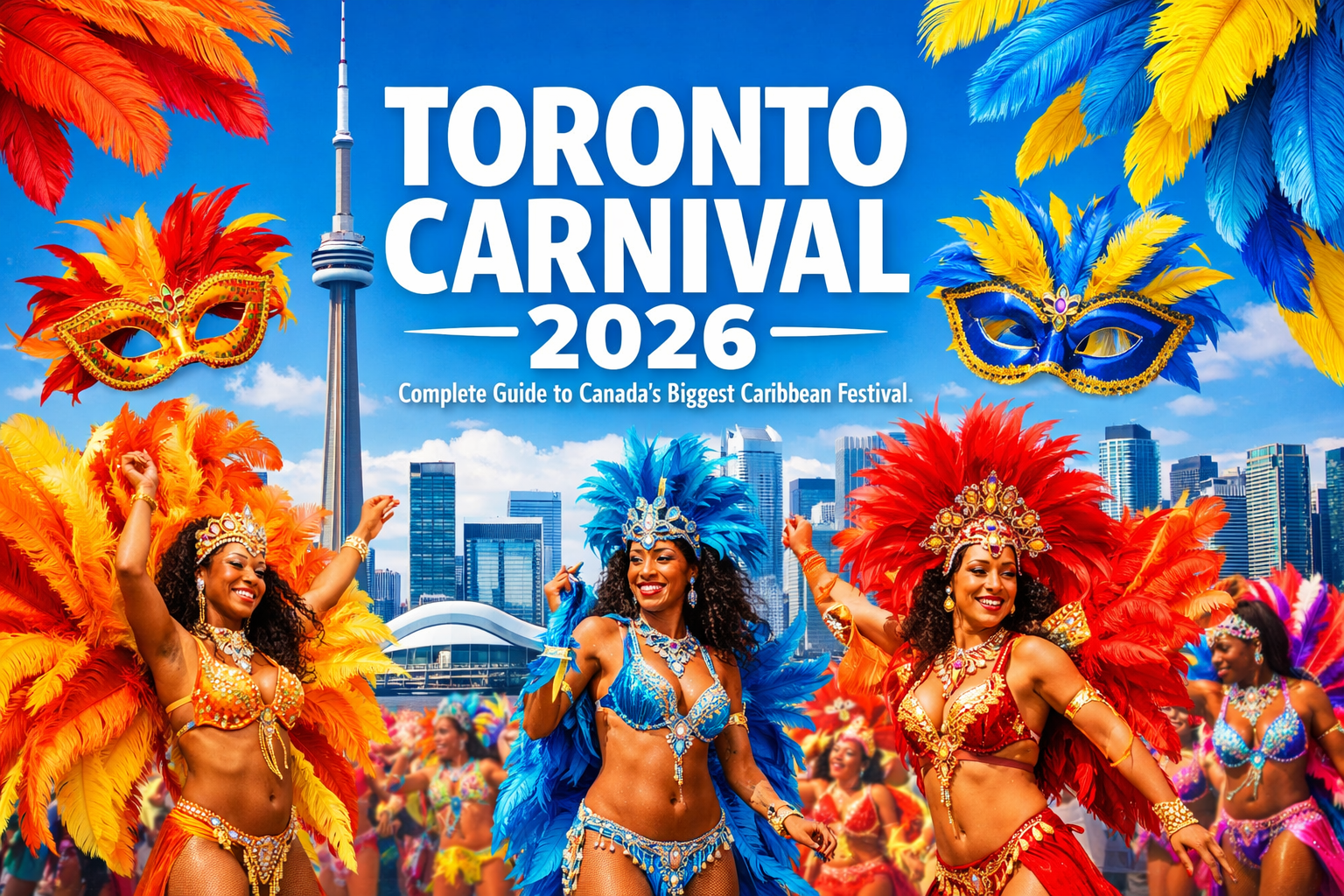
• Toronto Carnival 2026 takes place August 1-3, 2026, featuring the Grand Parade on Saturday along the Lakeshore Boulevard
• Registration opens in early 2026 with costume prices ranging from $200-$800 depending on the band and section
• Accommodation booking should begin 6-8 months in advance as hotels fill up quickly during carnival weekend
• The festival includes multiple events: King & Queen competition, Panorama steel band competition, J’Ouvert morning celebration, and numerous fetes
• Budget planning is essential – expect to spend $1,500-$3,000 total including costume, accommodation, food, and entertainment for the full carnival experience
1. CARNIVAL BASICS
1.1 What is Toronto Caribbean Carnival
Toronto Caribbean Carnival represents the largest celebration of Caribbean culture in North America, deeply rooted in traditions that trace back to 18th-century Trinidad and Tobago. This magnificent festival emerged from the ancient practice of masquerade, where enslaved Africans used elaborate costumes and celebrations to preserve their cultural identity while adapting to colonial restrictions.
The cultural significance of Toronto Carnival extends far beyond entertainment – it serves as a powerful platform for cultural preservation, community building, and economic empowerment within the Caribbean diaspora. Since its inception in 1967 as Caribana, the festival has evolved into a sophisticated cultural showcase that honors traditional mas-making techniques while embracing contemporary artistic innovation.
Evolution from the 1960s to present shows remarkable growth. What began as a small community celebration during Canada’s Centennial year has transformed into an internationally recognized festival. The event weathered various organizational changes, including a significant rebranding in 2006 to Toronto Caribbean Carnival, while maintaining its core mission of celebrating Caribbean heritage.
While UNESCO recognition hasn’t been formally granted to Toronto’s version, the festival draws inspiration from Trinidad’s Carnival, which UNESCO acknowledges as a Masterpiece of Oral and Intangible Heritage of Humanity. This connection reinforces the authentic cultural foundations that make Toronto Carnival so special.
Compared to other carnivals worldwide, Toronto Carnival ranks among the top five, alongside Rio de Janeiro, Trinidad, Notting Hill, and New Orleans. What sets Toronto apart is its unique blend of authentic Caribbean traditions with Canadian multiculturalism, creating an inclusive celebration that welcomes participants from all backgrounds.
1.2 When is Carnival
Toronto Carnival 2026 is scheduled for August 1-3, 2026, following the traditional Civic Holiday weekend timing that has made this festival a cornerstone of Toronto’s summer calendar. Unlike Trinidad’s pre-Lenten carnival, Toronto’s timing allows for perfect summer weather and aligns with tourist season.
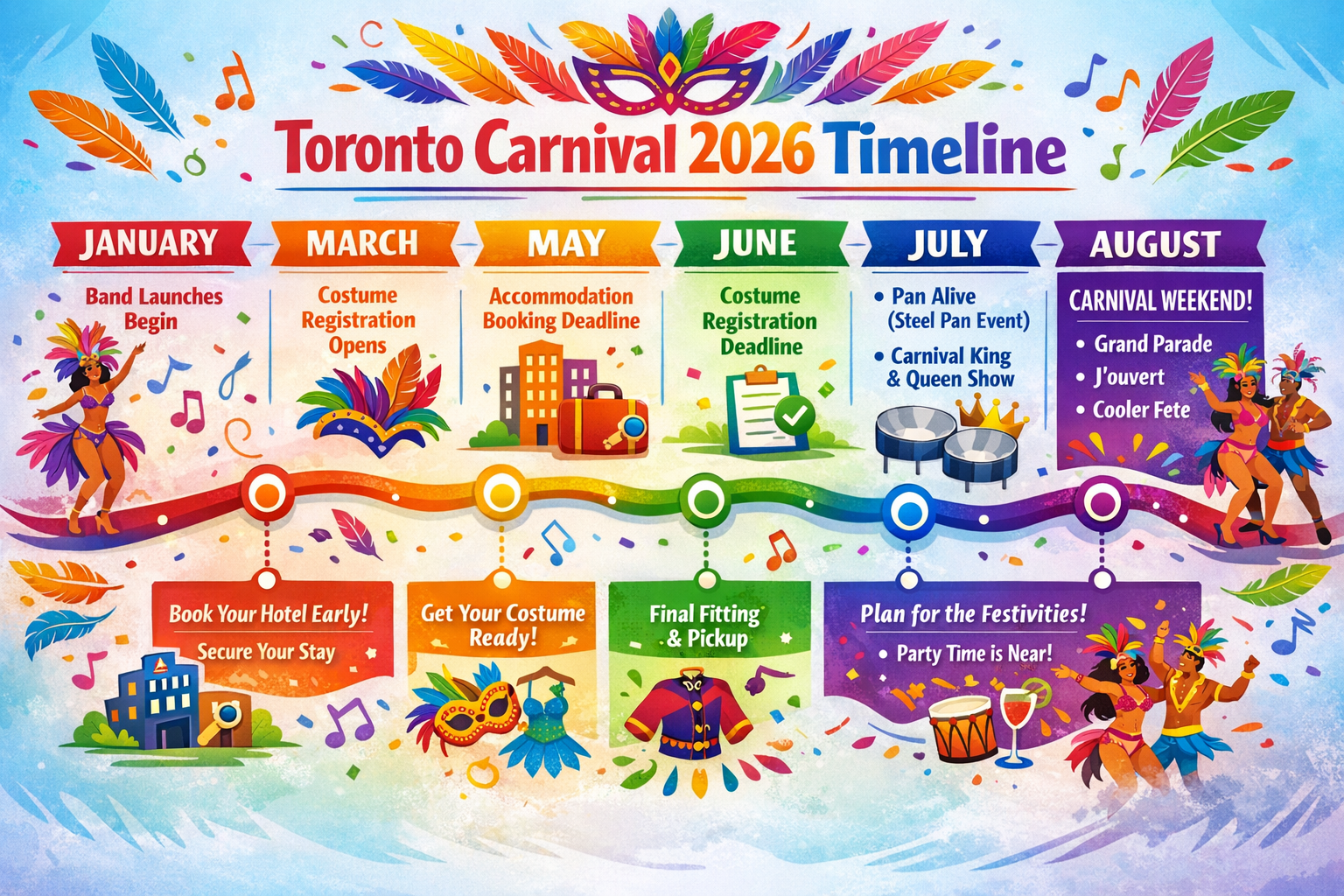
The carnival calendar and countdown typically begins in January with band launches, where mas bands reveal their themes and costume designs. Registration opens in February-March, with early bird pricing encouraging prompt bookings. Costume fittings occur in June-July, building excitement toward the main event.
Best time to visit Toronto for carnival is the entire week leading up to the main parade. Many visitors arrive on Wednesday or Thursday to attend pre-carnival fetes and cultural events, maximizing their carnival experience while exploring Toronto’s diverse neighborhoods and attractions.
The duration of festivities officially spans three days, but carnival enthusiasts know the celebration extends throughout the week with various parties, cultural exhibitions, and community events scattered across the Greater Toronto Area.
1.3 Carnival Season Timeline
Post-Christmas activities begin the carnival year with band meetings and theme development. January brings band launches at venues across Toronto, where mas bands unveil their creative visions for the upcoming carnival through elaborate presentations featuring music, dance, and costume previews.
Friday night kicks off the weekend with J’Ouvert, a dawn celebration featuring mud, paint, powder, and pure liberation. This traditional opening ceremony allows revelers to abandon inhibitions and embrace the primal joy of carnival in its most authentic form.
Carnival Saturday features the spectacular Grand Parade along Lakeshore Boulevard, where thousands of masqueraders showcase months of preparation in a dazzling display of creativity, craftsmanship, and cultural pride that stretches for miles along Toronto’s waterfront.
2. CARNIVAL EVENTS & ACTIVITIES
2.1 Major Events
J’Ouvert Morning Celebration begins at 4:00 AM on Saturday, transforming Exhibition Place into a playground of liberation where participants cover themselves in mud, paint, and powder while dancing to traditional percussion and brass bands. What to expect: an authentic carnival experience that strips away pretense and celebrates pure joy. Safety tips include wearing old clothes, bringing waterproof phone protection, staying hydrated, and traveling in groups.
King & Queen Competition represents the pinnacle of carnival artistry, where designers create massive, elaborate costumes that tell stories through movement and visual spectacle. The preliminaries occur on Thursday evening, semifinals on Friday, and the finals on Saturday night at the CNE Bandshell. Where to watch: VIP seating offers the best views, while general admission provides an authentic carnival atmosphere. Tickets range from $25-$150.
Panorama Steel Band Competition showcases the musical heart of carnival, with steel orchestras competing in categories from small bands to large orchestras. The competition occurs on Friday evening, featuring both traditional calypso arrangements and contemporary soca compositions that demonstrate the evolution of this uniquely Caribbean art form.
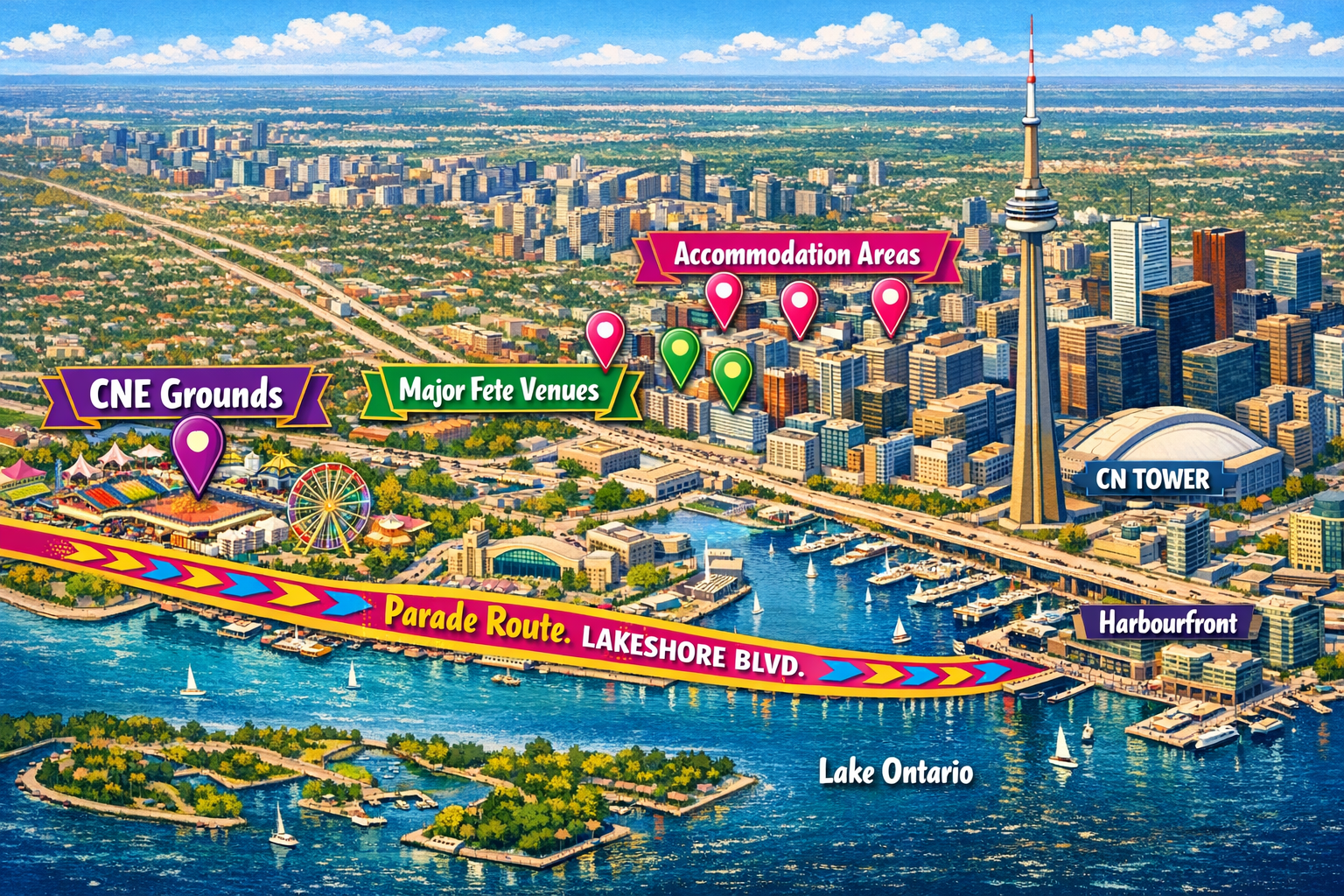
Mas Bands on the Road form the centerpiece of carnival weekend. Saturday’s Grand Parade features the main competition with bands presenting their full artistic vision along the judging route. Bands are evaluated on costume design, presentation, musical accompaniment, and overall impact at multiple judging points along Lakeshore Boulevard. The parade route stretches from Exhibition Place to Marilyn Bell Park, offering spectacular waterfront views.
2.2 Competitions
Calypso and Soca Monarch competitions celebrate the musical foundations of carnival culture. These events typically occur during the weeks leading up to carnival weekend at venues like the Phoenix Concert Theatre or Danforth Music Hall. Performers compete with original compositions that often address social issues, celebrate Caribbean culture, or simply aim to create the perfect party anthem.
Junior Carnival provides opportunities for young participants to experience carnival culture in age-appropriate ways. Categories include toddlers (2-4 years), children (5-9 years), juniors (10-13 years), and teens (14-17 years). These competitions emphasize creativity, cultural education, and family participation while maintaining the artistic standards of adult carnival.
Traditional Character competitions honor historical carnival figures like Midnight Robber, Dame Lorraine, and Sailor Mas. These categories preserve important cultural narratives and provide alternatives to contemporary pretty mas, ensuring carnival’s historical roots remain visible and celebrated.
2.3 Pre-Carnival Parties
Fetes (carnival parties) begin weeks before the main event, featuring top soca artists, DJs, and cultural performers. Major fetes include all-inclusive events with premium drinks and food, while smaller parties offer intimate settings for dancing and socializing. Private vs public events vary in scale and exclusivity, with some requiring connections within the carnival community while others welcome all participants.
Band launches serve dual purposes as promotional events and community gatherings where potential masqueraders can meet band leaders, see costume prototypes, and understand each band’s vision for the upcoming carnival. These events often feature live entertainment, Caribbean cuisine, and early registration incentives.
3. MUSIC & CULTURE
3.1 Music Genres
Soca music forms the rhythmic backbone of Toronto Carnival, evolving from traditional calypso to incorporate modern production techniques, international influences, and contemporary themes. History and evolution trace from 1970s Trinidad through the diaspora to Toronto’s vibrant soca scene, which now produces internationally recognized artists and contributes to the genre’s global expansion.
Calypso maintains its position as carnival’s storytelling tradition, with lyrics that address social commentary, political satire, and cultural celebration. Toronto’s calypso scene includes both traditional performers and contemporary artists who adapt classic forms for modern audiences while preserving the genre’s essential narrative function.
Steel pan music represents one of the 20th century’s most significant musical innovations, transforming discarded oil drums into sophisticated instruments capable of complex harmonies and intricate arrangements. Toronto hosts several steel orchestras that perform year-round, maintaining this crucial element of Caribbean musical culture.
Chutney music reflects the Indo-Caribbean contribution to carnival culture, blending traditional Indian musical elements with Caribbean rhythms to create a unique sound that celebrates the diversity within Caribbean communities.
3.2 Dance & Movement
Carnival dance encompasses traditional movements like “wining” (rhythmic hip movements), “jumping” (energetic bouncing), and “chipping” (the steady forward movement during parade). These movements serve both cultural and practical purposes, allowing masqueraders to maintain energy throughout long parade routes while expressing the music’s rhythmic complexity.
Traditional characters each have distinctive movement styles that tell specific stories. The Midnight Robber’s theatrical gestures, the Dame Lorraine’s exaggerated feminine movements, and the Sailor’s disciplined formations all contribute to carnival’s rich performance vocabulary.
Contemporary dance fusion incorporates elements from dancehall, soca, and international dance trends while maintaining connection to traditional carnival movement. This evolution ensures carnival remains relevant to younger generations while honoring its cultural foundations.
4. MASQUERADE BANDS
4.1 Choosing a Band
Large bands vs small bands offer different carnival experiences. Large bands like Saldenah, Tribal Carnival, and Toronto Revellers provide extensive infrastructure, multiple costume sections, professional organization, and comprehensive support services. Small bands offer intimate community experiences, personalized attention, unique artistic visions, and often more affordable pricing.
Band reputation and reviews should guide selection decisions. Research previous years’ costumes, read participant testimonials, examine social media presence, and attend band launches to assess organizational quality. Established bands typically provide more reliable experiences, while newer bands may offer innovative approaches and competitive pricing.
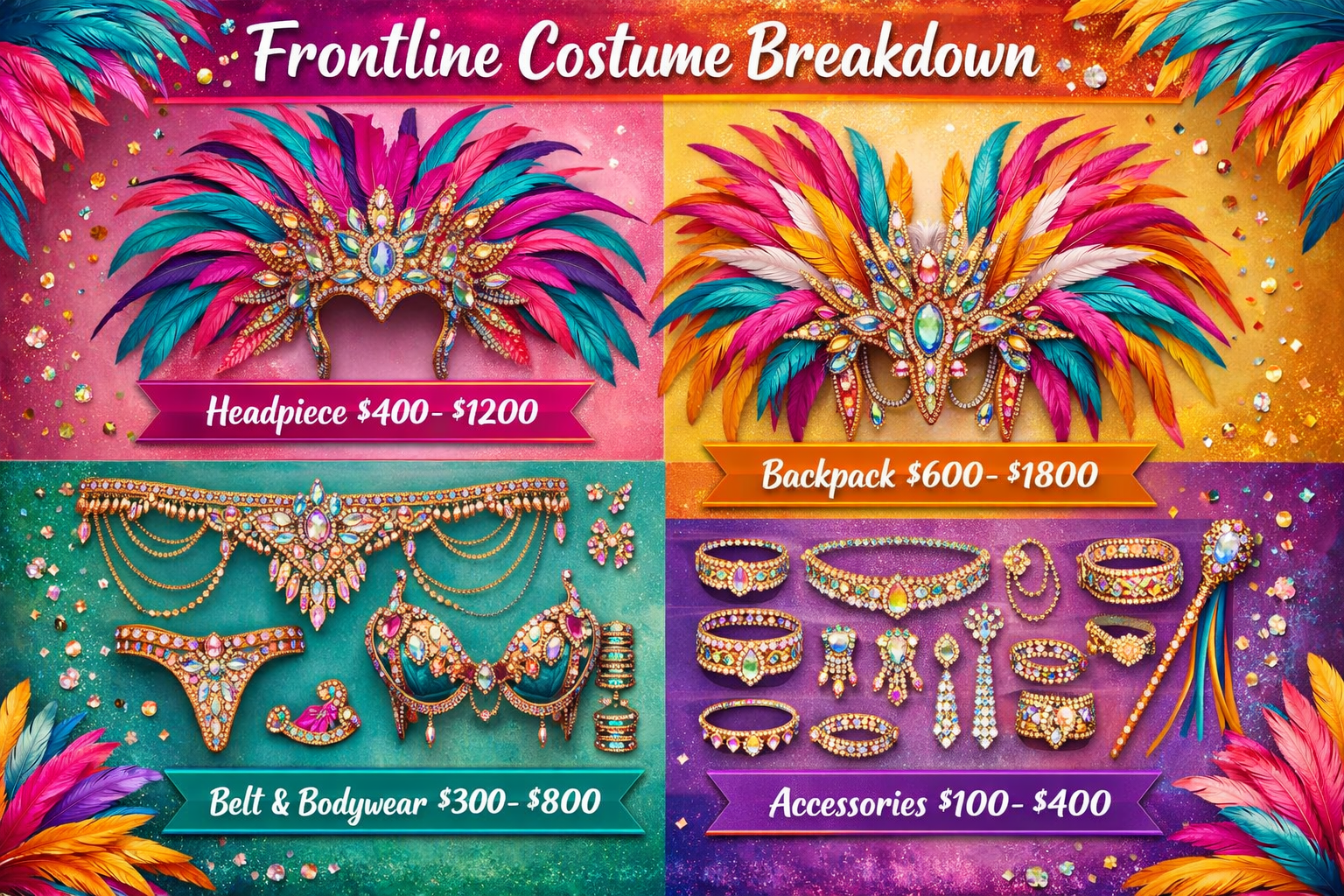
Price ranges vary significantly based on band size, costume complexity, and included services. Budget options start around $200 for basic backline costumes, while frontline pieces in premium bands can exceed $800. Mid-range options ($300-$500) often provide the best balance of quality and value.
Costume sections within bands allow participants to choose their preferred level of coverage, embellishment, and price point. Frontline features the most elaborate costumes with extensive feathers, beading, and accessories. Backline offers simpler designs at lower prices. Male sections provide masculine interpretations of band themes with appropriate coverage and styling.
4.2 Registration Process
Early bird specials typically offer 10-20% discounts for registrations completed before specific deadlines, usually in March or April. These savings can be substantial, making early commitment financially advantageous for budget-conscious participants.
Payment plans accommodate various financial situations, with most bands accepting deposits ($100-$200) followed by monthly installments leading up to carnival weekend. Some bands offer extended payment terms for loyal returning customers or early registrants.
Registration requirements include completed forms, photo identification, accurate measurements, emergency contact information, and signed liability waivers. International participants may need additional documentation depending on their country of origin.
4.3 Band Services
Costume fittings occur in June and July, allowing time for adjustments and ensuring proper fit for parade day. Professional bands provide multiple fitting sessions and on-site alterations to guarantee customer satisfaction.
Parade day support includes security, water stations, bathroom facilities, first aid, and professional photographers. Premium bands may provide breakfast, lunch, and post-parade celebrations as part of their service packages.
Band trucks and music provide mobile entertainment centers featuring live DJs, sound systems, and sometimes live performers. These trucks serve as focal points for band energy and ensure continuous musical motivation throughout the parade route.
4.4 Alternative Mas
Individual mas allows creative participants to design and create their own costumes, competing in various categories based on traditional characters or original concepts. This option appeals to experienced carnival participants with artistic skills and cultural knowledge.
Small bands (under 100 members) offer intimate community experiences with personalized attention, unique themes, and often more affordable pricing. These bands frequently focus on specific cultural traditions or innovative artistic concepts.
Traditional character bands preserve historical carnival figures and narratives, providing educational and cultural value while maintaining connections to carnival’s roots. These bands often welcome newcomers interested in learning about carnival’s deeper cultural significance.
Historical presentations recreate specific periods or events in Caribbean history, combining education with entertainment while honoring the ancestors and experiences that shaped Caribbean culture.
5. COSTUMES
5.1 Costume Selection
Costume sections within bands cater to different preferences and budgets. Frontline costumes feature maximum embellishment with extensive feathers, intricate beadwork, elaborate headpieces, and premium materials. Backline options provide simpler designs with basic accessories at more affordable prices. VIP sections may include additional services like private changing areas, exclusive refreshments, and enhanced parade day support.
Male vs female costumes reflect different aesthetic approaches and cultural expectations. Female costumes typically feature bikini-style tops with decorative belts, elaborate headpieces, and optional leg pieces. Male costumes include decorated shorts or brief-style bottoms with coordinating accessories, chest pieces, and headgear designed for masculine presentation.
Sizing and fitting require accurate measurements and professional guidance. Most bands provide detailed measurement guides and offer multiple fitting sessions to ensure proper fit. Custom alterations accommodate individual body types and preferences, ensuring comfort during long parade hours.
Price ranges ($200-$800+) reflect costume complexity, materials quality, and included services. Budget-conscious participants can find attractive options in the $200-$400 range, while premium costumes with extensive feathers and beading command higher prices. Limited edition or designer pieces may exceed $1000.
Costume reveal season creates anticipation and excitement as bands unveil their artistic visions through professional photoshoots, launch events, and social media campaigns. These reveals help potential masqueraders visualize themselves in different sections and make informed choices.
5.2 Costume Elements
Headpieces serve as costume focal points, ranging from simple feathered bands to elaborate architectural structures. Quality headpieces use lightweight materials and secure attachment systems to ensure comfort and stability during hours of dancing and movement.
Backpacks/back pieces create dramatic silhouettes and visual impact, often featuring the band’s theme through symbolic elements, color schemes, and artistic interpretation. These pieces require careful engineering to balance visual impact with wearability.
Belts and leg pieces define costume proportions and provide opportunities for intricate beadwork, sequin applications, and decorative elements. Well-designed pieces enhance body lines while remaining secure during active movement.
Bras and bodywear form costume foundations, requiring proper fit, adequate support, and secure attachment points for decorative elements. Professional costume makers prioritize comfort and durability alongside aesthetic appeal.
Monokinis vs bikinis offer different coverage options and styling approaches. Monokinis provide connected top-and-bottom designs, while traditional bikinis allow mix-and-match flexibility and easier bathroom access during long parade days.
Embellishments and materials distinguish quality costumes from basic versions. Premium pieces feature genuine crystals, quality feathers, durable sequins, and professional-grade adhesives that maintain their appearance throughout carnival weekend.
Feathers, beads, and crystals require careful selection and application to achieve desired visual effects while maintaining durability. Quality materials resist weather, movement, and extended wear while providing maximum visual impact.
5.3 Costume Preparation
Fittings and alterations ensure optimal fit and comfort for parade day performance. Professional bands schedule multiple fitting sessions and provide on-site alterations to accommodate individual body types and preferences.
Customization options allow personal expression within band themes. Many bands accommodate special requests for additional embellishments, modified coverage, or personalized elements that enhance individual satisfaction.
Costume collection typically occurs the week before carnival, allowing final fittings and last-minute adjustments. Organized bands provide efficient collection systems that minimize wait times and ensure all components are included.
What to bring on the road includes backup adhesives, safety pins, baby wipes, towels, and protective coverings for costume transportation. Experienced masqueraders prepare emergency repair kits for minor costume issues.
Costume care and storage preserve investment and maintain appearance throughout carnival weekend. Proper storage prevents damage, while careful handling during transport ensures costumes arrive in perfect condition.
6. PLANNING YOUR CARNIVAL
6.1 When to Book
Costume sales timeline follows predictable patterns, with band launches in January-February, registration opening in March-April, and early bird deadlines in May-June. Popular bands and premium sections sell out quickly, making early registration essential for desired choices.
Accommodation booking should begin 6-8 months in advance as Toronto hotels recognize carnival’s economic impact and adjust pricing accordingly. Downtown hotels, especially those near the waterfront, book solid during carnival weekend.
Flight booking benefits from early planning, particularly for international visitors. Summer flights to Toronto peak during carnival weekend, making advance booking crucial for reasonable pricing and preferred schedules.
Fete ticket purchasing begins months before carnival weekend, with popular events selling out quickly. VIP packages and all-inclusive events command premium prices but provide enhanced experiences with better access and amenities.
6.2 Budgeting
Costume costs represent the largest single expense, ranging from $200-$800+ depending on band choice and section selection. Additional costs include alterations, accessories, and costume care products.
Accommodation costs vary dramatically based on location, timing, and booking strategy. Budget options like hostels or shared accommodations start around $50/night, while luxury hotels can exceed $300/night during carnival weekend.
Fete tickets range from $40 for smaller events to $150+ for premium all-inclusive parties featuring international artists. Most carnival enthusiasts attend 3-5 fetes during carnival week, budgeting $300-$500 for entertainment.
Food and drinks costs depend on dining choices and carnival participation level. Street food and casual dining offer budget-friendly options, while fine dining and premium venues command higher prices.
Transportation includes flights, airport transfers, and local transportation during carnival week. Public transit provides economical options, while rideshare services offer convenience at premium prices.
Total estimated budget for carnival weekend ranges from $1,500-$3,000 per person, including costume, accommodation, food, entertainment, and transportation. Luxury experiences can exceed $5,000, while budget-conscious planning can reduce costs to under $1,000.
Money-saving tips include early booking discounts, shared accommodations, home-cooked meals, public transportation, and selective fete attendance. Group bookings often provide additional savings opportunities.
6.3 Travel Logistics
Visa requirements vary by nationality, with most visitors requiring valid passports and potentially electronic travel authorizations (eTA) for air travel to Canada. Processing times vary, making early application essential.
Flights to Toronto Pearson International Airport provide the primary entry point, with extensive international connections and ground transportation options. Billy Bishop Toronto City Airport offers convenient downtown access for regional flights.
Airport transfers include public transit (UP Express), taxis, rideshare services, and hotel shuttles. The UP Express provides efficient, economical transportation between Pearson Airport and downtown Toronto in 25 minutes.
Currency and payments use Canadian dollars, with widespread credit card acceptance and numerous ATM locations. Currency exchange services operate at airports, banks, and dedicated exchange locations throughout the city.
Travel insurance protects against medical emergencies, trip cancellations, and lost luggage. Comprehensive coverage provides peace of mind for international visitors unfamiliar with Canadian healthcare systems.
6.4 Accommodation
Hotels in downtown Toronto provide convenient access to carnival events, restaurants, and attractions. Premium properties like the Fairmont Royal York, Shangri-La Toronto, and The Ritz-Carlton offer luxury amenities at corresponding prices.
Airbnb options provide alternative accommodations with kitchen facilities, group-friendly layouts, and often more economical pricing for extended stays. Popular neighborhoods include Entertainment District, Harbourfront, and King West.
Areas to stay should consider proximity to carnival events, public transportation access, and personal safety preferences. Downtown core provides maximum convenience, while suburban areas offer potential cost savings with longer commute times.
Safety considerations include researching neighborhood characteristics, securing valuables, using licensed transportation, and maintaining awareness of surroundings. Toronto maintains excellent safety standards, but basic precautions remain advisable.
Proximity to events affects convenience and costs. Waterfront hotels provide walking access to parade routes, while downtown properties offer easy access to fetes and cultural events throughout carnival week.
7. WHAT TO PACK & WEAR
7.1 Carnival Day Essentials
Comfortable shoes/sneakers rank as the most critical carnival investment. Quality athletic shoes with excellent support, cushioning, and breathability prevent foot pain during 6-8 hours of continuous dancing and walking. Many experienced masqueraders invest in premium running shoes specifically for carnival.
Athletic/dance wear under costume provides foundation support and prevents chafing during extended movement. Moisture-wicking fabrics, seamless construction, and proper fit ensure comfort throughout parade day. Sports bras for women and compression shorts for men offer essential support.
Hydration pack/water bottle maintains essential fluid intake during physically demanding parade participation. Hands-free hydration systems allow continuous dancing while ensuring adequate water consumption in summer heat.
Sunscreen (waterproof) protects exposed skin during outdoor parade activities. SPF 30+ waterproof formulations resist sweat and maintain protection throughout the day. Reapplication every 2-3 hours ensures continued effectiveness.
Portable phone charger maintains communication and photography capabilities throughout long carnival days. High-capacity battery packs or solar chargers provide multiple device charges when electrical access is unavailable.
Waterproof phone case/pouch protects expensive electronics from sweat, rain, and accidental spills while maintaining touch screen functionality and camera access for capturing carnival memories.
Small backpack or fanny pack carries essentials without interfering with costume elements or dance movements. Waterproof materials and secure closures protect contents while maintaining easy access.
Cash and cards provide payment flexibility for food, drinks, and emergency purchases. Small denominations facilitate quick transactions with street vendors and service providers.
7.2 Weather Preparedness
Sun protection extends beyond sunscreen to include hats, sunglasses, and UV-protective clothing for non-costume hours. Toronto’s summer sun can be intense, particularly during extended outdoor exposure.
Rain gear prepares for potential weather changes during outdoor events. Lightweight, packable rain jackets or ponchos provide protection without adding significant weight or bulk to carnival preparations.
Layered clothing accommodates temperature variations between early morning J’Ouvert celebrations and afternoon parade activities. Lightweight, removable layers provide flexibility for changing conditions.
7.3 Fete Attire
Festival wear for carnival parties emphasizes comfort, style, and cultural appropriateness. Bright colors, flowing fabrics, and Caribbean-inspired patterns celebrate carnival aesthetics while ensuring dance floor comfort.
Comfortable dancing shoes for fete attendance prioritize support and breathability over fashion. Quality sneakers or dance shoes prevent foot fatigue during hours of soca dancing and energetic movement.
Light, breathable clothing suits Toronto’s summer climate and crowded party venues. Natural fibers or moisture-wicking synthetics maintain comfort in warm, humid conditions typical of popular fetes.
Themed outfits when required demonstrate respect for specific party concepts and enhance overall experience. Some fetes request white clothing, vintage themes, or specific color schemes that add to event atmosphere.
8. FOOD & DRINK
8.1 Carnival Food
Road-side snacks provide convenient energy during parade participation. Popular options include doubles (curried chickpea sandwiches), bake and shark (fried bread with fish), corn soup, and snow cones that offer quick nutrition and authentic Caribbean flavors.
Traditional Caribbean dishes available throughout carnival week include roti (curry-filled flatbread), jerk chicken, rice and peas, curry goat, and oxtail stew. These hearty meals provide sustenance for energy-intensive carnival activities.
Where to eat during carnival includes dedicated food vendors along parade routes, Caribbean restaurants throughout Toronto, and band-provided catering for registered masqueraders. Popular areas include Kensington Market, Little Jamaica (Eglinton West), and various festival food courts.
Street food safety requires attention to vendor cleanliness, food temperature, and preparation methods. Established vendors with high turnover typically offer safer options than temporary setups with questionable storage practices.
8.2 Drinks
Rum and cocktails represent essential carnival beverages, with rum punch, painkiller, bahama mama, and piña colada providing tropical flavors and cultural authenticity. Many bands provide complimentary drinks for registered members.
Local beers include Red Stripe (Jamaican), Carib (Trinidadian), and Canadian options like Molson and Labatt’s. Light beers suit extended outdoor consumption in summer heat.
Staying hydrated requires balancing alcohol consumption with adequate water intake. The combination of physical activity, summer heat, and alcohol can lead to dangerous dehydration without proper precautions.
Cooler system on the road provides bands with mobile refreshment stations featuring ice, water, sports drinks, and alcoholic beverages for registered members. These systems ensure continuous hydration access throughout parade routes.
8.3 Restaurants & Cuisine
Caribbean restaurants in Toronto offer authentic cuisine throughout carnival week. Recommended establishments include Bacchus Roti, Rap’s Restaurant, Real Jerk, and Allwyn’s Bakery for traditional dishes and cultural atmosphere.
Fine dining options incorporate Caribbean influences into upscale presentations. Restaurants like The Chase, Canoe, and Alo may feature special carnival-themed menus or Caribbean-inspired dishes during festival week.
Food delivery services provide convenient meal options for exhausted carnival participants. Apps like UberEats, DoorDash, and SkipTheDishes offer extensive restaurant selection and hotel delivery for recovery meals.
9. SAFETY & TIPS
9.1 Safety Guidelines
Travel in groups provides security and support during carnival activities. Large crowds, unfamiliar locations, and celebration atmosphere can create vulnerability that group travel mitigates through shared awareness and mutual assistance.
Keep valuables secure through strategic planning and minimal carrying. Leave expensive jewelry, electronics, and documents in hotel safes, carrying only essential items in secure, concealed storage.
Be aware of surroundings despite carnival’s festive atmosphere. Large crowds can mask criminal activity, making constant awareness essential for personal security and emergency response.
Emergency contacts should include local police (911), band leaders, hotel information, and emergency medical services. Program important numbers into phones and carry written backup copies.
Authorized taxi services provide safer transportation than unlicensed vehicles. Use official taxi companies, rideshare apps, or hotel-arranged transportation rather than accepting rides from strangers.
Avoiding dangerous areas requires local knowledge and common sense. Research neighborhood safety, avoid isolated areas after dark, and follow local advice about areas to avoid during carnival week.
9.2 Health Considerations
Staying hydrated becomes critical during physically demanding carnival participation in summer heat. Drink water regularly, monitor urine color for hydration status, and recognize dehydration symptoms like dizziness, fatigue, and headaches.
Sun protection prevents painful burns and long-term skin damage during extended outdoor exposure. Apply sunscreen generously, reapply frequently, and seek shade during peak sun hours when possible.
Foot care and blisters require preventive measures and prompt treatment. Quality shoes, moisture-wicking socks, and blister prevention products protect feet during hours of dancing and walking on pavement.
Stamina and rest planning prevents exhaustion and injury during multi-day celebration. Schedule rest periods, maintain regular meal times, and listen to body signals that indicate need for recovery.
Medical facilities in Toronto provide excellent care for emergencies or health issues. Toronto General Hospital, St. Michael’s Hospital, and numerous walk-in clinics offer various levels of medical care.
Prescription medications require adequate supply and proper storage during travel. Carry medications in original containers with prescriptions, and research pharmacy locations for emergency refills.
9.3 First-Timer Tips
Start with smaller fetes to understand carnival culture and build stamina gradually. Large events can overwhelm newcomers, while smaller parties provide manageable introduction to carnival energy and expectations.
Pace yourself throughout carnival week to maintain energy and enjoyment. The temptation to attend every event can lead to exhaustion that diminishes overall experience quality.
Make friends with locals who provide insider knowledge, cultural context, and enhanced safety through community connections. Carnival culture emphasizes inclusion and friendship with newcomers.
Join band WhatsApp groups for real-time updates, community support, and practical information sharing. These groups provide valuable resources for navigation, meeting points, and emergency communication.
Download band apps for schedules, maps, announcements, and member services. Technology integration enhances carnival experience through improved organization and communication.
Study parade routes to understand timing, logistics, and optimal viewing locations. Familiarity with routes helps plan meeting points, rest stops, and emergency exits.
10. TORONTO CARNIVAL HISTORY
10.1 Origins and Evolution
Toronto Caribbean Carnival began in 1967 as Caribana, coinciding with Canada’s Centennial celebrations and reflecting the growing Caribbean immigrant population in Toronto. The festival emerged from community desire to share Caribbean culture while celebrating Canadian diversity and inclusion.
Founding members included dedicated community leaders like Charles Roach, Jules Elder, and Lennox Farrell who recognized carnival’s potential for cultural preservation, economic development, and community building within Toronto’s emerging Caribbean diaspora.
Early challenges included limited funding, organizational inexperience, weather concerns, and skepticism from both Caribbean traditionalists and Canadian authorities. Despite these obstacles, community determination and cultural pride drove continued growth and development.
Organizational changes throughout the decades reflect evolving community needs, financial pressures, and governance challenges. Various incarnations including the Caribbean Cultural Committee, Caribana Arts Group, and current Toronto Caribbean Carnival organization demonstrate ongoing commitment to festival sustainability.
Cultural impact extends beyond entertainment to influence Toronto’s identity as a multicultural metropolis. The festival has introduced Caribbean culture to mainstream Canadian society while providing economic opportunities and cultural pride for Caribbean communities.
10.2 Significant Milestones
1970s expansion saw growing attendance, increased media coverage, and recognition from tourism authorities who began promoting carnival as a major summer attraction. This period established carnival’s economic importance and cultural legitimacy.
1980s international recognition brought Caribbean artists, increased sponsorship, and tourism partnerships that elevated Toronto Carnival’s profile within global carnival circuits. International participation enhanced authenticity and cultural exchange.
1990s challenges included financial difficulties, organizational disputes, and weather-related cancellations that tested community resilience and commitment. These challenges led to structural improvements and better contingency planning.
2000s revitalization featured rebranding efforts, improved organization, enhanced safety measures, and renewed community support that restored carnival’s position as Toronto’s premier summer festival.
2010s modernization incorporated social media, mobile technology, improved logistics, and expanded programming that attracted younger participants while maintaining cultural authenticity and traditional elements.
10.3 Cultural Legacy
Community building through carnival participation has strengthened Caribbean identity in Toronto while fostering connections across different Caribbean islands and cultural backgrounds. The festival serves as an annual reunion for diaspora communities.
Economic development provides opportunities for artists, designers, musicians, food vendors, and service providers who depend on carnival for significant annual income. The festival generates millions in economic activity throughout the Greater Toronto Area.
Cultural preservation maintains traditional mas-making techniques, musical forms, and cultural narratives that might otherwise disappear in diaspora communities. Young people learn cultural skills and stories through carnival participation.
Educational impact introduces non-Caribbean participants to authentic Caribbean culture, history, and artistic traditions. Schools, community groups, and cultural organizations use carnival as educational opportunities.
Political significance demonstrates Caribbean community organization, economic contribution, and cultural value within Canadian multiculturalism. The festival serves as a platform for community advocacy and political engagement.
11. PHOTOGRAPHY & MEDIA
11.1 Photography Tips
Best spots for photos include the CNE grounds during band assembly, Lakeshore Boulevard judging points, and Marilyn Bell Park for waterfront backdrops. Early morning light provides optimal conditions for costume photography before crowds intensify.
Hiring a photographer offers professional documentation of carnival experience. Many photographers specialize in carnival coverage, understanding costume elements, cultural significance, and optimal shooting conditions for vibrant, authentic images.
Band photographers provide convenient, affordable options for individual and group photos during parade participation. These photographers understand costume details and carnival energy, producing images that capture authentic carnival spirit.
Instagram-worthy locations include the Toronto Islands skyline backdrop, Harbourfront Centre, and various downtown murals that complement carnival aesthetics. Golden hour lighting enhances feather textures and costume colors.
Drone regulations in Toronto require permits and adherence to Transport Canada guidelines. Carnival events may have specific restrictions due to crowd safety and airspace management around the waterfront area.
11.2 Social Media
Hashtags to use include #TorontoCarnival2026, #TorontoCarnival, #Caribana, #CarnivalTO, #SocaMusic, #MasqueradeLife, and band-specific tags that connect posts with broader carnival community conversations.
Following carnival updates through official accounts, band pages, and carnival influencers provides real-time information about schedule changes, weather updates, and special events throughout carnival week.
Band social media channels offer behind-the-scenes content, costume reveals, member spotlights, and community building that enhances overall carnival experience through digital engagement and connection.
Live streams and coverage allow global audiences to participate virtually while providing documentation for participants to relive carnival memories. Many bands and media outlets provide extensive live coverage.
11.3 Capturing Memories
Video highlights require planning for optimal footage including costume preparation, parade participation, and celebration moments. Action cameras and stabilizing equipment improve video quality during active participation.
GoPro recommendations include chest mounts for hands-free recording during parade participation, head mounts for first-person perspective, and handheld gimbals for smooth footage during dancing and movement.
Professional photo packages offered by bands and independent photographers provide comprehensive documentation including costume fittings, parade day coverage, and post-carnival celebrations with professional editing and delivery.
Copyright and privacy considerations affect photo sharing and commercial use. Respect other participants’ privacy preferences and understand usage rights for professional photography and videography services.
12. BEYOND CARNIVAL
12.1 Exploring Toronto
Tourist attractions complement carnival visits with diverse experiences including the CN Tower, Royal Ontario Museum, Casa Loma, and Toronto Islands. These attractions provide cultural context and relaxation opportunities between carnival events.
Neighborhoods to visit include Kensington Market for eclectic shopping and dining, Distillery District for historic charm, Queen Street West for trendy boutiques, and Little Jamaica for authentic Caribbean culture year-round.
Cultural sites such as the Art Gallery of Ontario, Harbourfront Centre, and various theaters offer sophisticated cultural experiences that complement carnival’s vibrant energy with refined artistic presentations.
Shopping opportunities range from luxury boutiques in Yorkville to vintage finds in Kensington Market. Toronto’s diverse retail landscape provides everything from high-end fashion to unique souvenirs and Caribbean specialty items.
12.2 Day Trips and Excursions
Niagara Falls offers iconic natural beauty just 90 minutes from Toronto, providing spectacular scenery and tourist attractions that create memorable additions to carnival visits. Various tour operators provide convenient transportation and guided experiences.
Muskoka region provides cottage country experiences with lakes, forests, and recreational activities that offer peaceful contrast to carnival’s urban energy. Summer resorts and vacation rentals accommodate various group sizes and preferences.
Wine country in the Niagara region features world-class wineries, scenic vineyards, and gourmet dining that create sophisticated experiences for carnival visitors seeking refined relaxation and cultural exploration.
12.3 Post-Carnival Activities
Recovery and relaxation options include spa services, beach access at the Toronto Islands, and peaceful parks throughout the city that provide restoration after intensive carnival participation.
Hiking and nature experiences at the Scarborough Bluffs, High Park, and various conservation areas offer outdoor recreation and natural beauty that complement urban carnival experiences with peaceful natural settings.
Cultural sites provide educational and enriching experiences that deepen understanding of Canadian culture, history, and artistic achievements beyond carnival’s specific cultural focus.
Relaxation and recovery facilities including spas, wellness centers, and recreational facilities help carnival participants restore energy and process experiences before returning to regular routines.
13. CARNIVAL INDUSTRY
13.1 Costume Design and Production
How costumes are made involves months of planning, design development, material sourcing, and skilled craftsmanship that transforms creative visions into wearable art. The process begins with theme development and artistic concepts that guide all design decisions.
Designers and builders combine artistic vision with technical expertise to create costumes that balance visual impact with wearability, durability, and comfort. Many designers train in traditional techniques while incorporating modern materials and construction methods.
Innovation in carnival includes LED lighting, lightweight materials, improved attachment systems, and sustainable production methods that enhance costume quality while addressing practical concerns about comfort, durability, and environmental impact.
Traditional techniques preserve cultural knowledge and artistic skills passed down through generations. Wire bending, feather work, beading, and fabric manipulation require specialized training and cultural understanding.
13.2 Economic Impact
Tourism statistics demonstrate carnival’s significant economic contribution, with over 1.3 million visitors generating more than $400 million in economic activity throughout the Greater Toronto Area during carnival weekend.
Industry size encompasses costume production, event management, hospitality services, transportation, food service, and entertainment that collectively support hundreds of businesses and thousands of jobs.
Employment opportunities include seasonal work in costume production, event management, security, food service, and transportation that provide income for diverse community members throughout the carnival supply chain.
Sponsorships from major corporations recognize carnival’s marketing value and community impact, providing essential funding for event production, safety services, and cultural programming that ensure festival sustainability.
13.3 Carnival Arts
Wire bending creates costume frameworks that support elaborate decorative elements while maintaining lightweight, flexible structures that accommodate movement and dance throughout long parade participation.
Costume design balances artistic vision with practical requirements including comfort, durability, weather resistance, and cultural authenticity that honor carnival traditions while embracing contemporary innovation.
Makeup artists (MUA) provide specialized services including body painting, glitter application, and creative makeup that enhance costume presentations and create cohesive artistic visions for individual participants and entire bands.
Body painting offers artistic expression and practical coverage that complements costume elements while providing creative opportunities for personal expression and artistic collaboration between artists and participants.
14. FAMILY CARNIVAL
14.1 Kiddies Carnival
Age groups and categories accommodate children from toddlers through teenagers with appropriate costume designs, safety considerations, and participation levels that ensure positive experiences for young carnival participants.
Children’s bands provide family-friendly environments with enhanced safety measures, age-appropriate themes, simplified costumes, and experienced supervision that prioritize child welfare and enjoyment.
Junior competitions celebrate young talent in categories including costume design, dance performance, and cultural presentation that encourage cultural learning and artistic development in supportive, age-appropriate settings.
Safety for families includes enhanced security, medical support, shorter parade routes, and family-friendly facilities that accommodate the unique needs of participants traveling with children.
14.2 Family-Friendly Options
Daytime events provide carnival experiences without late-night party atmospheres, allowing families to enjoy carnival culture while maintaining appropriate schedules and environments for children.
Family fetes offer alcohol-free or limited-alcohol events with family-appropriate music, activities, and entertainment that welcome participants of all ages in safe, inclusive environments.
Kid-friendly costumes emphasize comfort, safety, and age-appropriate coverage while maintaining carnival aesthetics and cultural authenticity that introduce children to carnival traditions.
Parade viewing spots designated for families provide safe, comfortable areas with amenities like seating, shade, and bathroom access that accommodate family needs during parade viewing.
15. SUSTAINABILITY & RESPONSIBILITY
15.1 Environmental Considerations
Costume recycling programs encourage reuse and repurposing of costume elements, reducing waste while providing affordable options for budget-conscious participants and supporting environmental sustainability.
Waste management during carnival events requires comprehensive planning for recycling, composting, and proper disposal that minimizes environmental impact while maintaining festival cleanliness and public health standards.
Eco-friendly practices include sustainable material choices, reduced packaging, digital communications, and transportation coordination that demonstrate environmental responsibility while maintaining carnival quality and cultural authenticity.
Beach and street cleanup initiatives engage carnival participants in environmental stewardship that gives back to host communities while demonstrating respect for public spaces and environmental responsibility.
15.2 Cultural Respect
Understanding traditions requires education about carnival’s historical, cultural, and spiritual significance beyond entertainment value. Respectful participation honors the ancestors and communities that created and preserved these traditions.
Respectful participation includes learning about cultural meanings, supporting authentic presentations, and avoiding appropriation while embracing the inclusive spirit that welcomes diverse participation in carnival celebration.
Supporting local businesses strengthens community economic development while ensuring authentic cultural experiences through establishments owned and operated by Caribbean community members.
Cultural appropriation awareness helps participants understand the difference between appreciation and appropriation, ensuring respectful engagement that honors cultural origins while welcoming diverse participation.
15.3 Community Impact
Supporting local artisans provides economic opportunities for skilled craftspeople while preserving traditional techniques and cultural knowledge that maintain carnival’s authentic artistic foundations.
Tipping and gratuities recognize service providers’ contributions while supporting workers who depend on carnival season income. Appropriate tipping demonstrates respect and appreciation for quality service.
Responsible tourism includes respectful behavior, cultural sensitivity, environmental awareness, and economic support for local communities that host and welcome carnival visitors.
Giving back through volunteer work, donations, or community support demonstrates appreciation for carnival experiences while contributing to festival sustainability and community development.
16. RESOURCES
16.1 Official Information
Toronto Caribbean Carnival organization provides official schedules, registration information, safety guidelines, and cultural programming through their website and social media channels.
Government websites offer travel information, visa requirements, health guidelines, and safety resources for international visitors planning carnival participation.
Tourism Toronto provides comprehensive visitor information including accommodation options, attraction recommendations, transportation guidance, and special carnival packages and promotions.
Embassy contacts assist international visitors with travel documentation, emergency services, and consular support when needed during carnival visits.
16.2 Carnival Apps & Tools
Band apps provide member services including schedules, maps, communication tools, and exclusive content that enhance carnival experience through improved organization and community connection.
Event calendars consolidate carnival-related activities including fetes, competitions, cultural events, and community activities that help participants plan comprehensive carnival experiences.
Route maps detail parade paths, timing, judging points, and facilities that help participants and spectators navigate carnival events efficiently and safely.
Ticket platforms provide secure purchasing for fetes, competitions, and special events with various payment options and delivery methods that ensure convenient access to carnival activities.
16.3 Community Resources
Carnival forums offer discussion platforms for experience sharing, advice exchange, and community building among carnival enthusiasts from around the world.
Facebook groups provide real-time communication, photo sharing, and community support that enhance carnival experience through digital connection and information sharing.
WhatsApp communities enable instant communication for coordination, updates, and emergency information sharing among band members and carnival participants.
Local contacts and concierge services provide personalized assistance with bookings, recommendations, and logistics that enhance carnival visits through local expertise and support.
16.4 Frequently Asked Questions
First-timer FAQs address common concerns about costume selection, band choice, safety considerations, and cultural expectations that help newcomers prepare for positive carnival experiences.
Costume FAQs cover sizing, alterations, care instructions, and parade day logistics that ensure proper costume preparation and maintenance throughout carnival weekend.
Travel FAQs provide information about documentation, transportation, accommodation, and safety that help visitors plan successful carnival trips to Toronto.
Safety FAQs address security concerns, emergency procedures, health considerations, and risk management that ensure safe, enjoyable carnival participation for all visitors.
    Toronto Carnival 2026 Budget Calculator

        .cg-element-calculator {
            max-width: 800px;
            margin: 0 auto;
            font-family: 'Segoe UI', Tahoma, Geneva, Verdana, sans-serif;
            background: linear-gradient(135deg, #ff6b35, #f7931e, #ffd23f);
            border-radius: 15px;
            padding: 30px;
            box-shadow: 0 10px 30px rgba(0,0,0,0.1);
        }

        .cg-element-header {
            text-align: center;
            margin-bottom: 30px;
        }

        .cg-element-title {
            color: #fff;
            font-size: 2.2rem;
            font-weight: bold;
            margin-bottom: 10px;
            text-shadow: 2px 2px 4px rgba(0,0,0,0.3);
        }

        .cg-element-subtitle {
            color: #fff;
            font-size: 1.1rem;
            opacity: 0.9;
        }

        .cg-element-form {
            background: white;
            border-radius: 12px;
            padding: 25px;
            margin-bottom: 20px;
            box-shadow: 0 5px 15px rgba(0,0,0,0.1);
        }

        .cg-element-section {
            margin-bottom: 25px;
        }

        .cg-element-section-title {
            font-size: 1.3rem;
            font-weight: bold;
            color: #2c3e50;
            margin-bottom: 15px;
            border-bottom: 2px solid #ff6b35;
            padding-bottom: 5px;
        }

        .cg-element-input-group {
            display: grid;
            grid-template-columns: 1fr auto auto;
            gap: 15px;
            align-items: center;
            margin-bottom: 15px;
            padding: 15px;
            background: #f8f9fa;
            border-radius: 8px;
            border-left: 4px solid #ff6b35;
        }

        .cg-element-label {
            font-weight: 600;
            color: #2c3e50;
            font-size: 0.95rem;
        }

        .cg-element-select, .cg-element-input {
            padding: 8px 12px;
            border: 2px solid #e9ecef;
            border-radius: 6px;
            font-size: 0.95rem;
            min-width: 120px;
            transition: border-color 0.3s ease;
        }

        .cg-element-select:focus, .cg-element-input:focus {
            outline: none;
            border-color: #ff6b35;
        }

        .cg-element-price {
            font-weight: bold;
            color: #27ae60;
            font-size: 1rem;
            min-width: 80px;
            text-align: right;
        }

        .cg-element-results {
            background: #2c3e50;
            color: white;
            border-radius: 12px;
            padding: 25px;
            text-align: center;
        }

        .cg-element-total {
            font-size: 2.5rem;
            font-weight: bold;
            color: #ffd23f;
            margin-bottom: 15px;
        }

        .cg-element-breakdown {
            display: grid;
            grid-template-columns: repeat(auto-fit, minmax(200px, 1fr));
            gap: 15px;
            margin-top: 20px;
        }

        .cg-element-breakdown-item {
            background: rgba(255, 255, 255, 0.1);
            padding: 15px;
            border-radius: 8px;
            text-align: center;
        }

        .cg-element-breakdown-label {
            font-size: 0.9rem;
            opacity: 0.8;
            margin-bottom: 5px;
        }

        .cg-element-breakdown-value {
            font-size: 1.3rem;
            font-weight: bold;
            color: #ffd23f;
        }

        .cg-element-tips {
            background: #e8f5e8;
            border: 1px solid #c3e6c3;
            border-radius: 8px;
            padding: 15px;
            margin-top: 20px;
        }

        .cg-element-tips-title {
            font-weight: bold;
            color: #155724;
            margin-bottom: 10px;
        }

        .cg-element-tips-list {
            color: #155724;
            font-size: 0.9rem;
            line-height: 1.5;
        }

        @media (max-width: 768px) {
            .cg-element-calculator {
                margin: 0 10px;
                padding: 20px;
            }

            .cg-element-title {
                font-size: 1.8rem;
            }

            .cg-element-input-group {
                grid-template-columns
html
.cg-element-calculator {
max-width: 800px;
margin: 0 auto;
font-family: ‘Segoe UI’, Tahoma, Geneva, Verdana, sans-serif;
background: linear-gradient(135deg, #ff6b35, #f7931e, #ffd23f);
border-radius: 15px;
padding: 30px;
box-shadow: 0 10px 30px rgba(0,0,0,0.1);
}
.cg-element-header {
text-align: center;
margin-bottom: 30px;
}
.cg-element-title {
color: #fff;
font-size: 2.2rem;
font-weight: bold;
margin-bottom: 10px;
text-shadow: 2px 2px 4px rgba(0,0,0,0.3);
}
.cg-element-subtitle {
color: #fff;
font-size: 1.1rem;
opacity: 0.9;
}
.cg-element-form {
background: white;
border-radius: 12px;
padding: 25px;
margin-bottom: 20px;
box-shadow: 0 5px 15px rgba(0,0,0,0.1);
}
.cg-element-section {
margin-bottom: 25px;
}
.cg-element-section-title {
font-size: 1.3rem;
font-weight: bold;
color: #2c3e50;
margin-bottom: 15px;
border-bottom: 2px solid #ff6b35;
padding-bottom: 5px;
}
.cg-element-input-group {
display: grid;
grid-template-columns: 1fr auto auto;
gap: 15px;
align-items: center;
margin-bottom: 15px;
padding: 15px;
background: #f8f9fa;
border-radius: 8px;
border-left: 4px solid #ff6b35;
}
.cg-element-label {
font-weight: 600;
color: #2c3e50;
font-size: 0.95rem;
}
.cg-element-select, .cg-element-input {
padding: 8px 12px;
border: 2px solid #e9ecef;
border-radius: 6px;
font-size: 0.95rem;
min-width: 120px;
transition: border-color 0.3s ease;
}
.cg-element-select:focus, .cg-element-input:focus {
outline: none;
border-color: #ff6b35;
}
.cg-element-price {
font-weight: bold;
color: #27ae60;
font-size: 1rem;
min-width: 80px;
text-align: right;
}
.cg-element-results {
background: #2c3e50;
color: white;
border-radius: 12px;
padding: 25px;
text-align: center;
}
.cg-element-total {
font-size: 2.5rem;
font-weight: bold;
color: #ffd23f;
margin-bottom: 15px;
}
.cg-element-breakdown {
display: grid;
grid-template-columns: repeat(auto-fit, minmax(200px, 1fr));
gap: 15px;
margin-top: 20px;
}
.cg-element-breakdown-item {
background: rgba(255, 255, 255, 0.1);
padding: 15px;
border-radius: 8px;
text-align: center;
}
.cg-element-breakdown-label {
font-size: 0.9rem;
opacity: 0.8;
margin-bottom: 5px;
}
.cg-element-breakdown-value {
font-size: 1.3rem;
font-weight: bold;
color: #ffd23f;
}
.cg-element-tips {
background: #e8f5e8;
border: 1px solid #c3e6c3;
border-radius: 8px;
padding: 15px;
margin-top: 20px;
}
.cg-element-tips-title {
font-weight: bold;
color: #155724;
margin-bottom: 10px;
}
.cg-element-tips-list {
color: #155724;
font-size: 0.9rem;
line-height: 1.5;
}
@media (max-width: 768px) {
.cg-element-calculator {
margin: 0 10px;
padding: 20px;
}
.cg-element-title {
font-size: 1.8rem;
}
.cg-element-input-group {
grid-template-columns: 1fr;
gap: 10px;
text-align: center;
}
.cg-element-breakdown {
grid-template-columns: 1fr;
}
}
🎭 Toronto Carnival 2026
Budget Calculator & Planner
🎪 Carnival Essentials
Backline – $200
Mid-line – $350
Frontline – $500
Premium – $750
VIP/Designer – $1000
$500
None – $0
1 Fete – $75
2 Fetes – $150
3 Fetes – $225
4 Fetes – $300
5+ Fetes – $400
$225
🏨 Accommodation
Hostel/Shared – $50/night
Budget Hotel – $100/night
Mid-range Hotel – $150/night
Luxury Hotel – $200/night
Premium Suite – $300/night
$600
2 nights
3 nights
4 nights
5 nights
7 nights
4 nights
✈️ Travel & Extras
Local/No Flight – $0
Domestic – $300
US/Nearby – $600
International – $1000
Premium International – $1500
$600
Budget – $50/day
Moderate – $75/day
Comfortable – $100/day
Premium – $125/day
Luxury – $150/day
$400
Basic – $100
Standard – $200
Comfortable – $300
Premium – $400
$200
Estimated Total Cost for Toronto Carnival 2026
• Share hotel rooms with friends to split costs
• Mix expensive fetes with free cultural events
• Use public transit instead of taxis/rideshare
• Bring snacks and water bottles to reduce food costs
• Look for group discounts on fete tickets
function updateCalculator() {
// Get all values
const costumeValue = parseInt(document.getElementById(‘costumeType’).value);
const feteCount = parseInt(document.getElementById(‘feteCount’).value);
const accommodationType = parseInt(document.getElementById(‘accommodationType’).value);
const nightCount = parseInt(document.getElementById(‘nightCount’).value);
const flightBudget = parseInt(document.getElementById(‘flightBudget’).value);
const foodBudget = parseInt(document.getElementById(‘foodBudget’).value);
const miscBudget = parseInt(document.getElementById(‘miscBudget’).value);
// Calculate costs
const costumeCost = costumeValue;
const feteCost = feteCount * 75;
const accommodationCost = (accommodationType / 4) * nightCount;
const travelCost = flightBudget;
const foodMiscCost = foodBudget + miscBudget;
const totalCost = costumeCost + feteCost + accommodationCost + travelCost + foodMiscCost;
// Update display
document.getElementById(‘costumePrice’).textContent = $${costumeCost};
document.getElementById(‘fetePrice’).textContent = $${feteCost};
document.getElementById(‘accommodationPrice’).textContent = $${accommodationCost};
document.getElementById(‘flightPrice’).textContent = $${travelCost};
document.getElementById(‘foodPrice’).textContent = $${foodBudget};
document.getElementById(‘miscPrice’).textContent = $${miscBudget};
// Update breakdown
document.getElementById(‘costumeCost’).textContent = $${costumeCost};
document.getElementById(‘accommodationCost’).textContent = $${accommodationCost};
document.getElementById(‘entertainmentCost’).textContent = $${feteCost};
document.getElementById(‘travelCost’).textContent = $${travelCost};
document.getElementById(‘foodMiscCost’).textContent = $${foodMiscCost};
// Update total
document.getElementById(‘totalCost’).textContent = $${totalCost.toLocaleString()};
}
// Add event listeners
document.querySelectorAll(‘select’).forEach(select => {
select.addEventListener(‘change’, updateCalculator);
});
// Initial calculation
updateCalculator();
`
Conclusion
Toronto Carnival 2026 represents more than just a weekend festival – it’s a transformative cultural experience that connects participants to the rich traditions, vibrant energy, and inclusive spirit of Caribbean culture. From the moment you register for your first costume to the final notes of the closing ceremony, carnival offers an immersive journey into one of the world’s most celebrated cultural traditions.
The comprehensive planning required for carnival participation – from costume selection and accommodation booking to understanding cultural protocols and safety considerations – reflects the depth and significance of this celebration. Success at Toronto Carnival 2026 depends on early preparation, cultural respect, and openness to the transformative power of mas.
Key preparation steps include:
The cultural impact of participating in Toronto Carnival extends far beyond the weekend celebration. Many first-time masqueraders discover a passion for Caribbean culture that leads to year-round involvement in steel pan orchestras, dance classes, and community organizations. The friendships formed through band participation often last for decades, creating global networks of carnival family.
Economic benefits flow both ways – participants invest in an unforgettable experience while supporting hundreds of artists, designers, musicians, and service providers who depend on carnival for their livelihoods. This economic ecosystem preserves traditional skills while fostering innovation in costume design, event production, and cultural presentation.
For Toronto Carnival 2026, expect continued evolution in sustainability practices, digital integration, and accessibility improvements while maintaining the authentic cultural foundations that make this festival so special. New safety protocols, enhanced participant services, and expanded cultural programming reflect the organization’s commitment to excellence.
Next steps for prospective participants:
The magic of Toronto Carnival lies in its ability to transform participants through authentic cultural immersion, artistic expression, and community celebration. Whether you’re seeking personal transformation, cultural education, artistic inspiration, or simply the best party in North America, Toronto Carnival 2026 offers an experience that will resonate long after the last feather falls.
Join the thousands who discover annually that carnival is not just something you watch – it’s something you become. The streets of Toronto await your transformation from spectator to participant, from tourist to temporary Torontonian, from individual to member of the global carnival family.
Toronto Carnival 2026 promises to be the most spectacular yet. Your carnival journey begins with a single step – taking the leap from curiosity to commitment, from observer to participant in one of the world’s most joyful celebrations.
—
SEO Meta Title: Toronto Carnival 2026: Complete Guide to Canada’s Biggest Caribbean Festival
SEO Meta Description: Everything you need for Toronto Carnival 2026: costume guide, band selection, budget planning, accommodation tips, and insider secrets for the ultimate carnival experience.