Brazil Carnival 2027: The Ultimate Guide to the World’s Greatest Celebration
Picture this: 2 million people dancing through the streets of Rio de Janeiro, adorned in feathers, sequins, and elaborate costumes that took months to create. The thunderous sound of samba drums echoes off colonial buildings while confetti rains down like colorful snow. This is Brazil Carnival 2027 – a spectacle so magnificent it transforms entire cities into open-air theaters of joy, music, and cultural expression.
Brazil’s Carnival isn’t just a party; it’s a cultural phenomenon that represents the soul of a nation. From the world-famous Sambadrome parades in Rio to the electric trio performances in Salvador, Brazil Carnival 2027 promises to be the most spectacular celebration yet, building on centuries of tradition while embracing modern innovations.
Key Takeaways
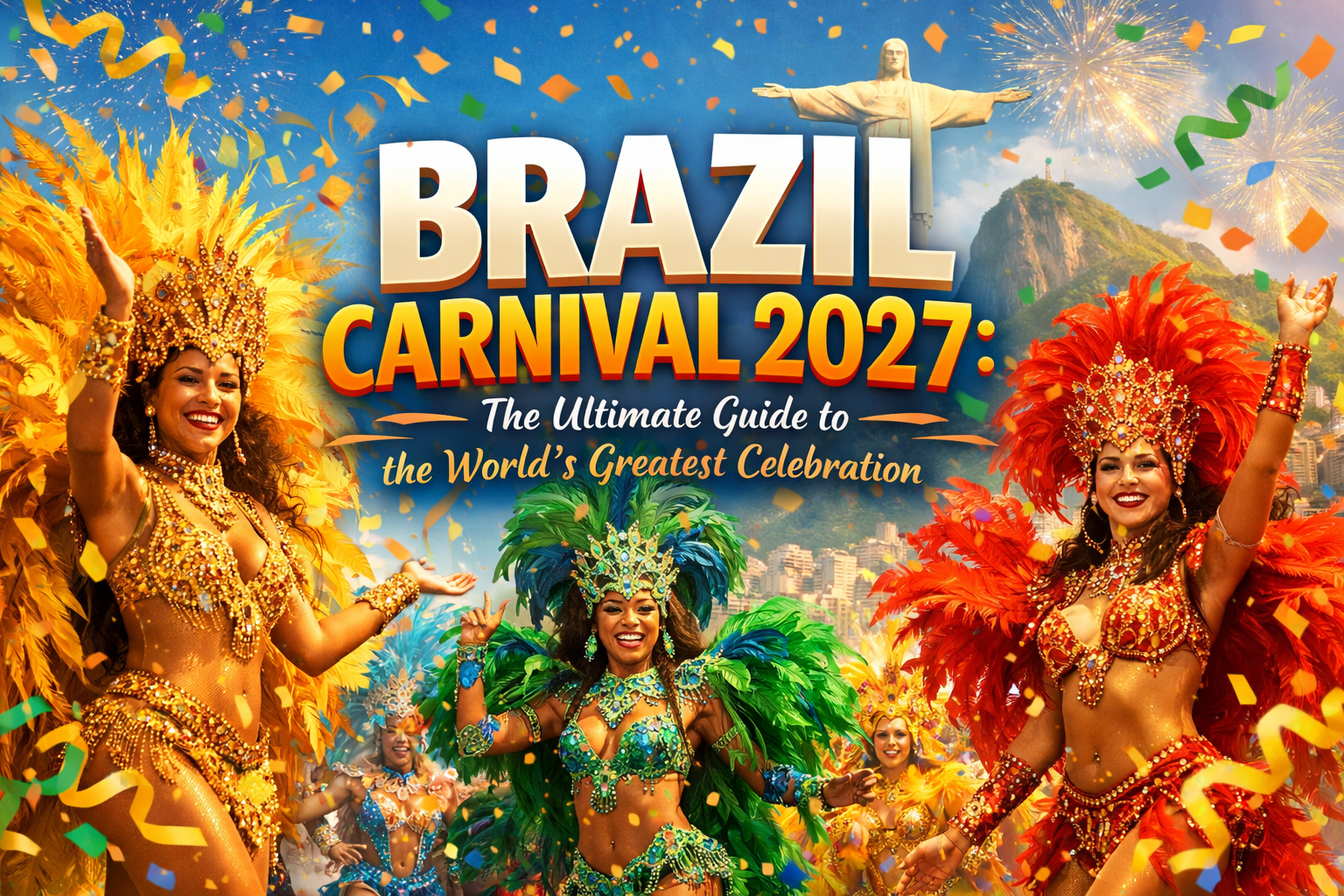
• Brazil Carnival 2027 takes place from March 1-2, 2027 (Monday and Tuesday before Ash Wednesday)
• Rio de Janeiro and Salvador offer the most iconic Carnival experiences with distinct regional flavors
• Costume prices range from $200-$1000+ depending on band and section choice
• Booking early (October-December 2026) is essential for costumes, accommodations, and popular events
• Safety preparation and understanding cultural significance enhance the authentic Carnival experience
1. CARNIVAL BASICS
1.1 What is Brazil Carnival
Brazil Carnival represents the world’s largest and most vibrant pre-Lenten celebration, deeply rooted in Portuguese colonial traditions mixed with African rhythms and indigenous influences. This cultural fusion began in the 18th century when Portuguese settlers brought European Carnival customs to Brazil, which then evolved through the creativity and musical genius of enslaved Africans and their descendants.
The cultural significance of Brazil Carnival extends far beyond entertainment. It serves as a powerful expression of Brazilian identity, social commentary, and artistic achievement. Through elaborate costumes, intricate choreography, and innovative music, Carnival participants tell stories of their communities, celebrate their heritage, and showcase Brazil’s incredible diversity.
UNESCO recognition came in 2019 when the organization acknowledged Rio’s Carnival as an Intangible Cultural Heritage of Humanity, cementing its status as one of the world’s most important cultural celebrations. This recognition highlights how Brazil Carnival preserves traditional crafts, music, and storytelling while continuously evolving with contemporary influences.
Compared to other world carnivals, Brazil’s celebration stands unique in its scale, duration, and cultural depth. While Venice focuses on elegant masks and New Orleans emphasizes jazz parades, Brazil Carnival 2027 will showcase the nation’s unparalleled ability to blend high art with street culture, creating an inclusive celebration that welcomes millions of participants and spectators.
The evolution from the 18th century to present day shows remarkable adaptation. Early Carnival featured simple street parties and masked balls among the elite. Today’s celebration encompasses massive technological productions, international tourism, and sophisticated artistic competitions while maintaining its grassroots community spirit.
1.2 When is Carnival
Brazil Carnival 2027 officially occurs on Monday, March 1st and Tuesday, March 2nd, following the traditional Catholic calendar that places Carnival on the Monday and Tuesday before Ash Wednesday. However, the celebration extends far beyond these two official days, with festivities beginning in January and reaching peak intensity during Carnival week.
The Carnival calendar follows a precise countdown that Brazilians eagerly anticipate year-round. Street parties called “blocos” begin appearing in January, building momentum through February until the explosive finale during Carnival week. This extended timeline allows visitors to experience different aspects of the celebration, from intimate neighborhood gatherings to massive stadium productions.
Best time to visit depends on personal preferences and energy levels. First-time visitors often benefit from arriving a few days before official Carnival to acclimate to the rhythm and intensity. The pre-Carnival period offers smaller, more manageable events while still providing authentic experiences. However, nothing matches the electric atmosphere of the official Carnival days themselves.
The duration of festivities varies by city. Rio de Janeiro’s celebration peaks during the five-day period from Friday through Tuesday, while Salvador extends the party for nearly a week. Recife and Olinda celebrate for four days, each city adding its unique flavor to the Brazil Carnival 2027 experience.
1.3 Carnival Season Timeline
The post-Christmas activities mark the unofficial beginning of Carnival season. Starting in early January, neighborhoods begin organizing their blocos, rehearsing music, and preparing costumes. This period offers visitors a chance to witness the incredible preparation that goes into creating Brazil’s most important cultural event.
Carnival Monday (Mas Monday) kicks off with early morning celebrations as bands begin their parade routes. The energy builds throughout the day, with different neighborhoods hosting their own street parties. Monday traditionally features more relaxed celebrations, allowing participants to pace themselves for Tuesday’s grand finale.
Carnival Tuesday (Mas Tuesday) represents the climax of Brazil Carnival 2027. This day features the most elaborate costumes, largest crowds, and most spectacular performances. The celebration continues late into Tuesday night, with many parties extending until Wednesday morning’s Ash Wednesday ceremonies.
Brazil Carnival 2027 Interactive Planner
.cg-element-container {
max-width: 800px;
margin: 0 auto;
font-family: Arial, sans-serif;
padding: 20px;
background: linear-gradient(135deg, #FFD700, #FF6B35, #8B4513);
border-radius: 15px;
box-shadow: 0 8px 25px rgba(0,0,0,0.2);
}
.cg-element-header {
text-align: center;
color: white;
margin-bottom: 30px;
}
.cg-element-header h2 {
margin: 0;
font-size: 2.2em;
text-shadow: 2px 2px 4px rgba(0,0,0,0.5);
}
.cg-element-form {
background: white;
padding: 25px;
border-radius: 10px;
margin-bottom: 20px;
}
.cg-element-input-group {
margin-bottom: 20px;
}
.cg-element-label {
display: block;
font-weight: bold;
margin-bottom: 8px;
color: #333;
}
.cg-element-select, .cg-element-input {
width: 100%;
padding: 12px;
border: 2px solid #ddd;
border-radius: 5px;
font-size: 16px;
box-sizing: border-box;
}
.cg-element-select:focus, .cg-element-input:focus {
border-color: #FF6B35;
outline: none;
}
.cg-element-button {
background: linear-gradient(45deg, #FF6B35, #FFD700);
color: white;
border: none;
padding: 15px 30px;
font-size: 18px;
font-weight: bold;
border-radius: 8px;
cursor: pointer;
width: 100%;
margin-top: 10px;
transition: transform 0.2s;
}
.cg-element-button:hover {
transform: translateY(-2px);
box-shadow: 0 5px 15px rgba(0,0,0,0.2);
}
.cg-element-results {
background: white;
padding: 25px;
border-radius: 10px;
margin-top: 20px;
display: none;
}
.cg-element-results.show {
display: block;
}
.cg-element-budget-item {
display: flex;
justify-content: space-between;
padding: 10px 0;
border-bottom: 1px solid #eee;
}
.cg-element-total {
font-size: 1.3em;
font-weight: bold;
color: #FF6B35;
border-top: 2px solid #FF6B35;
padding-top: 15px;
margin-top: 15px;
}
.cg-element-recommendations {
background: #f8f9fa;
padding: 20px;
border-radius: 8px;
margin-top: 20px;
}
.cg-element-recommendation {
margin-bottom: 10px;
padding: 10px;
background: white;
border-left: 4px solid #FFD700;
border-radius: 4px;
}
@media (max-width: 600px) {
.cg-element-container {
padding: 15px;
margin: 10px;
}
.cg-element-header h2 {
font-size: 1.8em;
}
.cg-element-form {
padding: 20px;
}
}
🎭 Brazil Carnival 2027 Budget Planner 🎭
Plan your perfect Carnival experience with our interactive budget calculator
Rio de Janeiro
Salvador
Recife
Olinda
Budget Hotel/Hostel
Mid-Range Hotel
Luxury Hotel
Airbnb
No Costume (Spectator Only)
Basic Costume ($200-400)
Premium Costume ($400-700)
Frontline Costume ($700-1000+)
Minimal (Free street parties)
Moderate ($200-500)
Premium ($500-1000)
VIP Experience ($1000+)
Street Food & Local Spots
Mixed (Street + Restaurants)
Primarily Restaurants
Fine Dining
Your Brazil Carnival 2027 Budget Breakdown
function calculateBudget() {
const city = document.getElementById('cg-city').value;
const duration = parseInt(document.getElementById('cg-duration').value);
const accommodation = document.getElementById('cg-accommodation').value;
const costume = document.getElementById('cg-costume').value;
const parties = document.getElementById('cg-parties').value;
const dining = document.getElementById('cg-dining').value;
// Base costs by city
const cityMultipliers = {
'rio': 1.2,
'salvador': 1.0,
'recife': 0.8,
'olinda': 0.7
};
const cityNames = {
'rio': 'Rio de Janeiro',
'salvador': 'Salvador',
'recife': 'Recife',
'olinda': 'Olinda'
};
// Calculate accommodation costs
const accommodationCosts = {
'budget': 50,
'mid': 120,
'luxury': 300,
'airbnb': 80
};
// Calculate costume costs
const costumeCosts = {
'none': 0,
'basic': 300,
'premium': 550,
'frontline': 850
};
// Calculate party costs
const partyCosts = {
'minimal': 0,
'moderate': 350,
'premium': 750,
'vip': 1250
};
// Calculate dining costs per day
const diningCosts = {
'street': 25,
'mixed': 45,
'restaurant': 75,
'fine': 150
};
const multiplier = cityMultipliers[city];
const accommodationTotal = accommodationCosts[accommodation] duration multiplier;
const costumeTotal = costumeCosts[costume] * multiplier;
const partyTotal = partyCosts[parties] * multiplier;
const diningTotal = diningCosts[dining] duration multiplier;
const transportation = 100 * multiplier; // Local transport
const miscellaneous = 200 * multiplier; // Shopping, tips, etc.
const totalBudget = accommodationTotal + costumeTotal + partyTotal + diningTotal + transportation + miscellaneous;
// Display results
const resultsDiv = document.getElementById('cg-results');
const budgetDetails = document.getElementById('cg-budget-details');
budgetDetails.innerHTML = `
📍 Destination: ${cityNames[city]}
🏨 Accommodation (${duration} nights)
$${accommodationTotal.toFixed(0)}
👗 Costume & Band Fees
$${costumeTotal.toFixed(0)}
🎉 Parties & Events
$${partyTotal.toFixed(0)}
🍽️ Food & Dining (${duration} days)
$${diningTotal.toFixed(0)}
🚗 Local Transportation
$${transportation.toFixed(0)}
🛍️ Miscellaneous
$${miscellaneous.toFixed(0)}
💰 TOTAL ESTIMATED BUDGET
$${totalBudget.toFixed(0)}
`;
// Add recommendations
const recommendations = document.getElementById('cg-recommendations');
let tips = [];
if (totalBudget > 3000) {
tips.push("💡 Consider staying slightly outside city center to reduce accommodation costs");
tips.push("🎭 Your budget allows for premium experiences - book early for best availability");
} else if (totalBudget < 1500) {
tips.push("🌟 Great budget-conscious choices! Focus on free street parties for authentic experiences");
tips.push("🏠 Consider shared accommodations to meet fellow carnival-goers");
}
tips.push(📅 Best booking time for ${cityNames[city]}: October-December 2026);
tips.push("✈️ Flight costs not included - book 3-6 months in advance for best rates");
tips.push("💳 Bring cash - many street vendors don't accept cards");
recommendations.innerHTML = `
💡 Personalized Recommendations:
${tips.map(tip => ${tip}).join('')}
`;
resultsDiv.classList.add('show');
resultsDiv.scrollIntoView({ behavior: 'smooth' });
}
2. CARNIVAL EVENTS & ACTIVITIES
2.1 Major Events
Brazil Carnival 2027 features several world-renowned events that define the celebration’s character. The Sambadrome Parade in Rio de Janeiro stands as the crown jewel, where elite samba schools compete with elaborate floats, thousands of dancers, and choreographed performances that take months to prepare. These parades occur on Sunday and Monday nights, with the Champions Parade on the following Saturday featuring the top six schools.
What to expect during major events includes massive crowds, incredible energy, and sensory overload in the best possible way. The Sambadrome holds 90,000 spectators, creating an electric atmosphere as each school presents their theme through music, dance, and visual storytelling. Arrive early, stay hydrated, and prepare for a late night – parades often continue until dawn.
Safety tips for major events include traveling in groups, keeping valuables secure, and staying aware of surroundings. Use official transportation when possible, avoid displaying expensive items, and keep emergency contacts readily available. The Brazilian authorities increase security significantly during Carnival, but personal vigilance remains important.
The Trio Elétrico performances in Salvador represent another major event category, featuring massive sound trucks surrounded by dancing crowds. These mobile parties move through designated routes, creating moving celebrations that can include hundreds of thousands of participants.
2.2 Competitions
Samba School Competitions form the heart of Rio’s Carnival, with schools divided into different leagues based on their performance and resources. The Special Group features the top 12 schools competing for the championship, while Access Groups provide opportunities for emerging schools to advance to higher levels.
Preliminaries, semifinals, and finals occur throughout Carnival weekend, with each school having approximately 80 minutes to present their theme. Judging criteria include harmony, evolution (how well the parade flows), theme development, costumes, floats, drumming, and overall presentation.
Kings and Queens of Carnival competitions celebrate individual excellence in costume design and presentation. These contests occur in various cities, with participants creating elaborate costumes that often weigh hundreds of pounds and require engineering to support their intricate designs.
Venue and tickets for competitions vary by city and event. Rio’s Sambadrome offers different seating sections ranging from general admission bleachers to luxury boxes. Salvador’s events occur on public streets with some VIP viewing areas available for purchase.
2.3 Pre-Carnival Parties
Blocos represent the grassroots soul of Brazil Carnival 2027, featuring neighborhood street parties that welcome everyone. These events begin weeks before official Carnival and continue throughout the season. Popular Rio blocos like Cordão da Bola Preta can attract over one million participants, while smaller neighborhood blocos offer more intimate experiences.
Private vs public events offer different experiences and price points. Public blocos are typically free and open to all, creating democratic celebrations where social barriers dissolve. Private events, including exclusive parties at hotels and clubs, provide controlled environments with premium amenities but less authentic cultural immersion.
Fetes and parties occur nightly during Carnival season, featuring both local and international DJs, live bands, and themed celebrations. Popular venues book months in advance, and ticket prices range from $50 for local events to $500+ for exclusive international parties.
3. MUSIC & CULTURE
3.1 Music Genres
Samba remains the heartbeat of Brazil Carnival 2027, with its infectious rhythms and complex percussion arrangements driving the celebration’s energy. The history and evolution of samba traces back to African slaves who brought their musical traditions to Brazil, where they merged with Portuguese and indigenous influences to create this uniquely Brazilian art form.
Modern samba encompasses various styles, from the traditional samba de roda of Bahia to the high-energy samba-enredo created specifically for Carnival parades. Each samba school develops an original song that tells their year’s story, with lyrics that often address social issues, celebrate Brazilian culture, or honor historical figures.
Axé music dominates Salvador’s Carnival scene, featuring upbeat rhythms perfect for street dancing. This genre emerged in the 1980s, blending Caribbean influences with traditional Brazilian sounds. Artists like Ivete Sangalo and Claudia Leitte have become international ambassadors for this energetic style.
Frevo from Pernambuco state adds another musical dimension to Brazil Carnival 2027, characterized by its frenetic pace and acrobatic dance moves. This genre requires incredible skill and stamina, with dancers performing umbrella choreography and athletic movements that defy gravity.
3.2 Dance & Movement
Samba dancing involves intricate footwork, hip movements, and upper body coordination that takes years to master. The basic ginga step provides the foundation, but advanced dancers incorporate spins, kicks, and dramatic poses that match the music’s intensity. Many visitors take samba lessons before attending Carnival to enhance their experience.
Capoeira influences appear throughout Carnival celebrations, with this martial art-dance hybrid adding athletic elements to street performances. Capoeira circles form spontaneously during blocos, creating interactive entertainment that showcases Brazil’s African heritage and physical artistry.
Street dancing during Carnival follows few rules beyond enjoying the music and respecting others’ space. The democratic nature of Brazilian dance culture welcomes all skill levels, with experienced dancers often helping newcomers learn basic steps. The key is feeling the rhythm and letting the music guide movement.
4. MASQUERADE BANDS
4.1 Choosing a Band
Large bands vs small bands offer distinctly different Carnival experiences. Large bands like Beija-Flor and Portela in Rio provide spectacular productions with thousands of participants, elaborate floats, and professional-level organization. These bands offer comprehensive packages including costumes, meals, drinks, and security, but can feel impersonal due to their massive size.
Small bands create more intimate experiences with closer connections between participants. These groups often focus on specific themes or communities, providing opportunities to form lasting friendships and gain deeper cultural insights. However, smaller bands may have limited amenities and require more self-sufficiency from participants.
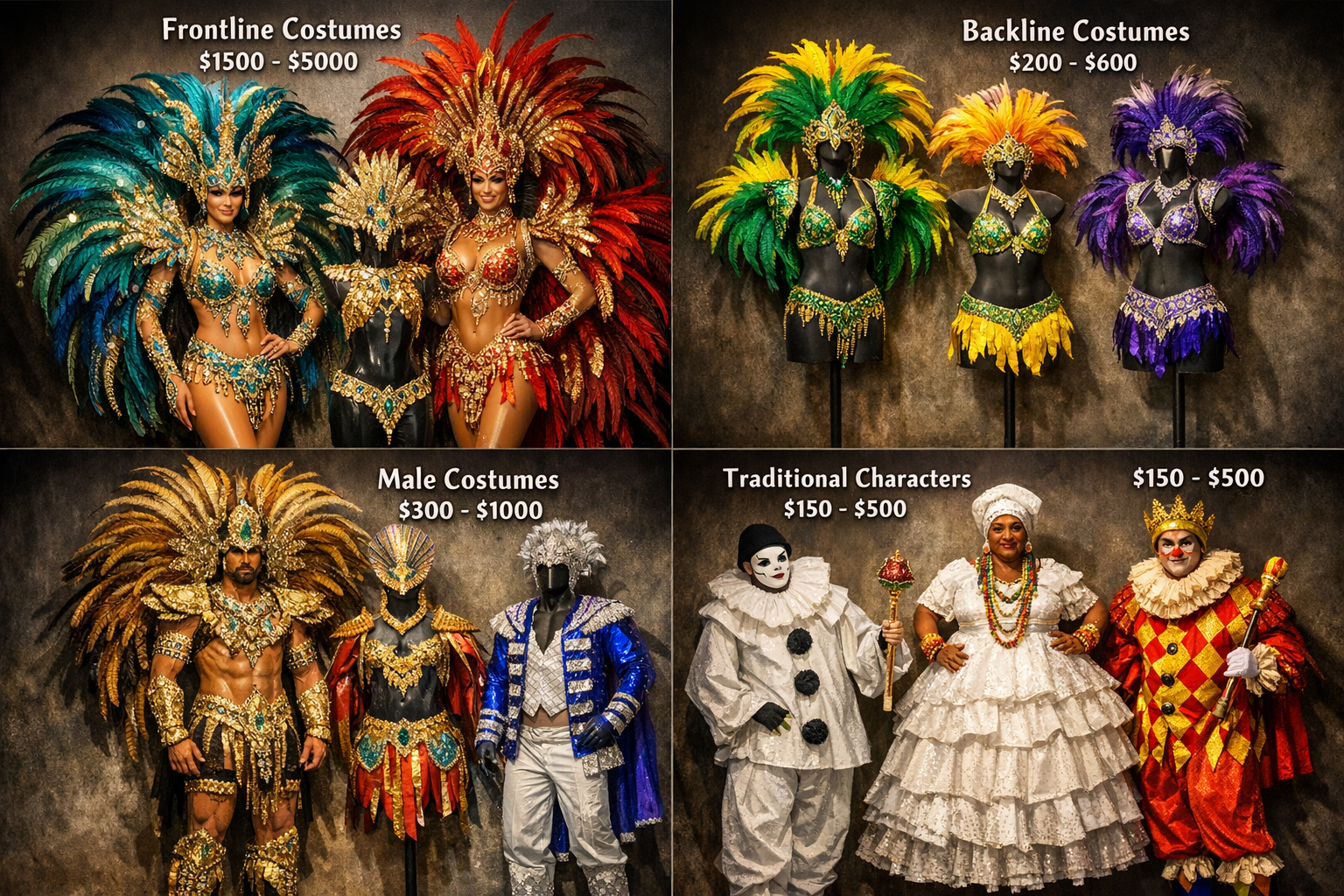
Price ranges vary dramatically based on band size, reputation, and costume section. Basic participation in smaller bands might cost $200-400, while premium frontline positions in prestigious bands can exceed $1,000. These prices typically include costume, basic beverages, and access to band facilities during parade days.
Band reputations and reviews provide valuable guidance for first-time participants. Research bands’ histories, read participant testimonials, and check social media for recent photos and videos. Established bands with strong reputations generally provide better organization, safety, and overall experiences.
4.2 Costume Sections Within Bands
Frontline sections feature the most elaborate costumes and prominent parade positions. These participants often appear in media coverage and receive the most attention from spectators. Frontline costumes typically include large feathered headdresses, intricate beadwork, and dramatic back pieces that can weigh 20-30 pounds.
Backline sections offer more affordable participation with simpler but still beautiful costumes. These sections form the bulk of most bands, creating the visual impact through coordinated colors and movements. Backline costumes are typically lighter and more comfortable for extended dancing and walking.
Wing sections within bands represent different aspects of the overall theme. Each wing might have distinct costume designs while maintaining the band’s unified aesthetic. Some wings cater to specific demographics, such as families, international visitors, or particular age groups.
4.3 Alternative Mas
Individual mas allows creative individuals to design and present their own costumes outside organized bands. This traditional form requires significant skill, resources, and cultural knowledge but offers complete creative freedom. Individual mas participants often compete for prizes and recognition from judges and spectators.
Small bands focusing on traditional characters preserve historical Carnival figures like Mestre-Sala, Porta-Bandeira, and various folkloric representations. These bands prioritize cultural authenticity over commercial appeal, offering participants deeper connections to Carnival’s roots.
Historical presentations recreate important moments in Brazilian history through costume and performance. These educational bands serve cultural preservation functions while entertaining spectators with dramatic reenactments and historically accurate costumes.
5. COSTUMES
5.1 Costume Selection
Costume sections within bands determine both price and experience level. Frontline costumes feature the most elaborate designs with extensive featherwork, crystals, and dramatic silhouettes. These premium options typically cost $700-1,000+ but provide the most photogenic and memorable experiences.
Backline costumes offer beautiful but more practical designs suitable for extended dancing and movement. These options typically range from $200-500 and include essential elements like themed tops, bottoms, and accessories without the weight and complexity of frontline pieces.
Male vs female costumes traditionally differ significantly, with female costumes featuring more elaborate decoration and revealing cuts, while male costumes emphasize comfort and mobility. However, modern Carnival increasingly embraces gender-fluid costume options, allowing all participants to choose styles that match their preferences.
Sizing and fitting require careful attention, as most costumes are custom-made for each participant. Bands typically provide measurement guidelines and fitting appointments closer to Carnival. International participants should plan for potential shipping delays and customs considerations.
5.2 Costume Elements
Headpieces serve as costume focal points, often featuring elaborate featherwork, crystals, and LED lighting. These pieces require careful handling and may need assembly on Carnival day. Some headpieces include engineering elements like springs or wires to create movement during dancing.
Backpacks and back pieces create dramatic silhouettes and visual impact from all angles. These elements often incorporate the band’s theme through symbolic imagery, colors, and materials. Proper fitting is crucial for comfort during long parade days.
Belts and leg pieces provide lower body decoration while allowing freedom of movement. These elements often include fringe, beading, or fabric elements that create visual interest during dancing. Comfortable fitting around the waist and thighs is essential for extended wear.
Bras and bodywear form the costume foundation, typically featuring extensive beadwork, sequins, or other decorative elements. Quality construction is important for both comfort and durability during active participation.
5.3 Costume Preparation
Fittings and alterations typically occur in the weeks leading up to Carnival. Bands schedule appointment times for participants to try on costumes and make necessary adjustments. International visitors should plan to arrive several days early to accommodate fitting schedules.
Customization options vary by band and section, with some allowing personal touches or modifications. However, most bands maintain strict design standards to preserve their overall aesthetic vision. Discuss any desired changes with band organizers well in advance.
Costume collection usually occurs 1-2 days before Carnival begins. Bands provide specific pickup times and locations, often requiring identification and payment confirmation. Plan adequate time for collection, as popular bands may have long queues.
What to bring on the road includes comfortable shoes, sunscreen, water, and small personal items. Most costume elements are delicate and require careful handling. Bands often provide storage areas for personal belongings during parades.
6. PLANNING YOUR CARNIVAL
6.1 When to Book
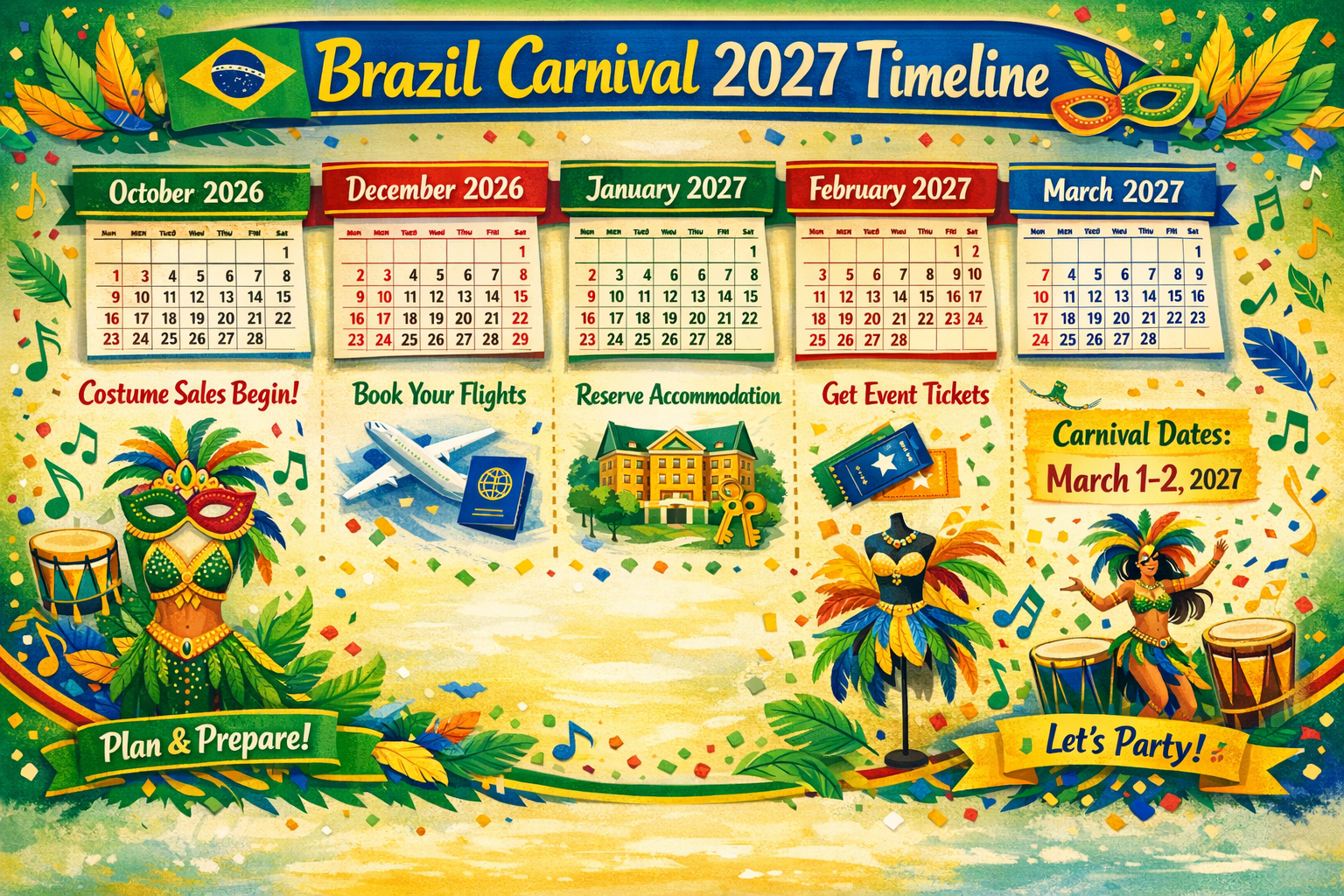
Costume sales timeline typically begins in October following the previous year’s Carnival. The most popular bands and sections sell out quickly, sometimes within weeks of opening sales. Brazil Carnival 2027 costume sales likely began in October 2026, with most bands closing sales by December or January.
Accommodation booking should occur as early as possible, ideally 6-12 months in advance. Hotels in prime locations often book entirely during Carnival week, with prices increasing 300-500% above normal rates. Alternative accommodations like Airbnb also experience high demand and premium pricing.
Flight booking requires similar advance planning, with international flights to Brazil increasing significantly in price as Carnival approaches. The best rates typically appear 3-6 months before travel, though some deals may emerge closer to departure dates if demand is lower than expected.
Fete ticket purchasing begins at various times depending on the event. Major parties and exclusive events often sell out months in advance, while smaller local events may have tickets available closer to Carnival dates.
6.2 Budgeting
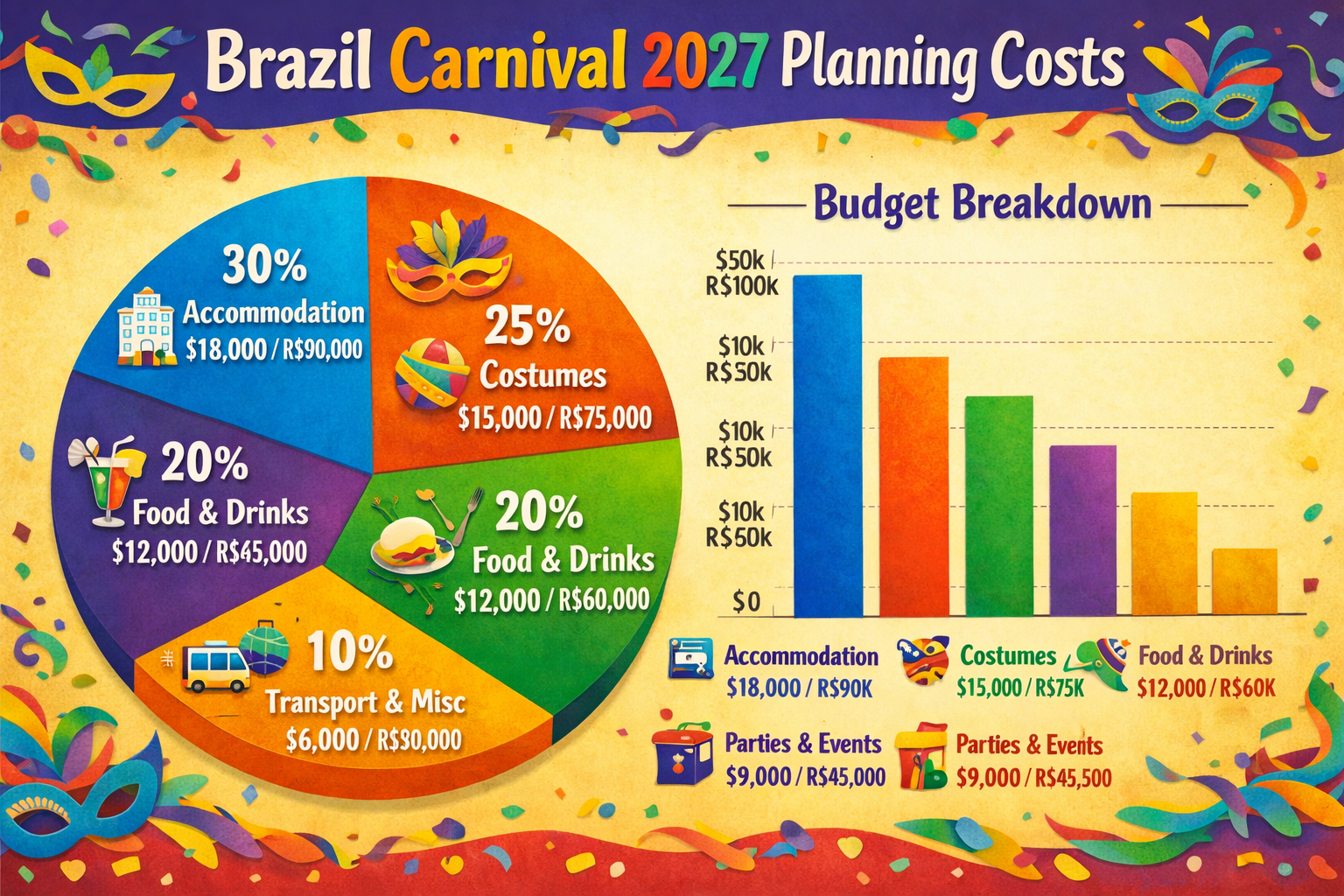
Costume costs represent a significant budget component, ranging from $200 for basic participation to over $1,000 for premium frontline positions. These costs typically include the costume itself, some beverages during parade days, and access to band facilities.
Accommodation costs during Brazil Carnival 2027 will likely range from $100-200 per night for budget options to $500+ per night for luxury hotels in prime locations. Sharing accommodations with friends or booking slightly outside city centers can reduce these costs significantly.
Fete tickets vary widely based on venue and exclusivity. Free street parties provide excellent entertainment without cost, while premium private events can cost $200-500 per ticket. A moderate fete budget of $300-600 allows participation in several quality events.
Food and drinks costs depend heavily on dining choices. Street food and local restaurants provide authentic experiences at reasonable prices ($25-50 per day), while hotel restaurants and tourist areas charge premium rates ($75-150 per day).
Total estimated budget for Brazil Carnival 2027 typically ranges from $1,500-5,000+ per person for a 5-7 day experience, depending on accommodation choices, costume selection, and activity preferences. This estimate excludes international flights but includes local transportation, meals, costumes, and entertainment.
6.3 Travel Logistics
Visa requirements for Brazil vary by nationality. US citizens need visas for stays longer than 90 days, while EU citizens can enter visa-free for tourism purposes. Check current requirements well in advance, as visa processing can take several weeks during busy periods.
Flights to major cities during Carnival week command premium prices and may require connections through São Paulo or other Brazilian hubs. Rio de Janeiro’s Galeão International Airport and Salvador’s Deputado Luís Eduardo Magalhães International Airport serve as primary gateways for Carnival visitors.
Airport transfers should be arranged in advance, as taxi demand peaks during Carnival week. Many hotels offer shuttle services, while ride-sharing apps provide convenient alternatives. Allow extra time for airport transfers due to increased traffic and demand.
Currency and payments in Brazil primarily use the Brazilian Real (BRL). Credit cards are widely accepted in hotels and restaurants, but street vendors and small businesses often require cash. ATMs are readily available, though fees can be significant for international cards.
6.4 Accommodation
Hotels in Rio de Janeiro offer various options from budget hostels to luxury resorts. Copacabana and Ipanema provide beach access and central locations but command premium prices during Carnival. Santa Teresa offers boutique options with cultural atmosphere, while Barra da Tijuca provides modern amenities at moderate prices.
Airbnb options can provide authentic neighborhood experiences and cost savings for groups. However, verify that properties allow Carnival parties and noise, as many buildings have strict policies during the celebration period.
Areas to stay should balance convenience, safety, and budget considerations. Staying near metro lines provides easy access to major events while avoiding traffic congestion. Beach areas offer recreational opportunities but may be crowded with tourists.
Safety considerations include choosing accommodations in well-lit, populated areas with 24-hour security when possible. Research neighborhood characteristics and avoid areas known for higher crime rates, particularly late at night.
7. WHAT TO PACK & WEAR
7.1 Carnival Day Essentials
Comfortable shoes and sneakers are absolutely critical for Carnival participation. Most events involve extensive walking and dancing on various surfaces, from pavement to sand. Choose well-broken-in shoes with good support and consider bringing backup pairs for multi-day celebrations.
Athletic and dance wear under costumes provides comfort and protection during extended activities. Moisture-wicking fabrics help manage Brazil’s tropical climate, while fitted clothing prevents chafing under costume elements. Sports bras for women and compression shorts for men offer additional support.
Hydration packs and water bottles are essential for staying healthy during Brazil Carnival 2027’s intense activities. Many events last 8-12 hours in hot, humid conditions. Hands-free hydration systems allow continued dancing while maintaining fluid intake.
Sunscreen (waterproof) protects against Brazil’s intense UV rays, particularly important during daytime events and beach activities. Choose broad-spectrum protection with SPF 30 or higher, and reapply frequently during sweating and water exposure.
Portable phone chargers ensure communication capabilities throughout long event days. Consider ruggedized or waterproof charging options that can withstand the party environment. Fully charge devices before events and bring backup charging cables.
7.2 General Packing List
Lightweight, breathable clothing suits Brazil’s tropical climate during Carnival season (February-March). Cotton and moisture-wicking synthetic fabrics provide comfort in high humidity. Pack more clothes than usual, as frequent changes may be necessary due to sweating and party conditions.
Rain gear is advisable, as Brazilian summers can include sudden tropical downpours. Lightweight ponchos or rain jackets pack efficiently and protect both clothing and costumes. Waterproof bags for electronics and important documents are also recommended.
First aid supplies should include basics like bandages, pain relievers, anti-diarrheal medication, and any prescription drugs. Brazil’s pharmacies are well-stocked, but having essentials readily available prevents interruptions to Carnival activities.
Electronics and adapters require Brazil-specific power adapters (Type N plugs). Bring backup charging cables and consider portable speakers for impromptu parties. Waterproof cases protect devices from rain, spilled drinks, and humid conditions.
7.3 Fete Attire
Festival wear for fetes and parties should be comfortable, stylish, and appropriate for dancing in crowded conditions. Bright colors and festive patterns match Carnival’s celebratory atmosphere. Avoid expensive jewelry or clothing that can’t be replaced if lost or damaged.
Comfortable dancing shoes for fetes differ from parade shoes, as indoor venues may have different surface conditions. Consider bringing multiple shoe options for different types of events. Closed-toe shoes provide protection in crowded conditions.
Light, breathable clothing helps manage heat in packed party venues. Many fetes occur in outdoor or semi-outdoor spaces where air circulation may be limited. Layering options allow adjustment as conditions change throughout the night.
Themed outfits may be required for specific events or parties. Research dress codes for planned fetes and pack accordingly. Some events have strict theme requirements, while others simply encourage festive attire.
8. FOOD & DRINK
8.1 Carnival Food
Road-side snacks provide authentic Brazilian flavors and convenient energy during long Carnival days. Pastéis (fried pastries with various fillings) offer quick, satisfying meals, while açaí bowls provide healthy energy and hydration. Coxinhas (chicken croquettes) and pão de açúcar (sugar bread) are popular portable options.
Traditional Brazilian dishes available during Carnival include feijoada (black bean stew with pork), moqueca (seafood stew), and churrasco (grilled meats). Many restaurants offer special Carnival menus featuring regional specialties from different Brazilian states.
Where to eat during Carnival ranges from street vendors to high-end restaurants. Street food provides authentic experiences and reasonable prices, while established restaurants offer air conditioning and reliable service. Food trucks and temporary stalls appear throughout Carnival areas, providing convenient options near events.
Dietary considerations for vegetarians and vegans are increasingly accommodated in Brazilian cities. Traditional dishes often feature meat heavily, but modern restaurants and food vendors offer plant-based alternatives. Fresh fruit vendors provide healthy, refreshing options throughout Carnival areas.
8.2 Drinks
Rum and cocktails form an integral part of Brazilian Carnival culture. Caipirinhas made with cachaça (Brazilian rum), lime, and sugar represent the national cocktail. Batidas blend cachaça with fruit juices, while caipiroskas substitute vodka for cachaça. Many bars create special Carnival-themed cocktails featuring tropical fruits and colorful presentations.
Local beers provide refreshing alternatives to stronger spirits. Skol, Brahma, and Antarctica are widely available Brazilian brands, while craft breweries in major cities offer more unique options. Beer vendors circulate through crowds during street parties, providing convenient access to cold beverages.
Staying hydrated is crucial during Brazil Carnival 2027’s intense heat and activity levels. Alternate alcoholic drinks with water, coconut water, or fresh fruit juices. Many vendors sell fresh coconut water directly from coconuts, providing natural electrolytes and hydration.
Cooler systems on the road during parades often include band-provided beverages and ice. Participants typically receive drink vouchers or unlimited access to basic beverages. Premium sections may include premium spirits and cocktail service.
8.3 Restaurants & Cuisine
Regional specialties vary significantly across Brazilian Carnival cities. Rio de Janeiro features fresh seafood and beach-inspired dishes, while Salvador emphasizes Afro-Brazilian cuisine with complex spices and coconut-based preparations. Bahian cuisine includes acarajé (black-eyed pea fritters) and vatapá (creamy shrimp paste).
Fine dining options in major cities provide respite from street food and an opportunity to experience elevated Brazilian cuisine. Renowned chefs create innovative interpretations of traditional dishes using modern techniques and presentation styles.
International cuisine is readily available in tourist areas, though experiencing local Brazilian food provides more authentic cultural immersion. Italian, Japanese, and Middle Eastern restaurants offer familiar options for those needing breaks from Brazilian flavors.
9. SAFETY & TIPS
9.1 Safety Guidelines
Travel in groups whenever possible, particularly during late-night events and when moving between venues. Groups provide mutual protection and assistance in crowded, unfamiliar environments. Establish meeting points and communication plans in case group members become separated.
Keep valuables secure by using hotel safes for passports, extra cash, and expensive electronics. Carry only necessary items during events, and consider using money belts or hidden pouches for cash and identification. Avoid displaying expensive jewelry, watches, or electronics that might attract unwanted attention.
Be aware of surroundings and trust instincts about potentially dangerous situations. Crowded Carnival events can create opportunities for pickpocketing and other petty crimes. Stay alert to unusual behavior and remove yourself from situations that feel unsafe.
Emergency contacts should include local police (190), medical emergency services (192), and your country’s embassy or consulate. Program these numbers into your phone and keep written copies in separate locations. Share your itinerary with trusted contacts at home.
9.2 Health Considerations
Staying hydrated requires constant attention during Brazil’s hot, humid Carnival season. Drink water regularly, even when not feeling thirsty, and increase intake when consuming alcohol. Signs of dehydration include headache, dizziness, and decreased urination.
Sun protection goes beyond sunscreen to include protective clothing, hats, and seeking shade during peak UV hours (10 AM – 4 PM). Brazilian sun can cause severe burns quickly, particularly for visitors from northern climates. Reapply sunscreen frequently, especially after sweating or water exposure.
Foot care and blister prevention are crucial for multi-day Carnival participation. Break in shoes well before travel, use moisture-wicking socks, and consider blister prevention products. Carry basic foot care supplies and address any issues immediately before they become serious problems.
Stamina and rest management help maintain energy throughout Carnival’s demanding schedule. Pace activities to avoid burnout, prioritize sleep when possible, and listen to your body’s signals. It’s better to miss one event than to become too exhausted to enjoy the remainder of Carnival.
9.3 First-Timer Tips
Start with smaller fetes to acclimate to Brazilian party culture and Carnival intensity before attending major events. Smaller venues allow easier navigation and escape routes while providing authentic experiences without overwhelming crowds.
Pace yourself throughout Carnival week to maintain energy and health. Alternate high-intensity events with more relaxed activities, and don’t feel obligated to attend every possible event. Quality experiences often matter more than quantity.
Make friends with locals who can provide insider knowledge, safety tips, and authentic cultural insights. Brazilians are generally welcoming to international visitors and often enjoy sharing their culture with interested foreigners.
Join band WhatsApp groups for real-time updates, safety information, and community connections. These groups often provide valuable logistics information and help coordinate meetups with fellow band members.
10. PHOTOGRAPHY & MEDIA
10.1 Photography Tips
Best spots for photos include iconic locations like Copacabana Beach during sunrise, the Christ the Redeemer statue, and Santa Teresa neighborhood’s colorful streets. During parades, position yourself near judging points where performers give their best efforts, or find elevated positions for crowd shots.
Hiring a photographer can capture professional-quality memories while allowing full participation in events. Many local photographers specialize in Carnival coverage and understand the best locations and timing for spectacular shots. Prices typically range from $200-800 for event coverage.
Band photographers often provide coverage included in costume packages. These professionals understand band logistics and can access restricted areas for unique perspectives. However, individual attention may be limited due to the large number of participants.
Instagram-worthy locations include Selarón Steps in Rio, Pelourinho in Salvador, and various street art locations throughout major cities. Golden hour lighting (sunrise and sunset) provides optimal conditions for both portrait and landscape photography.
10.2 Social Media
Hashtags to use for Brazil Carnival 2027 include #BrazilCarnival2027, #Carnival2027, #RioCarnival, #SalvadorCarnival, and city-specific tags. Research band-specific hashtags to connect with fellow participants and find photos from events.
Following Carnival updates through official accounts provides real-time information about schedule changes, safety updates, and special events. Major bands, venues, and tourism boards maintain active social media presence during Carnival season.
Band social media channels offer behind-the-scenes content, costume reveals, and community building opportunities. Following your chosen band’s accounts helps build excitement and provides valuable logistical information.
Live streams and coverage allow sharing experiences with friends and family unable to attend. However, be mindful of data usage and battery life during long events. Consider designating specific times for social media updates rather than constant posting.
10.3 Capturing Memories
Video highlights can capture the energy and movement that still photos cannot convey. Short clips of dancing, music, and crowd reactions provide dynamic memories. Consider creating daily highlight reels rather than trying to document everything.
GoPro recommendations include chest mounts for hands-free recording during dancing and waterproof cases for protection against rain and spilled drinks. Extra batteries and memory cards are essential for extended recording during long events.
Professional photo packages offered by some bands and venues provide high-quality memories without the hassle of managing equipment during events. These packages often include edited photos delivered digitally after Carnival concludes.
Copyright and privacy considerations include respecting others’ wishes regarding photography and understanding that some venues prohibit professional photography equipment. Always ask permission before photographing individuals up close.
11. FAMILY CARNIVAL
11.1 Kiddies Carnival
Age groups and categories for children’s Carnival typically include toddlers (2-4), children (5-10), and pre-teens (11-13). Each age group has appropriate costume designs, parade distances, and activity levels designed for their developmental stage and stamina.
Children’s bands create family-friendly environments with enhanced safety measures, shorter parade routes, and age-appropriate themes. These bands often include educational elements about Brazilian culture and history, making Carnival both fun and learning experience.
Junior competitions showcase young talent in costume design, dancing, and cultural presentation. These events provide opportunities for children to experience Carnival’s competitive spirit while developing confidence and cultural appreciation.
Safety for families includes additional considerations like meeting points, identification for children, and emergency contacts. Family-friendly events typically have enhanced security and medical support specifically trained for pediatric needs.
11.2 Family-Friendly Options
Daytime events provide Carnival experiences without late-night scheduling conflicts for families. Many cities organize special family parades and activities during daylight hours, featuring the same music and energy as evening events.
Family fetes offer controlled environments where parents can supervise children while still enjoying Carnival atmosphere. These events typically feature earlier end times, alcohol-free zones, and activities specifically designed for children.
Kid-friendly costumes emphasize comfort, safety, and age-appropriate designs. These costumes typically use lighter materials, avoid small parts that could pose choking hazards, and include practical considerations like easy bathroom access.
Parade viewing spots for families should prioritize safety, visibility, and accessibility to restrooms and refreshments. Many cities designate family viewing areas with additional amenities and security specifically for parents with children.
12. SUSTAINABILITY & RESPONSIBILITY
12.1 Environmental Considerations
Costume recycling programs help reduce waste from elaborate Carnival costumes that may only be worn once. Many bands and organizations collect used costumes for donation to schools, community groups, or recycling programs that repurpose materials for future celebrations.
Waste management during Brazil Carnival 2027 requires conscious effort from all participants. Carry reusable water bottles, dispose of trash properly, and consider bringing small bags for collecting litter encountered during events. Many cities increase cleaning crews during Carnival, but individual responsibility remains important.
Eco-friendly practices include choosing accommodations with environmental certifications, using public transportation or walking when possible, and supporting businesses that demonstrate environmental responsibility. Small choices by millions of visitors can create significant positive impact.
Beach and street cleanup initiatives often occur during and after Carnival, with volunteer opportunities for visitors who want to give back to host communities. These activities provide meaningful ways to contribute while meeting like-minded travelers and locals.
12.2 Cultural Respect
Understanding traditions before participating helps ensure respectful engagement with Brazilian culture. Carnival represents more than entertainment – it’s a cultural expression with deep historical significance and ongoing social relevance. Research the history and meaning behind events and customs.
Respectful participation includes following band rules, respecting local customs, and avoiding behavior that might be considered offensive or inappropriate. When in doubt, observe local participants and ask questions respectfully.
Supporting local businesses provides economic benefits to communities that host Carnival celebrations. Choose locally-owned restaurants, shops, and services when possible, and consider purchasing authentic Brazilian crafts and souvenirs from local artisans.
Cultural appropriation awareness involves understanding the difference between appreciation and appropriation. Participate authentically and respectfully without claiming ownership of cultural elements or misrepresenting their significance### 12.3 Community Impact
Supporting local artisans during Brazil Carnival 2027 helps preserve traditional crafts and provides economic opportunities for skilled workers. Many costume elements are handmade by local craftspeople who spend months preparing for Carnival season. Purchasing authentic pieces directly from artisans ensures fair compensation and cultural preservation.
Tipping and gratuities play important roles in Brazilian service culture, particularly during Carnival when workers put in extraordinary hours. Hotel staff, restaurant servers, taxi drivers, and band crew members often depend on tips to supplement their income during this intensive period. Standard tipping ranges from 10-15% for restaurants and $5-10 daily for hotel housekeeping.
Responsible tourism means making choices that benefit local communities while minimizing negative impacts. This includes respecting noise ordinances in residential areas, not littering, and being considerate of locals who aren’t participating in Carnival activities but still need to navigate their daily lives.
Giving back can take many forms, from participating in cleanup activities to donating to local charities that support Carnival arts education or community development. Some visitors organize fundraisers in their home countries to support Brazilian cultural preservation programs.
13. RESOURCES
13.1 Official Information
National Carnival Commission (NCC) serves as Brazil’s official Carnival oversight body, providing authoritative information about schedules, safety guidelines, and cultural protocols. Their website offers downloadable guides in multiple languages and real-time updates during Carnival season.
Government websites for major Carnival cities provide essential information about transportation, safety, and official events. Rio de Janeiro’s tourism board (RioTur) and Salvador’s municipal tourism department maintain comprehensive English-language resources for international visitors.
Embassy contacts for your home country should be programmed into your phone and written down separately. Embassies can provide assistance with lost passports, emergency situations, and connections to local medical or legal services if needed during Brazil Carnival 2027.
Tourist police units in major cities specialize in assisting international visitors and often have multilingual officers available. These specialized units understand common tourist issues and can provide more targeted assistance than general police services.
13.2 Carnival Apps & Tools
Band apps provide real-time updates about costume fittings, parade schedules, and meeting points. Most major bands develop custom apps that include GPS tracking for parade routes, emergency contacts, and social features for connecting with fellow band members.
Event calendars help track the overwhelming number of parties, parades, and activities during Carnival week. Apps like “Carnival Rio” and “Salvador Carnival” aggregate events from multiple sources and allow filtering by date, location, and event type.
Route maps show parade paths, judging points, and optimal viewing locations. These digital maps often include real-time updates about traffic, crowd density, and any route changes due to weather or safety concerns.
Ticket platforms like “Sympla” and “Ingresse” serve as Brazil’s primary event ticketing services. Creating accounts on these platforms before traveling allows faster purchasing and easier access to sold-out events that may release additional tickets.
13.3 Community Resources
Carnival forums like “Carnival Insider” and “Brazil Travel Forum” provide peer-to-peer advice from experienced participants. These communities share real-time tips, safety updates, and insider knowledge that isn’t available through official channels.
Facebook groups for specific bands, cities, or international visitors offer community support and information sharing. Groups like “Rio Carnival International” and “Salvador Carnival Lovers” maintain active discussions year-round and intensify during Carnival season.
WhatsApp communities provide immediate communication during events. Many bands, hotels, and tour groups create WhatsApp groups for their participants, offering real-time updates and emergency communication channels.
Local contacts and concierge services can provide personalized assistance with logistics, reservations, and cultural guidance. Many hotels offer concierge services specifically trained in Carnival planning, while independent cultural consultants provide more personalized guidance.
13.4 Frequently Asked Questions
First-timer FAQs typically include questions about costume fitting, parade timing, safety protocols, and cultural etiquette. Most bands provide orientation sessions for new participants, covering essential information about their specific requirements and procedures.
Costume FAQs address sizing concerns, care instructions, assembly requirements, and what happens if pieces are damaged or lost. Understanding these details before arrival prevents stress and ensures optimal Carnival experiences.
Travel FAQs cover visa requirements, vaccination recommendations, currency exchange, and transportation options. Brazil’s tourism board maintains updated FAQ sections addressing common concerns for international visitors.
Safety FAQs provide guidance about personal security, emergency procedures, and health precautions. These resources help visitors make informed decisions about risk management while maintaining the ability to enjoy Carnival fully.
14. CARNIVAL INDUSTRY
14.1 Behind the Scenes
How costumes are made involves months of planning, design, and construction by skilled artisans. The process begins immediately after the previous year’s Carnival, with designers creating concepts, sourcing materials, and beginning construction. Featherwork alone can take weeks for complex pieces, with artisans hand-placing thousands of individual feathers.
Designers and builders form specialized communities within Brazilian cities, often working exclusively on Carnival productions. These craftspeople include wire benders who create costume frameworks, seamstresses who handle fabric work, and decorators who apply beading and sequins. Many skills pass through generations within families.
Innovation in carnival continues pushing creative boundaries through new materials, LED lighting integration, and engineering advances that allow larger, more complex costume designs. Some bands now incorporate programmable lighting, sound effects, and even mechanical movement into their presentations.
Manufacturing timeline for Brazil Carnival 2027 likely began in March 2026, immediately following the previous year’s celebration. Peak production occurs during November and December, with final assembly and quality control happening in January and February.
14.2 Economic Impact
Tourism statistics show that Carnival generates billions of dollars in economic activity across Brazil. Rio de Janeiro alone typically welcomes over 1.5 million tourists during Carnival week, with international visitors spending an average of $1,500-2,500 per person during their stays.
Industry size encompasses not just tourism but also employment for thousands of artisans, performers, security personnel, and support staff. The Carnival industry provides year-round employment for costume makers, float builders, and cultural educators, with peak seasonal employment during preparation and execution periods.
Employment opportunities during Carnival include temporary positions in hospitality, security, transportation, and event management. Many international visitors find part-time work with bands or tour companies, though proper work visas are required for legal employment.
Sponsorships from major Brazilian and international companies provide funding for bands, events, and infrastructure. Companies like Petrobras, Brahma, and various telecommunications providers invest heavily in Carnival sponsorships, seeing them as essential marketing opportunities.
14.3 Carnival Arts
Wire bending creates the structural frameworks that support elaborate costume designs. Master wire benders can create complex three-dimensional shapes that appear to defy gravity while remaining lightweight enough for dancers to wear comfortably for hours.
Costume design involves understanding both artistic vision and practical requirements. Designers must consider movement, weight distribution, weather resistance, and safety while creating visually stunning pieces that photograph well under various lighting conditions.
Makeup artists (MUA) specialize in Carnival-specific techniques that withstand heat, humidity, and extended wear. These professionals often use theatrical-grade products and waterproof formulations designed to maintain their appearance through hours of dancing and celebration.
Body painting adds another artistic dimension to Carnival presentations, with some participants choosing painted designs instead of or in addition to traditional costumes. These temporary artworks can take hours to complete and require special products designed for skin safety and durability.
15. ALTERNATIVE CARNIVAL EXPERIENCES
15.1 Off-the-Beaten-Path Celebrations
Smaller cities throughout Brazil host authentic Carnival celebrations that offer more intimate experiences than major tourist destinations. Cities like Paraty, Ouro Preto, and São Luís maintain traditional celebrations with strong community involvement and fewer commercial influences.
Regional variations showcase Brazil’s incredible cultural diversity through different musical styles, costume traditions, and celebration customs. Bumba-meu-boi in Maranhão, Frevo in Pernambuco, and Maracatu in various northeastern states offer distinct alternatives to mainstream samba-focused celebrations.
Community blocos in residential neighborhoods provide grassroots Carnival experiences where visitors can interact directly with local families and long-standing traditions. These events often welcome foreigners warmly while maintaining their authentic character and cultural significance.
Historical celebrations in colonial cities combine Carnival with cultural education, featuring period costumes, traditional music, and historical reenactments that provide context for Brazil’s complex cultural evolution.
15.2 Specialized Carnival Tours
Cultural immersion programs offer structured experiences that combine Carnival participation with educational components about Brazilian history, music, and social issues. These programs often include meetings with local artists, visits to costume workshops, and discussions about Carnival’s cultural significance.
Photography tours cater to serious photographers seeking optimal access and guidance for capturing Carnival’s visual spectacle. These specialized tours include professional guides who understand lighting, positioning, and timing for the best shots while respecting cultural protocols.
Music-focused experiences appeal to visitors interested in Brazil’s incredible musical heritage. These tours might include samba school rehearsals, percussion workshops, and meetings with renowned musicians who explain the technical and cultural aspects of Carnival music.
Volunteer opportunities allow visitors to contribute meaningfully to Carnival while gaining insider perspectives. Opportunities might include assisting with costume construction, helping with community events, or supporting educational programs that use Carnival as a teaching tool.
15.3 Post-Carnival Activities
Cultural exploration after Carnival provides opportunities to experience Brazil’s attractions without the intense crowds and elevated prices of Carnival week. Museums, historical sites, and cultural centers offer deeper insights into the traditions witnessed during Carnival.
Hiking and nature experiences showcase Brazil’s incredible biodiversity and natural beauty. Tijuca National Park in Rio, Chapada Diamantina in Bahia, and coastal areas throughout the country provide outdoor adventures and opportunities to decompress after Carnival’s intensity.
Relaxation and recovery might be necessary after the physical and emotional intensity of Brazil Carnival 2027. Beach destinations, spa resorts, and quiet colonial towns offer peaceful environments for processing the incredible experiences and preparing for return to normal life.
Extended travel within Brazil allows exploration of the country’s vast diversity beyond Carnival cities. The Amazon rainforest, Pantanal wetlands, and southern wine regions provide completely different perspectives on Brazilian culture and geography.
16. PLANNING CHECKLIST FOR BRAZIL CARNIVAL 2027
16.1 6-12 Months Before
✅ Research and choose your primary Carnival destination and backup options
✅ Book international flights for the best rates and availability
✅ Reserve accommodations in preferred neighborhoods and price ranges
✅ Apply for visas if required for your nationality
✅ Research bands and begin following their social media for costume reveals
✅ Set up travel insurance with coverage for international medical care
✅ Begin physical preparation if planning active participation
16.2 3-6 Months Before
✅ Purchase band costumes as soon as sales open (usually October-December)
✅ Book major fetes and events that typically sell out early
✅ Arrange airport transfers and local transportation
✅ Research restaurants and make reservations for special dining experiences
✅ Plan day-by-day itinerary balancing must-see events with flexibility
✅ Purchase travel gear including comfortable shoes, sun protection, and electronics
✅ Learn basic Portuguese phrases for enhanced cultural interaction
16.3 1-3 Months Before
✅ Confirm all bookings including flights, hotels, costumes, and events
✅ Pack strategically considering climate, activities, and luggage restrictions
✅ Download essential apps for navigation, translation, and event information
✅ Notify banks of international travel to prevent card blocks
✅ Research current safety and health recommendations
✅ Create backup plans for potential schedule changes or cancellations
✅ Organize travel documents and create copies stored separately
16.4 Final Week Preparations
✅ Check weather forecasts and adjust packing accordingly
✅ Confirm costume fitting appointments and pickup schedules
✅ Review emergency contacts and share itinerary with trusted contacts
✅ Prepare electronic devices with full charges and backup power sources
✅ Exchange currency and notify credit card companies of travel dates
✅ Pack first aid supplies and any necessary prescription medications
✅ Set realistic expectations and prepare for the adventure of a lifetime
Conclusion
Brazil Carnival 2027 represents more than just a celebration – it’s a transformative cultural experience that connects millions of people through music, art, and shared joy. From the thunderous drums of Rio’s Sambadrome to the electric energy of Salvador’s street parties, Brazil’s Carnival offers unparalleled opportunities for cultural immersion, personal growth, and unforgettable memories.
The key to maximizing your Brazil Carnival 2027 experience lies in thorough preparation, cultural respect, and openness to unexpected adventures. Whether you choose to participate as a costumed band member dancing through the streets or as a spectator absorbing the incredible artistry and energy, Carnival provides experiences that will resonate long after the last song ends.
Take action now to ensure your place in this extraordinary celebration:
Brazil Carnival 2027 promises to be the most spectacular celebration yet, building on centuries of tradition while embracing innovation and international participation. The memories, friendships, and cultural insights gained during this incredible experience will last a lifetime, making the investment in time, money, and energy absolutely worthwhile.
Don’t just witness history – become part of it. Brazil Carnival 2027 awaits, and it will exceed every expectation while creating new ones you never knew you had.
—
SEO Meta Title: Brazil Carnival 2027: Complete Guide to Costumes, Events & Planning
SEO Meta Description: Ultimate Brazil Carnival 2027 guide covering Rio & Salvador events, costume selection, budgeting tips, safety advice, and insider planning secrets for the world’s greatest celebration.
—