aruba carnival 2027

Aruba Carnival 2027: Your Ultimate Guide to the Caribbean’s Most Spectacular Festival

Picture this: the sun-drenched streets of Aruba pulsing with infectious calypso rhythms, thousands of revelers adorned in glittering costumes dancing through the capital city, and an atmosphere so electric it feels like the entire island has transformed into a living, breathing celebration. Welcome to Aruba Carnival 2027 – the Caribbean’s most vibrant and inclusive festival that transforms this Dutch paradise into a kaleidoscope of color, music, and pure joy for nearly two months each year.

Unlike its more famous counterparts in Trinidad or Rio, Aruba Carnival offers something truly special: an intimate yet grand celebration where visitors become part of the family rather than mere spectators. With its unique blend of Caribbean, Latin American, and European influences, Aruba’s carnival season creates an unforgettable experience that keeps people returning year after year.

Key Takeaways
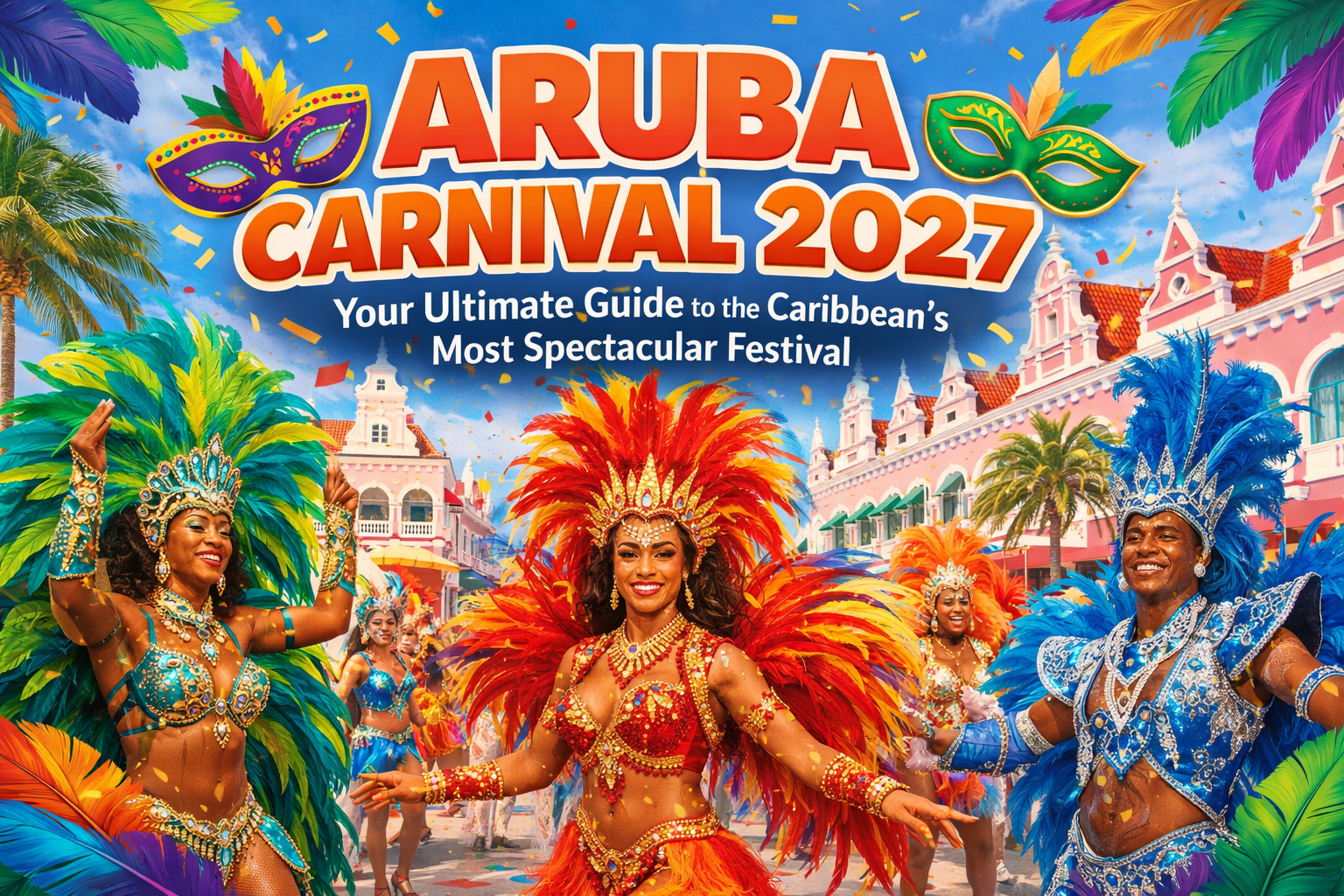
Cover image - Create a vibrant 1536x1024 landscape cover image featuring a colorful carnival scene in Aruba with dancing participants in ela

Aruba Carnival 2027 runs from early January through March, culminating in the Grand Parade on March 1-2, 2027
Costume costs range from $200-$1000+ depending on the band and section you choose
Book early – costume sales typically begin in October 2026, with the best selections selling out quickly
Budget approximately $2,500-$4,000 per person for a complete carnival experience including flights, accommodation, costumes, and events
Safety is paramount – travel in groups, stay hydrated, and keep valuables secure during all carnival activities

1. CARNIVAL BASICS

1.1 What is Aruba Carnival

Aruba Carnival represents one of the Caribbean’s most authentic and welcoming cultural celebrations, deeply rooted in the island’s rich multicultural heritage. This spectacular festival traces its origins back to the 18th century when enslaved Africans, European colonists, and indigenous Arawak peoples began blending their traditions into what would eventually become modern carnival.

The cultural significance of Aruba Carnival extends far beyond mere entertainment. It serves as a powerful expression of freedom, creativity, and community unity that has sustained the Aruban people through centuries of change. The festival celebrates the island’s unique identity as a melting pot where Dutch colonial history, African rhythms, Latin American passion, and Caribbean warmth converge into something entirely magical.

From its humble beginnings as small neighborhood celebrations, Aruba Carnival has evolved dramatically over the past century. The 1950s marked a turning point when local communities began organizing more elaborate parades and competitions. By the 1980s, the festival had grown into a major tourist attraction while maintaining its authentic local character.

Today’s Aruba Carnival has earned recognition from cultural organizations worldwide, though it hasn’t yet received UNESCO designation like some other Caribbean festivals. However, this hasn’t diminished its importance as one of the region’s premier cultural events, attracting over 100,000 visitors annually to an island with a population of just 110,000.

Compared to other world-famous carnivals, Aruba offers several unique advantages:

  • Intimacy: Unlike Rio’s massive crowds or Trinidad’s intense competition, Aruba Carnival maintains a family-friendly atmosphere
  • Accessibility: English, Spanish, Dutch, and Papiamento are widely spoken, making navigation easier for international visitors
  • Weather: Aruba’s location outside the hurricane belt guarantees perfect carnival weather
  • Safety: The island’s low crime rate and excellent infrastructure provide peace of mind for travelers
  • 1.2 When is Carnival

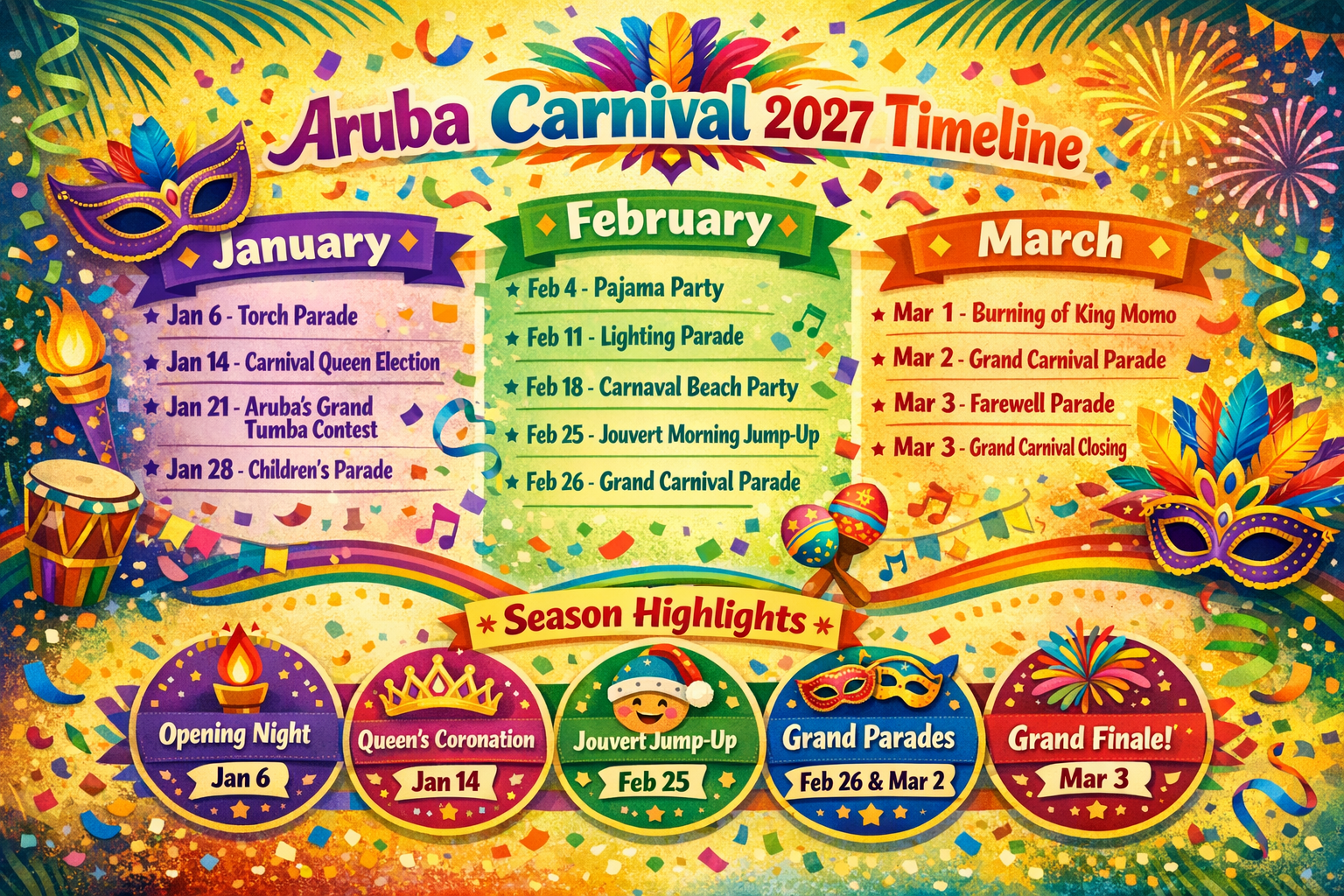
    Aruba Carnival 2027 follows the traditional Catholic calendar, with the main celebrations occurring on Monday, March 1st and Tuesday, March 2nd – the two days immediately preceding Ash Wednesday. However, the carnival season actually begins much earlier, creating an extended period of festivities that locals call “the most wonderful time of the year.”

    The carnival calendar and countdown officially starts on January 6th (Three Kings Day) and builds momentum through various events, competitions, and parties leading up to the grand finale. This extended timeline allows visitors to choose their preferred level of intensity, from early-season intimate gatherings to the explosive energy of the final weekend.

    For first-time visitors, the best time to visit depends on your goals:

  • Early January: Perfect for experiencing authentic local culture with smaller crowds
  • Mid-February: Ideal balance of events and manageable tourist numbers
  • Final Weekend: Maximum energy and spectacle, but largest crowds and highest prices
  • The duration of festivities spans nearly eight weeks, but the most intensive period occurs during the final two weeks leading up to Carnival Monday and Tuesday.

    1.3 Carnival Season Timeline

    Understanding the carnival season’s progression helps visitors plan their optimal experience:

    Post-Christmas Activities (January 6-31):

  • Children’s carnival events and competitions
  • Local band costume reveals
  • Traditional folk performances
  • Neighborhood street parties
  • Carnival Monday (Mas Monday) – March 1, 2027:

  • Morning: Children’s parade through Oranjestad
  • Afternoon: Adult costume bands begin their journey
  • Evening: Street parties and impromptu celebrations
  • Night: Official after-parties at various venues
  • Carnival Tuesday (Mas Tuesday) – March 2, 2027:

  • Dawn: Traditional “J’ouvert” celebration
  • Morning: Grand Parade judging begins
  • Afternoon: Main parade through downtown Oranjestad
  • Evening: Prize presentations and closing ceremonies
  • Night: Final carnival parties until dawn Wednesday
  • 2. CARNIVAL EVENTS & ACTIVITIES

    2.1 Major Events

    The Grand Parade represents the crown jewel of Aruba Carnival 2027, featuring over 30 masquerade bands with thousands of participants dancing through the streets of Oranjestad. What to expect: A sensory overload of elaborate costumes, thundering sound systems, and infectious energy that transforms the capital into a moving festival.

    Safety tips for parade participation:

  • Stay with your band group at all times
  • Wear comfortable, broken-in shoes
  • Apply waterproof sunscreen every 2 hours
  • Keep emergency contacts easily accessible
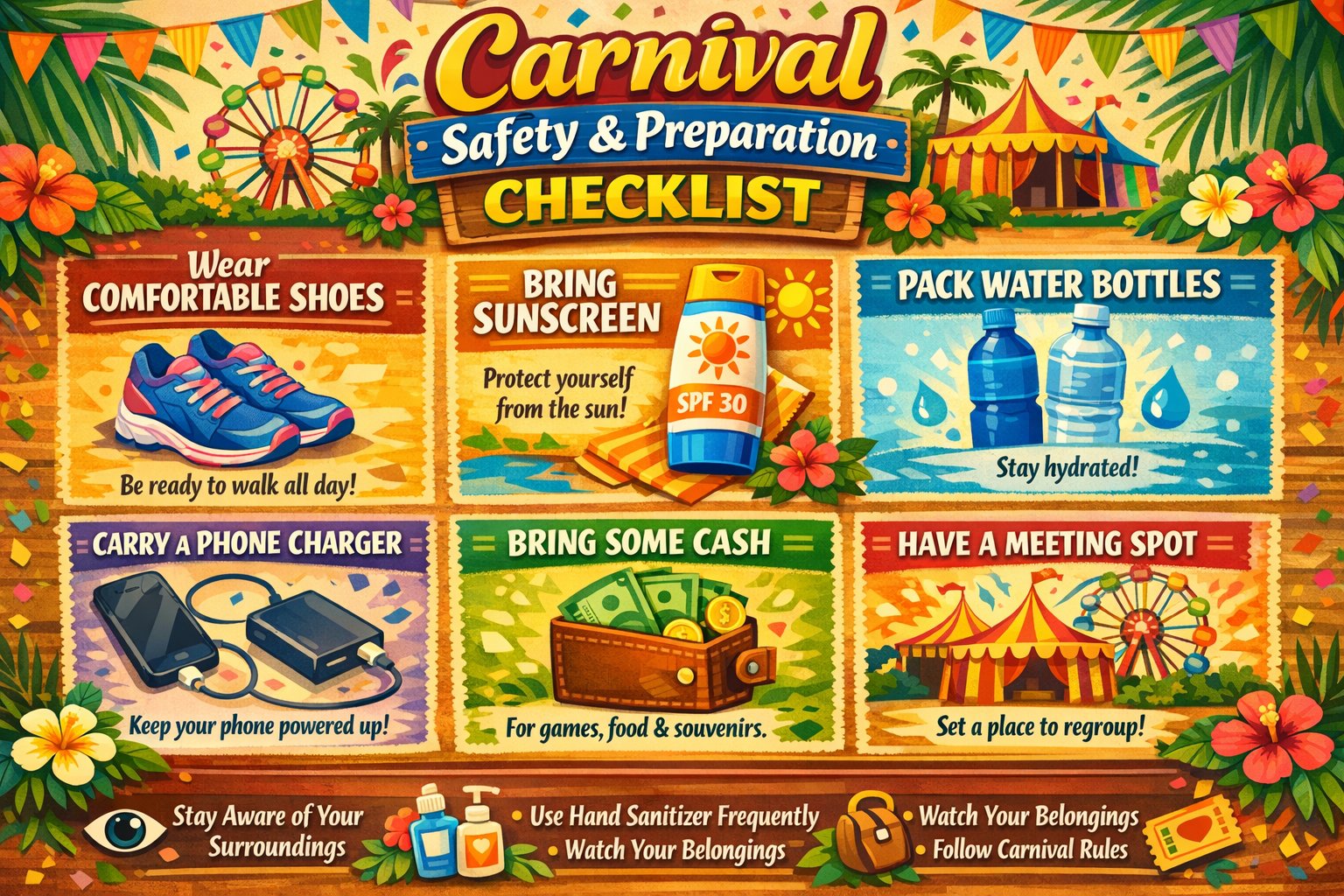
  • Designate a meeting point if separated from friends
  • The Calypso Competition unfolds over several weeks with preliminaries in mid-February, semifinals in late February, and finals during carnival weekend. Local and regional artists compete with original compositions that often provide social commentary mixed with humor and Caribbean wit.

    Where to watch: The Renaissance Festival Plaza provides the best viewing experience with covered seating and excellent acoustics. Tickets range from $25 for general admission to $75 for VIP sections with food and beverage service.

    Kings and Queens of Carnival competition showcases the most elaborate individual costumes, often weighing over 100 pounds and featuring intricate mechanical elements. Venue and tickets: The competition takes place at the Guillermo P. Trinidad Stadium with tickets starting at $40. VIP packages ($150) include premium seating and meet-and-greet opportunities with contestants.

    Mas Bands on the Road create the heart of carnival’s street celebration:

    Monday Mas: Generally more relaxed with smaller crowds, perfect for first-timers to acclimate to the carnival experience. Bands typically start their route around 1 PM and finish by 8 PM.

    Tuesday Mas: The main event featuring all registered bands competing for prizes across multiple categories. The parade begins at 10 AM and continues until sunset.

    Judging points are strategically located throughout the parade route where bands perform their most elaborate presentations. Key locations include:

  • Wilhelminastraat (main judging stage)
  • Renaissance Marketplace
  • Plaza Daniel Leo
  • Surfside Beach Boulevard
  • Routes and stages: The parade follows a 4-mile circuit through Oranjestad’s historic center, with designated rest stops every half-mile featuring water stations, restrooms, and medical assistance.

    2.2 Competitions

    Beyond the main parade competitions, Aruba Carnival 2027 features numerous specialized contests:

  • Tumba Competition: Crowns the official carnival song
  • Youth Calypso: Showcases emerging local talent
  • Steelpan Competition: Celebrates Caribbean musical traditions
  • Traditional Mas: Honors historical carnival characters
  • Roadmarch Competition: Determines the most popular parade songs
  • 2.3 Pre-Carnival Parties

    Fetes (carnival parties) begin in January and escalate in frequency and intensity as carnival approaches. These events range from intimate beach gatherings to massive stadium concerts featuring international Caribbean artists.

    Private vs public events:

  • Public fetes: Open to all ticket holders, typically $30-$80 admission
  • Private fetes: Invitation-only or band-member exclusive, often included in costume packages
  • Popular annual fetes include:

  • Pajama Party: Mid-January beach celebration
  • White Party: February elegance and sophistication
  • Paint Party: Colorful pre-carnival celebration
  • Dawn Dance: Sunrise beach party on Carnival Sunday
  • 3. MUSIC & CULTURE

    3.1 Music Genres

    Calypso remains the heartbeat of Aruba Carnival, with its history and evolution reflecting the island’s cultural journey. Originating from African work songs and evolving through Caribbean migration patterns, Aruban calypso incorporates Dutch, Spanish, and English lyrics alongside traditional Papiamento.

    Soca music energizes the modern carnival experience with its faster tempo and dance-oriented rhythms. Local DJs and sound systems blend classic soca with contemporary Caribbean beats, creating an irresistible soundtrack for street celebrations.

    Additional musical genres featured throughout carnival include:

  • Steelpan: Traditional Caribbean percussion ensembles
  • Tumba: Aruba’s indigenous carnival music style
  • Merengue and Bachata: Reflecting the island’s Latin American connections
  • Reggaeton: Modern urban Caribbean influences
  • 3.2 Dance & Movement

    Carnival dancing in Aruba emphasizes participation over performance, welcoming everyone regardless of skill level. Traditional moves include:

  • Wining: Hip-centric Caribbean dance fundamental to carnival
  • Jumping: High-energy movements synchronized with soca beats
  • Flag waving: Incorporating costume elements into dance
  • Chipping: Relaxed shuffling step perfect for long parade routes
  • 4. MASQUERADE BANDS

    Create a 1536x1024 landscape infographic showing the Aruba Carnival 2027 timeline from January through March. Display key dates, events, and

    4.1 Choosing a Band

    Selecting the right masquerade band significantly impacts your Aruba Carnival 2027 experience. Large bands vs small bands each offer distinct advantages:

    Large Bands (500+ members):

  • Professional organization and logistics
  • Elaborate sound systems and support trucks
  • Multiple costume sections and price points
  • Higher energy and crowd excitement
  • Examples: Turtuga, Watapana, Carnaval San Nicolas
  • Small Bands (50-200 members):

  • Intimate, family-like atmosphere
  • Personal attention from organizers
  • Unique, artistic costume designs
  • Easier navigation through crowds
  • More authentic cultural experience
  • Price ranges vary significantly based on band size and costume section:

  • Budget options: $200-$400 (backline sections)
  • Mid-range: $400-$700 (standard sections)
  • Premium: $700-$1000+ (frontline and king/queen sections)
  • Band reputations and reviews can be researched through:

  • Social media platforms and carnival forums
  • Previous participants’ testimonials
  • Local carnival blogs and websites
  • Band track records for organization and costume quality
  • Costume sections within bands typically include:

  • Frontline: Most elaborate costumes with full accessories
  • VIP: Premium positioning with enhanced services
  • Standard: Mid-level costumes balancing cost and aesthetics
  • Backline: Budget-friendly options focusing on participation over elaborate design
  • 4.4 Alternative Mas

    Individual mas allows creative freedom for experienced carnival participants who design and create their own costumes. This option requires significant preparation but offers unlimited artistic expression.

    Small bands often focus on specific themes or cultural traditions, providing more meaningful connections to Aruba’s heritage.

    Traditional character bands preserve historical carnival figures like:

  • Anansi (spider trickster from African folklore)
  • Diablos (devil characters from Spanish influence)
  • Indigenous Arawak representations
  • Dutch colonial period characters
  • Historical presentations educate while entertaining, often featuring elaborate storytelling through costume and performance.


        Aruba Carnival 2027 Band Selector
        
            .cg-element-container {
                max-width: 800px;
                margin: 20px auto;
                font-family: 'Segoe UI', Tahoma, Geneva, Verdana, sans-serif;
                background: linear-gradient(135deg, #ff6b6b, #4ecdc4, #45b7d1);
                padding: 30px;
                border-radius: 15px;
                box-shadow: 0 10px 30px rgba(0,0,0,0.2);
            }
            
            .cg-element-header {
                text-align: center;
                color: white;
                margin-bottom: 30px;
            }
            
            .cg-element-header h2 {
                font-size: 2.2em;
                margin: 0;
                text-shadow: 2px 2px 4px rgba(0,0,0,0.3);
            }
            
            .cg-element-filters {
                background: white;
                padding: 25px;
                border-radius: 10px;
                margin-bottom: 20px;
                box-shadow: 0 5px 15px rgba(0,0,0,0.1);
            }
            
            .cg-element-filter-group {
                margin-bottom: 20px;
            }
            
            .cg-element-filter-group label {
                display: block;
                font-weight: bold;
                margin-bottom: 8px;
                color: #333;
            }
            
            .cg-element-filter-group select, .cg-element-filter-group input {
                width: 100%;
                padding: 12px;
                border: 2px solid #ddd;
                border-radius: 8px;
                font-size: 16px;
                transition: border-color 0.3s;
            }
            
            .cg-element-filter-group select:focus, .cg-element-filter-group input:focus {
                border-color: #4ecdc4;
                outline: none;
            }
            
            .cg-element-results {
                background: white;
                border-radius: 10px;
                padding: 20px;
                box-shadow: 0 5px 15px rgba(0,0,0,0.1);
            }
            
            .cg-element-band-card {
                border: 2px solid #eee;
                border-radius: 10px;
                padding: 20px;
                margin-bottom: 15px;
                transition: transform 0.3s, box-shadow 0.3s;
            }
            
            .cg-element-band-card:hover {
                transform: translateY(-3px);
                box-shadow: 0 8px 20px rgba(0,0,0,0.15);
            }
            
            .cg-element-band-name {
                font-size: 1.4em;
                font-weight: bold;
                color: #2c3e50;
                margin-bottom: 10px;
            }
            
            .cg-element-band-details {
                display: grid;
                grid-template-columns: repeat(auto-fit, minmax(150px, 1fr));
                gap: 10px;
                margin-bottom: 15px;
            }
            
            .cg-element-detail-item {
                background: #f8f9fa;
                padding: 8px 12px;
                border-radius: 6px;
                font-size: 0.9em;
            }
            
            .cg-element-detail-label {
                font-weight: bold;
                color: #666;
            }
            
            .cg-element-price {
                font-size: 1.2em;
                font-weight: bold;
                color: #27ae60;
            }
            
            .cg-element-no-results {
                text-align: center;
                color: #666;
                font-style: italic;
                padding: 40px;
            }
            
            @media (max-width: 768px) {
                .cg-element-container {
                    margin: 10px;
                    padding: 20px;
                }
                
                .cg-element-header h2 {
                    font-size: 1.8em;
                }
                
                .cg-element-band-details {
                    grid-template-columns: 1fr;
                }
            }


    🎭 Aruba Carnival 2027 Band Selector

    Find the perfect masquerade band for your carnival experience!

    All Budgets Budget ($200-$400) Mid-Range ($400-$700) Premium ($700+)
    Any Size Small & Intimate (50-200 members) Large & Energetic (500+ members)
    Any Level First-Timer Experienced
    Any Theme Traditional Caribbean Fantasy & Mythology Nature & Wildlife Cultural Heritage

    const bands = [ { name: "Turtuga Mas Band", size: "large", budget: "mid", theme: "nature", experience: "beginner", priceRange: "$450-$650", members: "800+", founded: "1995", specialty: "Sea Life Themes", description: "Aruba's largest and most welcoming band, perfect for first-timers with excellent organization." }, { name: "Watapana Cultural Band", size: "large", budget: "premium", theme: "cultural", experience: "experienced", priceRange: "$700-$950", members: "600+", founded: "1988", specialty: "Aruban Heritage", description: "Premium band focusing on authentic Aruban culture with elaborate traditional costumes." }, { name: "Carnival San Nicolas", size: "large", budget: "mid", theme: "traditional", experience: "beginner", priceRange: "$400-$600", members: "750+", founded: "1975", specialty: "Traditional Caribbean", description: "Historic band from San Nicolas with strong community roots and affordable options." }, { name: "Mystical Aruba", size: "small", budget: "premium", theme: "fantasy", experience: "experienced", priceRange: "$800-$1200", members: "150", founded: "2010", specialty: "Fantasy Creatures", description: "Boutique band creating artistic fantasy costumes with personalized attention." }, { name: "Island Breeze Mas", size: "small", budget: "budget", theme: "nature", experience: "beginner", priceRange: "$200-$350", members: "120", founded: "2015", specialty: "Tropical Paradise", description: "Friendly small band perfect for budget-conscious first-timers seeking authentic experience." }, { name: "Heritage Warriors", size: "small", budget: "mid", theme: "cultural", experience: "experienced", priceRange: "$500-$750", members: "200", founded: "2005", specialty: "Indigenous History", description: "Educational band preserving Arawak and colonial history through detailed presentations." }, { name: "Tropical Storm Mas", size: "large", budget: "premium", theme: "nature", experience: "experienced", priceRange: "$750-$1100", members: "900+", founded: "1992", specialty: "Weather Elements", description: "High-energy band with spectacular weather-themed costumes and professional production." }, { name: "Papiamento Pride", size: "small", budget: "budget", theme: "cultural", experience: "beginner", priceRange: "$250-$400", members: "180", founded: "2018", specialty: "Local Language", description: "Community-focused band celebrating Papiamento culture with affordable family options." } ];

    function filterBands() { const budget = document.getElementById('budget').value; const size = document.getElementById('size').value; const experience = document.getElementById('experience').value; const theme = document.getElementById('theme').value;

    const filtered = bands.filter(band => { return (!budget || band.budget === budget) && (!size || band.size === size) && (!experience || band.experience === experience) && (!theme || band.theme === theme); });

    displayResults(filtered); }

    function displayResults(bands) { const resultsContainer = document.getElementById('results'); if (bands.length === 0) { resultsContainer.innerHTML = '

    No bands match your criteria. Try adjusting your filters!
    '; return; }

    const html = bands.map(band => `

    ${band.name}
    Price: ${band.priceRange}
    Members: ${band.members}
    Founded: ${band.founded}
    Specialty: ${band.specialty}

    ${band.description}

    `).join('');

    resultsContainer.innerHTML = html; }

    // Add event listeners document.getElementById('budget').addEventListener('change', filterBands); document.getElementById('size').addEventListener('change', filterBands); document.getElementById('experience').addEventListener('change', filterBands); document.getElementById('theme').addEventListener('change', filterBands);

    // Initial display displayResults(bands);

    5. COSTUMES

    5.1 Costume Selection

    Costume sections within bands offer different levels of elaborateness and corresponding price points:

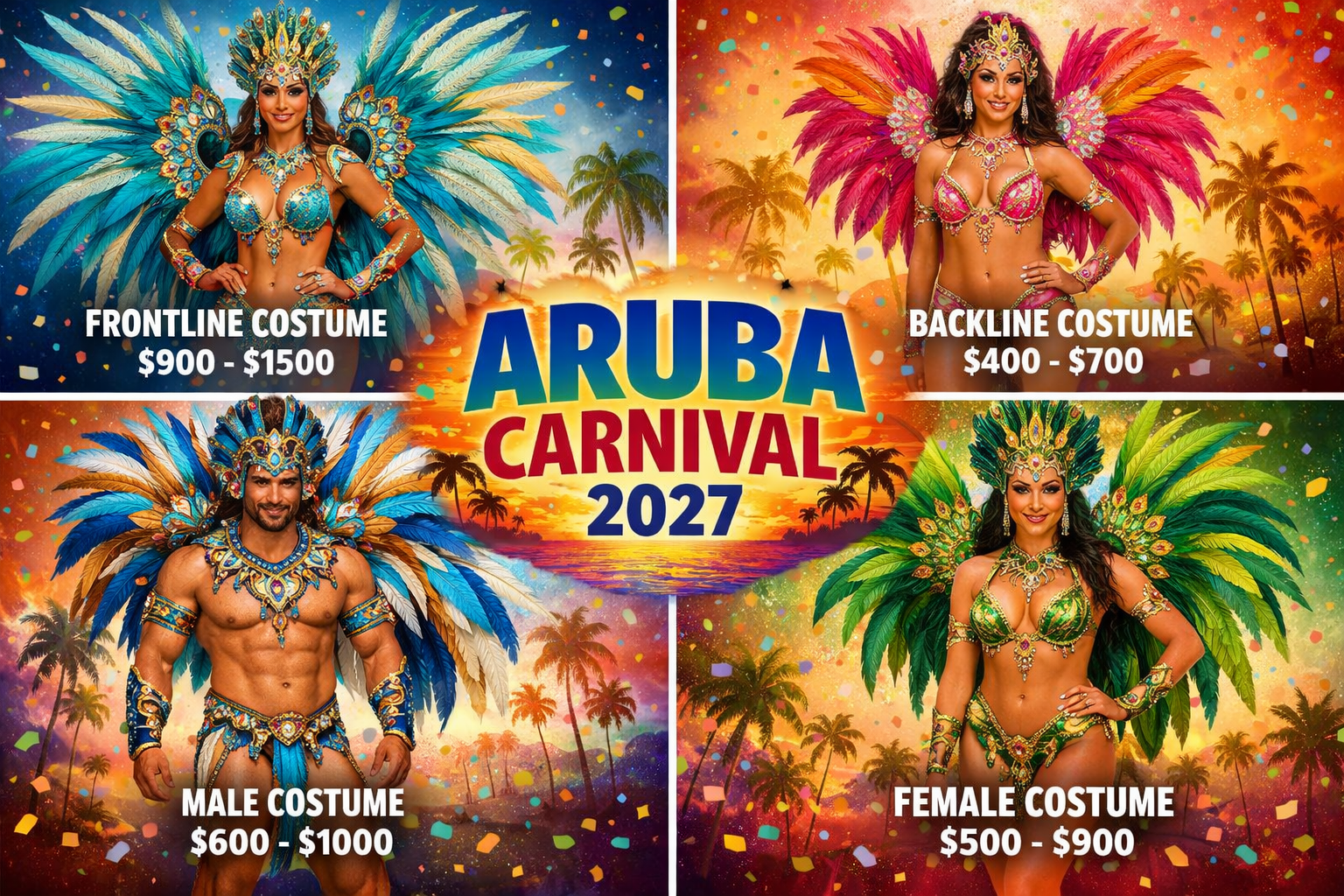
    Frontline sections feature the most spectacular costumes with full headpieces, elaborate backpacks, and premium materials. These costumes often include LED lighting, moving parts, and professional-grade construction.

    Backline sections provide more affordable entry points while still including essential costume elements. These typically feature smaller headpieces and simpler accessories but maintain the band’s overall aesthetic.

    Male vs female costumes traditionally differ in coverage and style:

  • Female costumes: Often feature decorative bras, shorts or skirts, and elaborate accessories
  • Male costumes: Typically include shorts, vests or chest pieces, and masculine accessories
  • Unisex options: Many modern bands offer gender-neutral costume designs
  • Sizing and fitting requires careful attention, as carnival costumes fit differently than regular clothing. Most bands offer multiple fitting sessions in the months leading up to carnival.

    Price ranges for Aruba Carnival 2027:

  • Budget sections: $200-$400
  • Standard sections: $400-$700
  • Premium sections: $700-$1000+
  • King/Queen costumes: $1500-$3000+
  • Costume reveal season typically begins in October, with bands unveiling their themes and designs through elaborate launch parties and social media campaigns.

    5.2 Costume Elements

    Understanding costume components helps participants make informed decisions:

    Headpieces range from simple decorative bands to elaborate structures requiring neck strengthening exercises. Consider weight and comfort for long parade days.

    Backpacks/back pieces create dramatic silhouettes but require practice walking and dancing. Some feature wheels for easier movement during parades.

    Belts and leg pieces add detail and movement to costumes while remaining relatively comfortable for extended wear.

    Bras and bodywear form the foundation of most female costumes. Quality construction ensures comfort and security during active participation.

    Monokinis vs bikinis offer different coverage options, with monokinis providing more security for active dancing.

    Embellishments and materials:

  • Feathers: Natural and synthetic options in every color imaginable
  • Beads: Hand-sewn details adding texture and catching light
  • Crystals: Swarovski and similar materials creating spectacular sparkle
  • Sequins: Traditional carnival material reflecting Caribbean sunshine
  • Wire work: Structural elements creating costume shapes and movement
  • 5.3 Costume Preparation

    Fittings and alterations typically occur 2-3 times before carnival:

  • First fitting: Basic sizing and initial adjustments
  • Second fitting: Fine-tuning and comfort modifications
  • Final fitting: Last-minute adjustments and accessory attachment
  • Customization options vary by band but may include:

  • Color variations within sections
  • Additional embellishments for extra fees
  • Personalized sizing for unique body types
  • Special accommodations for physical limitations
  • Costume collection usually occurs the week before carnival, with bands providing detailed pickup schedules and locations.

    What to bring on the road:

  • Comfortable undergarments designed for extended wear
  • Backup accessories in case of breakage
  • Repair kit with safety pins, tape, and basic tools
  • Comfortable shoes broken in well before carnival day
  • Costume care and storage after carnival:

  • Professional cleaning services available on the island
  • Proper storage techniques for preservation
  • Options for shipping costumes home as souvenirs
  • Band buyback programs for costume recycling
  • 6. PLANNING YOUR CARNIVAL

    6.1 When to Book

    Costume sales timeline follows a predictable pattern:

  • October 2026: Band launches and early bird pricing
  • November 2026: Full costume reveals and standard pricing
  • December 2026: Popular sections begin selling out
  • January 2027: Limited availability and premium pricing
  • February 2027: Final sales for remaining inventory only
  • Accommodation booking should begin as early as possible, with many visitors booking their Aruba Carnival 2027 hotels immediately after the previous year’s celebration ends.

    Flight booking strategies:

  • Best prices: Book 3-6 months in advance
  • Peak season: February-March flights command premium pricing
  • Alternative airports: Consider connecting through Miami, Panama, or Amsterdam
  • Extended stays: Longer visits often offer better per-day rates
  • Fete ticket purchasing begins in December, with popular events selling out quickly. VIP packages and group discounts offer better value for multiple events.

    6.2 Budgeting

    Comprehensive budget breakdown for Aruba Carnival 2027:

    Costume costs: $200-$1000+ depending on band and section choice

    Accommodation costs:

  • Budget hotels: $150-$250 per night
  • Mid-range resorts: $300-$500 per night
  • Luxury properties: $600-$1200+ per night
  • Vacation rentals: $200-$800 per night depending on size and location
  • Fete tickets: $30-$150 per event, with most visitors attending 4-6 events

    Food and drinks:

  • Restaurant meals: $25-$75 per person
  • Street food: $5-$15 per meal
  • Alcohol: $8-$15 per cocktail, $3-$6 per beer
  • Groceries: $50-$100 per week for basic supplies
  • Transportation:

  • Rental car: $40-$80 per day
  • Taxi services: $15-$40 per trip within hotel zones
  • Bus transportation: $2-$5 per ride
  • Total estimated budget:

  • Budget traveler: $1,500-$2,500 per person
  • Mid-range experience: $2,500-$4,000 per person
  • Luxury celebration: $4,000-$8,000+ per person
  • Money-saving tips:

  • Book costume and accommodation early for best rates
  • Share vacation rental costs with friends
  • Attend free events and beach parties
  • Cook some meals rather than dining out exclusively
  • Take advantage of happy hour specials
  • Use public transportation when possible
  • 6.3 Travel Logistics

    Visa requirements for Aruba vary by nationality:

  • US citizens: Valid passport required, no visa needed for stays up to 30 days
  • EU citizens: Valid passport or ID card, no visa for short stays
  • Other nationalities: Check with Aruban consulates for specific requirements
  • Flights to Aruba are available from major international hubs:

  • US gateways: Miami, New York, Atlanta, Houston, Boston
  • European connections: Amsterdam (KLM hub), Madrid, Frankfurt
  • Regional Caribbean: Curacao, Colombia, Venezuela
  • Seasonal routes: Additional flights added during carnival season
  • Airport transfers from Queen Beatrix International Airport:

  • Taxi: $25-$35 to most hotels (fixed rates)
  • Rental car pickup: All major companies represented
  • Hotel shuttles: Many resorts offer complimentary or paid transfers
  • Ride sharing: Limited availability but growing
  • Currency and payments:

  • Official currency: Aruban Florin (AWG)
  • US dollars: Widely accepted at tourist businesses
  • Credit cards: Visa and Mastercard accepted everywhere
  • ATMs: Readily available throughout the island
  • Tipping: 15-20% standard at restaurants and bars
  • Travel insurance recommendations:

  • Medical coverage for international travel
  • Trip cancellation protection for carnival-specific bookings
  • Lost luggage coverage (especially important for costume travel)
  • Activity coverage for carnival participation
  • 6.4 Accommodation

    Hotels in Oranjestad offer proximity to carnival events:

  • Renaissance Aruba Resort: Downtown location with private beach access
  • Talk of the Town Hotel: Budget-friendly option in city center
  • Aruba Marriott Resort: Upscale beachfront property
  • Airbnb options provide more space and local experiences:

  • Downtown apartments: Walking distance to parade routes
  • Beach houses: Perfect for groups wanting privacy
  • Local neighborhoods: Authentic Aruban living experiences
  • Areas to stay each offer different advantages:

  • Palm Beach: High-rise hotel zone with resort amenities
  • Eagle Beach: Low-rise luxury with beautiful beaches
  • Oranjestad: Downtown convenience for carnival events
  • San Nicolas: Local culture and lower prices
  • Safety considerations:

  • Choose well-reviewed accommodations with good lighting
  • Secure storage for valuables and costumes
  • 24-hour front desk or security presence
  • Safe neighborhood for walking
  • Proximity to events:

  • Downtown locations: Walking distance to most carnival events
  • Beach areas: Shuttle or taxi required but better resort amenities
  • Residential areas: Authentic experience but transportation needed
  • 7. WHAT TO PACK & WEAR

    7.1 Carnival Day Essentials

    Comfortable shoes/sneakers rank as the most critical carnival preparation item. Participants walk and dance for 8-12 hours on pavement, making proper footwear essential for enjoyment and injury prevention.

    Recommended shoe types:

  • Cross-training sneakers: Provide ankle support and cushioning
  • Running shoes: Lightweight with excellent shock absorption
  • Dance sneakers: Designed for movement and extended wear
  • Avoid: New shoes, sandals, high heels, or dress shoes
  • Athletic/dance wear under costume ensures comfort and prevents chafing:

  • Moisture-wicking fabrics: Keep skin dry during extended activity
  • Seamless undergarments: Prevent irritation from costume contact
  • Compression shorts: Reduce thigh chafing during dancing
  • Sports bras: Provide support under costume bras
  • Hydration pack/water bottle prevents dehydration in Caribbean heat:

  • Hands-free hydration packs: Allow continuous drinking while dancing
  • Insulated bottles: Keep water cool throughout the day
  • Electrolyte supplements: Replace minerals lost through sweating
  • Sunscreen (waterproof) protects exposed skin during outdoor celebration:

  • SPF 30 minimum: Higher protection recommended for fair skin
  • Water-resistant formulas: Maintain protection despite sweating
  • Reapplication schedule: Every 2 hours regardless of SPF rating
  • Portable phone charger keeps devices powered for photos and communication:

  • Power banks: 10,000+ mAh capacity for all-day power
  • Solar chargers: Harness Caribbean sunshine for sustainable power
  • Charging cables: Bring backups in case of loss or damage
  • Waterproof phone case/pouch protects devices from sweat, rain, and spills:

  • Full submersion protection: IPX8 rating minimum
  • Touch-screen compatibility: Allows phone use without removal
  • Lanyard attachment: Prevents loss during active dancing
  • Small backpack or fanny pack carries essentials without interfering with costume:

  • Lightweight materials: Minimize additional weight
  • Multiple compartments: Organize items for easy access
  • Secure closures: Prevent loss during active movement
  • Cash and cards for purchases throughout carnival day:

  • Small bills: Easier for vendor transactions
  • Backup payment methods: In case of loss or damage
  • Secure storage: Money belt or hidden pocket
  • 7.2 General Packing List

    Climate considerations for Aruba’s tropical environment:

  • Temperature range: 80-88°F (27-31°C) year-round
  • Humidity levels: 60-80% typical during carnival season
  • Trade winds: Provide cooling but increase dehydration
  • Minimal rainfall: Brief showers possible but rare
  • Essential clothing items:

  • Lightweight, breathable fabrics: Cotton, linen, moisture-wicking synthetics
  • Sun protection: Long-sleeve shirts for beach/pool days
  • Evening wear: Restaurants and venues may have dress codes
  • Swimwear: Multiple sets for frequent beach/pool visits
  • Light jacket: Air conditioning can be aggressive indoors
  • Personal care items:

  • Aloe vera gel: Soothe sun exposure and costume irritation
  • Blister prevention: Moleskin, bandages, and foot powder
  • Personal medications: Bring extra in case of extended stay
  • Insect repellent: Minimal mosquitoes but occasional presence
  • 7.3 Fete Attire

    Festival wear for carnival parties requires balancing style with comfort:

  • Breathable fabrics: Essential for crowded, energetic environments
  • Bright colors: Embrace carnival’s vibrant aesthetic
  • Comfortable fit: Allow for dancing and movement
  • Easy care: Minimize maintenance during vacation
  • Comfortable dancing shoes for fete participation:

  • Broken-in footwear: Never wear new shoes to carnival events
  • Non-slip soles: Important for potentially wet surfaces
  • Ankle support: Prevent injury during enthusiastic dancing
  • Light, breathable clothing for tropical party environments:

  • Moisture-wicking materials: Stay comfortable despite heat and humidity
  • Layering options: Indoor venues may be air-conditioned
  • Quick-dry fabrics: Easy to clean between events
  • Themed outfits when required:

  • White parties: All-white clothing mandatory
  • Beach parties: Swimwear with cover-ups
  • Pajama parties: Comfortable sleepwear or loungewear
  • Paint parties: Clothes you don’t mind getting permanently stained
  • 8. FOOD & DRINK

    Create a 1024x1024 square image showcasing different types of Aruba carnival costumes arranged in an attractive grid layout. Show frontline,

    8.1 Carnival Food

    Road-side snacks fuel carnival participants throughout parade days:

    Traditional Aruban street food:

  • Pastechi: Fried pastries filled with cheese, meat, or fish ($2-$4)
  • Croquettes: Dutch-influenced fried balls with various fillings ($1-$3)
  • Arepa: Venezuelan flatbread with diverse toppings ($3-$6)
  • Fresh fruit: Mango, pineapple, and coconut served ice-cold ($2-$5)
  • International carnival favorites:

  • Barbecue: Grilled meats and vegetables from mobile vendors
  • Ice cream: Essential for cooling down during hot parade days
  • Empanadas: Latin American pastries with savory fillings
  • Funchi: Aruban polenta served as side dish or snack
  • Where to eat during Carnival:

  • Mobile food trucks: Follow parade routes offering convenient meals
  • Renaissance Marketplace: Central location with multiple vendors
  • Local restaurants: Many offer special carnival menus and hours
  • Hotel restaurants: Reliable options with familiar international cuisine
  • 8.2 Drinks

    Rum and cocktails dominate Aruba’s carnival drinking scene:

    Local rum specialties:

  • Aruba Ariba: Island’s signature cocktail with rum, fruit juices, and liqueurs
  • Balashi Cocktail: Made with local beer and rum
  • Coecoei: Traditional liqueur from local cactus
  • Papiamento: Rum punch with tropical fruit flavors
  • Local beers:

  • Balashi: Aruba’s national beer, light and refreshing
  • Presidente: Popular throughout the Caribbean
  • International brands: Heineken, Corona, and others widely available
  • Staying hydrated during carnival activities:

  • Water consumption: Minimum 8-10 glasses daily in tropical heat
  • Electrolyte replacement: Sports drinks or coconut water
  • Alcohol moderation: Alternate alcoholic drinks with water
  • Signs of dehydration: Headache, dizziness, fatigue
  • Cooler system on the road: Many bands provide mobile refreshment trucks following parade routes, offering:

  • Ice-cold water: Usually included in band packages
  • Alcoholic beverages: Available for purchase
  • Sports drinks: Electrolyte replacement options
  • Fresh juices: Natural hydration with vitamins
  • 8.3 Restaurants & Cuisine

    Aruban cuisine blends Caribbean, Latin American, Dutch, and international influences:

    Must-try local dishes:

  • Keshi Yena: Stuffed cheese with meat or seafood
  • Stoba: Hearty stew with goat, beef, or chicken
  • Fresh seafood: Red snapper, mahi-mahi, and local catch
  • Pan Bati: Traditional flatbread served with most meals
  • Restaurant recommendations for carnival visitors:

  • Zeerovers: Casual seafood spot popular with locals
  • Papiamento Restaurant: Upscale dining in historic setting
  • The Flying Fishbone: Beachfront dining with feet in sand
  • Local food trucks: Authentic street food experiences
  • Dining during carnival season:

  • Reservations essential: Popular restaurants book quickly
  • Extended hours: Many establishments accommodate carnival schedules
  • Special menus: Carnival-themed dishes and drinks
  • Takeout options: Convenient for busy carnival days
  • 9. SAFETY & TIPS

    9.1 Safety Guidelines

    Travel in groups provides security and enhances the carnival experience:

  • Buddy system: Never separate from at least one other person
  • Group communication: Establish meeting points and check-in times
  • Shared transportation: Safer and more economical than solo travel
  • Emergency contacts: Exchange information with all group members
  • Keep valuables secure during carnival activities:

  • Hotel safes: Store passports, extra cash, and jewelry
  • Minimal carrying: Bring only essential items to events
  • Hidden storage: Money belts or internal pockets for cash and cards
  • Copies: Photograph important documents and store separately
  • Be aware of surroundings throughout carnival participation:

  • Crowd awareness: Stay alert in dense parade situations
  • Exit strategies: Know locations of medical stations and security
  • Intoxication limits: Maintain awareness through moderate drinking
  • Local customs: Respect cultural norms and traditions
  • Emergency contacts for Aruba:

  • Police: 911 or 100
  • Medical emergency: 911 or 912
  • Fire department: 911 or 115
  • Tourist police: 522-3776
  • Authorized taxi services ensure safe transportation:

  • Licensed operators: Look for official taxi signs and meters
  • Hotel arrangements: Ask front desk to call reputable companies
  • Ride sharing: Limited but growing availability on island
  • Fixed rates: Airport and hotel zone pricing typically standardized
  • Avoiding dangerous areas:

  • San Nicolas after dark: Exercise caution in certain neighborhoods
  • Isolated beaches: Stay in well-populated areas especially at night
  • Excessive drinking areas: Avoid overly intoxicated crowds
  • 9.2 Health Considerations

    Staying hydrated in Aruba’s tropical climate:

  • Increased needs: Hot weather and physical activity demand more fluids
  • Early symptoms: Thirst, dry mouth, and decreased urination
  • Severe dehydration: Dizziness, rapid heartbeat, and confusion
  • Prevention: Drink water consistently throughout the day
  • Sun protection during outdoor carnival activities:

  • UV intensity: Caribbean sun stronger than many visitors expect
  • Reflection: Sand and water increase sun exposure
  • Peak hours: 10 AM – 4 PM require extra protection
  • Reapplication: Sunscreen effectiveness decreases with sweating and time
  • Foot care and blisters from extended carnival participation:

  • Prevention: Proper shoes, moisture-wicking socks, foot powder
  • Early treatment: Address hot spots before blisters develop
  • Blister care: Clean, cover, and protect formed blisters
  • Professional help: Seek medical attention for infected wounds
  • Stamina and rest for multi-day carnival celebration:

  • Pacing: Don’t attempt every event, especially as first-timer
  • Sleep schedule: Maintain regular rest despite late-night activities
  • Nutrition: Eat regular meals to maintain energy levels
  • Recovery time: Build rest days into carnival schedule
  • Medical facilities available in Aruba:

  • Hospital Dr. Horacio Oduber: Main hospital with emergency services
  • Walk-in clinics: Several locations for minor medical needs
  • Pharmacy chains: Botica di Servicio and others throughout island
  • Hotel medical services: Many resorts have on-call medical staff
  • Prescription medications:

  • Bring extra: In case of travel delays or extended stay
  • Original containers: Keep medications in labeled pharmacy bottles
  • Medical documentation: Carry prescriptions for controlled substances
  • Local pharmacies: May require local prescriptions for refills
  • 9.3 First-Timer Tips

    Start with smaller fetes to acclimate to carnival culture:

  • Intimate venues: Easier to navigate and less overwhelming
  • Local crowds: More authentic cultural experience
  • Lower pressure: Less intense than major stadium events
  • Learning opportunity: Observe customs and traditions
  • Pace yourself throughout carnival season:

  • Energy management: Don’t exhaust yourself early in the season
  • Event selection: Choose quality over quantity for events
  • Recovery time: Schedule downtime between major activities
  • Listen to your body: Rest when needed rather than pushing through fatigue
  • Make friends with locals for insider knowledge:

  • Cultural insights: Learn traditions and proper etiquette
  • Safety advice: Local knowledge about areas and situations
  • Hidden gems: Discover events and locations tourists miss
  • Language help: Navigate Papiamento and local expressions
  • Join band WhatsApp groups for real-time information:

  • Updates: Last-minute changes to schedules and locations
  • Community: Connect with other band members before arrival
  • Tips: Experienced members share valuable advice
  • Coordination: Group meetups and shared transportation
  • Download band apps for essential information:

  • Schedules: Real-time event timing and location updates
  • Maps: Parade routes and important location markers
  • Communication: Direct contact with band organizers
  • Photos: Access to professional band photography
  • Study parade routes before carnival day:

  • Rest stops: Know locations of water stations and restrooms
  • Medical stations: Identify first aid locations along route
  • Meeting points: Establish backup plans if separated from group
  • Transportation: Understand how to return to accommodation
  • 10. ACCOMMODATION OPTIONS

    Choosing the right accommodation significantly impacts your Aruba Carnival 2027 experience, with options ranging from luxury resorts to authentic local stays.

    High-Rise Hotel Zone (Palm Beach):

  • Hyatt Regency Aruba: Beachfront luxury with multiple pools and restaurants
  • Marriott Aruba Ocean Club: Timeshare resort with spacious accommodations
  • Holiday Inn Resort Aruba: Family-friendly with extensive amenities
  • Ritz-Carlton Aruba: Ultra-luxury with private beach and spa
  • Low-Rise Hotel Zone (Eagle Beach):

  • Bucuti & Tara Beach Resort: Adults-only boutique property
  • Amsterdam Manor Beach Resort: Dutch colonial charm with kitchenettes
  • Casa del Mar Beach Resort: Intimate setting with personalized service
  • MVC Eagle Beach: Spacious suites perfect for groups
  • Downtown Oranjestad:

  • Renaissance Aruba Resort: Split between adult and family islands
  • Talk of the Town Hotel: Budget-friendly with local character
  • Aruba Downtown Apartments: Modern vacation rentals in city center
  • Alternative Accommodation Types:

  • Vacation rentals: Entire homes perfect for large groups
  • Boutique hotels: Unique properties with local flair
  • Bed & breakfasts: Intimate settings with personal attention
  • Extended stay properties: Ideal for longer carnival visits
  • 11. PHOTOGRAPHY & MEDIA

    11.1 Photography Tips

    Best spots for photos during Aruba Carnival 2027:

  • Renaissance Marketplace: Iconic downtown backdrop with colonial architecture
  • Wilhelminastraat: Main parade route with best crowd energy
  • Surfside Beach: Stunning ocean backdrop for costume photos
  • Fort Zoutman: Historical setting adding cultural context
  • Hiring a photographer provides professional memories:

  • Band photographers: Many bands offer professional photo packages ($150-$300)
  • Independent photographers: Local professionals specializing in carnival ($200-$500 per session)
  • Group packages: Split costs among band members for better rates
  • Drone photography: Aerial shots of parades and events (permits required)
  • Band photographers typically include:

  • Parade day coverage: Professional shots during entire route
  • Costume fittings: Studio-quality images of complete costume
  • Group photos: Band member gatherings and celebrations
  • Digital galleries: Online access to all photos within weeks
  • Instagram-worthy locations throughout Aruba:

  • Colorful downtown buildings: Perfect carnival backdrops
  • Natural bridge: Dramatic landscape for costume photography
  • Eagle Beach: World-famous white sand and clear water
  • Alto Vista Chapel: Peaceful setting for reflective moments
  • Drone regulations in Aruba:

  • Registration required: All drones must be registered with authorities
  • No-fly zones: Airports, government buildings, and crowded events
  • Altitude limits: Maximum 400 feet above ground level
  • Operator licensing: Commercial use requires special permits
  • 11.2 Social Media

    Hashtags to use for maximum engagement:

  • #ArubaCarnaval2027: Main event hashtag
  • #OneHappyIsland: Official Aruba tourism hashtag
  • #CarnivalAruba: General carnival content
  • #MasAruba: Masquerade band specific posts
  • #VisitAruba: Tourism board hashtag for broader reach
  • Following Carnival updates through social media:

  • @ArubaCarnaval: Official carnival Instagram account
  • @ArubaToday: Local news with carnival coverage
  • Band accounts: Follow your specific masquerade band
  • Local influencers: Aruban content creators sharing insider perspectives
  • Band social media channels provide:

  • Real-time updates: Schedule changes and important announcements
  • Behind-the-scenes content: Costume making and preparation
  • Member spotlights: Featured participants and their stories
  • Live coverage: Real-time parade and event documentation
  • Live streams and coverage:

  • ATV: Local television station with comprehensive carnival coverage
  • Facebook Live: Bands and individuals streaming events real-time
  • YouTube: Professional documentation and highlight reels
  • Instagram Stories: Moment-by-moment carnival experiences
  • 11.3 Capturing Memories

    Video highlights preserve carnival’s dynamic energy:

  • Action cameras: GoPro and similar devices for hands-free recording
  • Smartphone stabilizers: Smooth footage while dancing and walking
  • Time-lapse photography: Compress long parade routes into short videos
  • Slow-motion capture: Highlight intricate costume details and movements
  • GoPro recommendations for carnival documentation:

  • Chest mount: Stable footage while dancing
  • Head mount: First-person perspective of carnival experience
  • Hand grip: Versatile positioning for various shots
  • Extra batteries: Essential for all-day recording
  • Professional photo packages offered by many bands:

  • Digital galleries: Online access to hundreds of professional photos
  • Print options: High-quality prints shipped internationally
  • Social media packages: Optimized images for online sharing
  • Video highlights: Professional editing of parade day footage
  • Copyright and privacy considerations:

  • Permission: Ask before photographing individuals in costume
  • Band policies: Some bands restrict outside photographers
  • Commercial use: Special permits required for professional photography
  • Respect: Honor requests for privacy during personal moments
  • 12. BEYOND CARNIVAL

    Create a 1536x1024 landscape image depicting a carnival safety and preparation checklist. Design it as an attractive infographic with icons

    12.1 Exploring Aruba

    Natural attractions complement your carnival experience:

  • Arikok National Park: Covering 20% of the island with hiking trails and caves
  • Natural Pool: Hidden swimming spot accessible by off-road vehicle
  • Ostrich Farm: Unique wildlife experience with guided tours
  • Butterfly Farm: Tropical garden with hundreds of exotic species
  • Cultural sites provide deeper understanding of Aruban heritage:

  • Alto Vista Chapel: Peaceful pilgrimage site with panoramic views
  • Archaeological Museum: Pre-Columbian artifacts and island history
  • Fort Zoutman: Historic fortress and museum in downtown Oranjestad
  • Cas di Cultura: Cultural center showcasing local arts and traditions
  • Adventure activities for active travelers:

  • Windsurfing: World-class conditions at Fisherman’s Huts
  • Kitesurfing: Consistent trade winds and shallow waters
  • Snorkeling: Crystal-clear waters with abundant marine life
  • Deep-sea fishing: Charter boats for marlin, tuna, and mahi-mahi
  • 12.2 Day Trips

    Nearby islands accessible by ferry or small aircraft:

  • Curacao: Sister island with distinctive architecture and culture (30-minute flight)
  • Bonaire: World-renowned diving destination (45-minute flight)
  • Venezuela: Mainland South America for cultural exploration (flights available)
  • Island tours showcase Aruba’s diverse landscapes:

  • ATV adventures: Off-road exploration of rugged terrain
  • Jeep safaris: Guided tours to remote locations
  • Horseback riding: Beach and countryside trail rides
  • Sunset sailing: Catamaran cruises with dinner and drinks
  • 12.3 Post-Carnival Activities

    Relaxation and recovery after intensive carnival participation:

  • Spa treatments: Rejuvenating massages and wellness services
  • Beach days: Peaceful relaxation on world-famous beaches
  • Yoga classes: Many resorts offer beachside yoga sessions
  • Meditation retreats: Quiet spaces for reflection and restoration
  • Hiking and nature for active recovery:

  • Hooiberg: Aruba’s second-highest peak with panoramic views
  • Conchi (Natural Pool): Challenging hike to hidden swimming spot
  • Coastal trails: Scenic walks along dramatic limestone cliffs
  • Bird watching: Over 200 species including endemic subspecies
  • Cultural sites for deeper island understanding:

  • Museums: Extended visits to learn Aruban history
  • Art galleries: Local artists showcasing island-inspired works
  • Music venues: Live performances of traditional and contemporary music
  • Cooking classes: Learn to prepare authentic Aruban cuisine
  • 13. CARNIVAL INDUSTRY

    13.1 Costume Production

    How costumes are made involves months of planning and skilled craftsmanship:

    The process begins in April following each carnival, when band leaders start conceptualizing themes for the following year. Designers and builders work collaboratively to transform artistic visions into wearable art that can withstand hours of active dancing and Caribbean weather.

    Wire bending forms the structural foundation of elaborate headpieces and backpacks. Skilled artisans shape lightweight aluminum and steel wire into intricate frameworks that provide support while remaining comfortable for extended wear.

    Innovation in carnival continues evolving with new materials and technologies:

  • LED integration: Battery-powered lighting systems create stunning nighttime effects
  • Lightweight materials: Advanced polymers reduce costume weight without sacrificing visual impact
  • Modular design: Interchangeable components allow customization and easier transport
  • Sustainable practices: Recycled materials and eco-friendly production methods
  • 13.2 Economic Impact

    Tourism statistics demonstrate carnival’s significant economic importance:

  • Visitor numbers: Carnival season attracts 40% more tourists than average months
  • Hotel occupancy: Approaches 95% during peak carnival weekend
  • Average spending: Carnival visitors spend 60% more than typical tourists
  • Economic multiplier: Each carnival dollar generates $2.30 in broader economic activity
  • Industry size encompasses multiple sectors:

  • Direct employment: Over 2,000 jobs in costume production, event management, and tourism services
  • Indirect benefits: Restaurants, transportation, retail, and entertainment sectors see significant increases
  • Government revenue: Tourism taxes and business licenses generate substantial public income
  • Infrastructure investment: Carnival success justifies ongoing improvements to roads, utilities, and facilities
  • Sponsorships from local and international companies:

  • Telecommunications: Mobile carriers sponsor band communications and live streaming
  • Beverage companies: Rum and beer brands provide significant event funding
  • Hotels and resorts: Accommodation partners offer exclusive carnival packages
  • Airlines: Transportation sponsors facilitate international visitor access
  • 13.3 Carnival Arts

    Costume design requires artistic vision combined with practical engineering:

  • Sketch development: Initial concepts evolve through multiple iterations
  • Material selection: Balancing visual impact, comfort, and durability
  • Prototype testing: Sample costumes undergo rigorous wear testing
  • Production scaling: Manufacturing hundreds of costumes while maintaining quality
  • Makeup artists (MUA) create stunning transformations:

  • Body painting: Full-body artistic designs complementing costumes
  • Special effects: Glitter, gems, and temporary tattoos
  • Weather resistance: Products designed for tropical heat and humidity
  • Cultural themes: Designs reflecting carnival’s multicultural heritage
  • Wire bending represents a specialized carnival art form:

  • Traditional techniques: Passed down through generations of craftspeople
  • Modern tools: Specialized equipment for precision and efficiency
  • Artistic collaboration: Wire benders work closely with costume designers
  • Safety considerations: Smooth finishes and protective padding prevent injury
  • 14. FAMILY CARNIVAL

    14.1 Kiddies Carnival

    Age groups and categories ensure appropriate participation for all children:

  • Toddlers (2-4 years): Simple costumes with parent accompaniment
  • Children (5-8 years): Basic parade participation with supervision
  • Pre-teens (9-12 years): More elaborate costumes and independent participation
  • Teenagers (13-17 years): Adult-style costumes with age-appropriate themes
  • Children’s bands specialize in family-friendly carnival experiences:

  • Safety focus: Enhanced supervision and medical support
  • Shorter routes: Age-appropriate parade distances
  • Educational themes: Costumes teaching Aruban culture and history
  • Parent participation: Opportunities for family involvement
  • Junior competitions celebrate young talent:

  • Junior Calypso: Age-appropriate singing competitions
  • Young Kings and Queens: Elaborate costume competitions for children
  • Dance contests: Showcasing traditional and modern Caribbean moves
  • Art competitions: Drawing and craft contests with carnival themes
  • Safety for families requires special considerations:

  • Hydration stations: More frequent water breaks for children
  • Medical support: Pediatric-trained staff at family events
  • Lost child protocols: Identification systems and reunion procedures
  • Age-appropriate content: Family-friendly music and themes
  • 14.2 Family-Friendly Options

    Daytime events provide carnival experiences without late-night concerns:

  • Morning parades: Children’s events typically start at 9 AM
  • Beach parties: Afternoon celebrations with family activities
  • Cultural shows: Educational performances showcasing island heritage
  • Craft workshops: Hands-on activities teaching carnival arts
  • Family fetes offer inclusive celebration environments:

  • Alcohol-free zones: Designated areas for families with children
  • Entertainment variety: Activities beyond dancing and drinking
  • Food options: Kid-friendly menus alongside traditional carnival fare
  • Early timing: Events ending by 8 PM for school-age children
  • Kid-friendly costumes prioritize comfort and safety:

  • Lightweight materials: Easier for children to wear during active play
  • Safety features: Rounded edges and secure attachments
  • Bright colors: High visibility for safety in crowded areas
  • Comfortable fit: Room for growth and extended wear
  • Parade viewing spots accommodate families:

  • Shaded areas: Protection from intense Caribbean sun
  • Restroom access: Convenient facilities for families with young children
  • Food vendors: Easy access to snacks and drinks
  • Clear sightlines: Unobstructed views of parade performances
  • 15. SUSTAINABILITY & RESPONSIBILITY

    15.1 Environmental Considerations

    Costume recycling addresses the environmental impact of elaborate carnival productions:

  • Material recovery: Feathers, beads, and wire can be reused in future costumes
  • Donation programs: Bands donate costumes to schools and community groups
  • Upcycling initiatives: Creative reuse of costume elements for art projects
  • International shipping: Some visitors ship costumes home for reuse
  • Waste management during carnival requires coordinated efforts:

  • Increased capacity: Additional garbage collection during peak events
  • Recycling stations: Separate collection for recyclable materials
  • Volunteer cleanup: Community groups organize post-carnival cleaning
  • Vendor responsibility: Food and beverage sellers must manage packaging waste
  • Eco-friendly practices increasingly adopted by carnival organizations:

  • Biodegradable materials: Natural feathers and organic fabrics when possible
  • Water conservation: Efficient use during costume production and events
  • Energy efficiency: LED lighting and solar power for some events
  • Transportation coordination: Shared shuttles and group travel to reduce emissions
  • Beach and street cleanup involves entire community:

  • Volunteer programs: Visitors can participate in post-carnival cleanup efforts
  • Adopt-a-beach initiatives: Long-term environmental stewardship programs
  • Education campaigns: Teaching visitors about environmental responsibility
  • Government coordination: Official cleanup crews and waste management
  • 15.2 Cultural Respect

    Understanding traditions enhances visitor experience while showing respect:

  • Historical context: Learning about carnival’s cultural significance
  • Religious connections: Understanding carnival’s relationship to Catholic traditions
  • Local customs: Observing proper etiquette during cultural events
  • Language appreciation: Basic Papiamento phrases show cultural interest
  • Respectful participation involves appropriate behavior and attitudes:

  • Costume appreciation: Understanding the artistry and cultural meaning
  • Photography etiquette: Asking permission before photographing locals
  • Cultural sensitivity: Avoiding stereotypes and cultural appropriation
  • Local interaction: Engaging respectfully with Aruban residents
  • Supporting local businesses strengthens community connections:

  • Local restaurants: Choosing Aruban-owned establishments over international chains
  • Artisan purchases: Buying authentic local crafts and artwork
  • Service providers: Using local tour guides, photographers, and transportation
  • Band support: Understanding that costume purchases support local employment
  • Cultural appropriation awareness requires thoughtful consideration:

  • Sacred elements: Avoiding religious or culturally sacred symbols inappropriately
  • Historical sensitivity: Understanding the impact of colonialism and slavery
  • Authentic participation: Joining carnival as respectful guest rather than tourist spectacle
  • Learning opportunities: Using carnival as education about Caribbean culture
  • 15.3 Community Impact

    Supporting local artisans through carnival participation:

  • Costume makers: Providing employment for skilled craftspeople
  • Musicians: Supporting local calypso and soca artists
  • Designers: Encouraging artistic innovation and creativity
  • Small businesses: Contributing to family-owned enterprises
  • Tipping and gratuities show appreciation for service:

  • Band volunteers: Small tips for helpful band members
  • Service staff: Standard 15-20% for restaurants and bars
  • Tour guides: $10-$20 per person for quality tours
  • Hotel staff: Daily housekeeping tips and exceptional service recognition
  • Responsible tourism practices benefit the entire island:

  • Resource conservation: Mindful use of water and electricity
  • Waste reduction: Minimizing packaging and disposable items
  • Cultural respect: Learning about and honoring local traditions
  • Economic distribution: Spreading tourism benefits throughout the community
  • Giving back opportunities for meaningful contribution:

  • School visits: Sharing cultural exchange with local students
  • Community projects: Participating in ongoing development initiatives
  • Charitable donations: Supporting local nonprofits and community organizations
  • Skill sharing: Offering professional expertise to local businesses
  • 16. RESOURCES

    16.1 Official Information

    National Carnival Commission (NCC) serves as the primary organizing body:

  • Website: Official carnival schedules, rules, and registration
  • Contact information: +297 582-3777
  • Office location: Downtown Oranjestad government building
  • Services: Band registration, competition rules, official merchandise
  • Government websites provide essential visitor information:

  • Aruba Tourism Authority: VisitAruba.com for comprehensive travel information
  • Immigration services: Entry requirements and visa information
  • Health department: Medical facilities and health recommendations
  • Transportation authority: Public transit and taxi regulations
  • Embassy contacts for international visitors:

  • US Consular Agent: +297 582-3445
  • Netherlands Consulate: +297 582-4200 (Aruba is part of Kingdom of Netherlands)
  • Emergency services: 911 for all emergency situations
  • Tourist assistance: +297 522-3776 for visitor-specific help
  • 16.2 Carnival Apps & Tools

    Band apps provide essential real-time information:

  • Costume tracking: Monitor costume production and fitting schedules
  • Event calendars: Real-time updates on band activities and parties
  • Communication tools: Direct messaging with band organizers and members
  • Photo sharing: Access to professional band photography
  • Event calendars help plan carnival schedule:

  • Aruba Carnival Official App: Comprehensive event listings and schedules
  • Facebook Events: Social media integration for event discovery
  • Local newspaper apps: ArubaToday and other publications with carnival coverage
  • Tourism apps: General Aruba apps with carnival information
  • Route maps essential for parade navigation:

  • GPS integration: Real-time location tracking during parades
  • Rest stop locations: Water stations, restrooms, and medical facilities
  • Judging points: Key performance areas along parade routes
  • Transportation hubs: Pickup and drop-off locations for band members
  • Ticket platforms for purchasing carnival events:

  • Eventbrite: International platform with local event listings
  • Local websites: Band and venue-specific ticketing systems
  • Hotel concierge: Assistance with ticket purchasing and event planning
  • Travel packages: All-inclusive carnival experience bookings
  • 16.3 Community Resources

    Carnival forums connect participants year-round:

  • Reddit communities: r/Aruba and carnival-specific discussions
  • Facebook groups: “Aruba Carnival Lovers” and band-specific groups
  • Discord servers: Real-time chat during carnival events
  • Traditional forums: Long-established online communities with experienced members
  • WhatsApp communities provide instant communication:

  • Band groups: Each masquerade band typically maintains member groups
  • Visitor groups: International participants sharing tips and coordination
  • Local groups: Aruban residents welcoming visitors and sharing advice
  • Event-specific groups: Temporary groups for specific fetes and activities
  • Local contacts and concierge services:

  • Hotel concierges: Professional assistance with carnival planning
  • Tour operators: Specialized carnival experience packages
  • Local guides: Personal assistance and cultural interpretation
  • Emergency contacts: 24/7 assistance for visitor needs
  • 16.4 Frequently Asked Questions

    First-timer FAQs:

    Q: How early should I book my costume?
    A: Costume sales typically begin in October, with popular sections selling out by December. Book as early as possible for best selection and pricing.

    Q: What’s included in my costume package?
    A: Basic costume elements (headpiece, body wear, accessories), but shoes, undergarments, and personal items are separate.

    Q: Can I participate without joining a band?
    A: Yes, individual mas is possible, but joining a band provides better support, security, and overall experience.

    Costume FAQs:

    Q: How much do costumes typically cost?
    A: Prices range from $200-$1000+ depending on band, section, and elaborateness.

    Q: What if my costume doesn’t fit properly?
    A: Bands provide multiple fitting sessions and alterations to ensure proper fit.

    Q: Can I customize my costume?
    A: Limited customization is usually available for additional fees, depending on the band.

    Travel FAQs:

    Q: Do I need a visa to visit Aruba?
    A: US citizens need only a valid passport for stays up to 30 days. Other nationalities should check specific requirements.

    Q: What’s the best time to arrive for carnival?
    A: Arrive at least 2-3 days before your first planned event to acclimate and handle any last-minute preparations.

    Q: How much should I budget for carnival?
    A: Plan $2,500-$4,000 per person for a complete experience including flights, accommodation, costumes, and events.

    Safety FAQs:

    Q: Is Aruba safe for tourists during carnival?
    A: Aruba has one of the lowest crime rates in the Caribbean. Standard travel precautions are sufficient.

    Q: What medical facilities are available?
    A: Modern hospital and clinics provide excellent care. Many staff speak English.

    Q: How do I stay safe during crowded parade events?
    A: Travel in groups, stay hydrated, keep valuables secure, and follow band leader instructions.

    Conclusion

    Aruba Carnival 2027 represents more than just a festival – it’s a transformative cultural experience that welcomes visitors into the heart of Caribbean celebration. From the elaborate artistry of handcrafted costumes to the infectious rhythms of calypso and soca music, every element combines to create memories that last a lifetime.

    The key to maximizing your carnival experience lies in early preparation and cultural respect. Book your costume by November 2026, secure accommodation well in advance, and approach the festival with an open heart ready to embrace Aruban warmth and hospitality. Remember that carnival is not just entertainment but a living expression of cultural identity, creativity, and community unity.

    Safety and sustainability should guide your participation. Stay hydrated, travel in groups, respect local customs, and contribute positively to the community that welcomes you. Your carnival experience becomes richer when you engage authentically with local culture while supporting the artisans, musicians, and organizers who make this celebration possible.

    Take action today to begin planning your Aruba Carnival 2027 adventure:

  • Research bands and themes to find your perfect match
  • Set your budget and start saving for this once-in-a-lifetime experience
  • Connect with the community through social media and carnival forums
  • Book accommodation as soon as 2027 dates are confirmed
  • Start physical preparation – carnival requires stamina and endurance
  • Whether you’re seeking artistic inspiration, cultural education, or pure celebration, Aruba Carnival 2027 offers an unparalleled opportunity to experience Caribbean culture at its most vibrant and welcoming. Join the thousands who return year after year, drawn by the magic of an island that transforms into paradise during carnival season.

    The streets of Oranjestad are calling, the rhythm section is warming up, and your carnival costume is waiting to be created. Aruba Carnival 2027 promises to be an extraordinary celebration – will you be part of the magic? 🎭✨

    SEO Meta Information:

    Meta Title: Aruba Carnival 2027: Complete Guide to Caribbean’s Best Festival

    Meta Description: Plan your Aruba Carnival 2027 experience with our comprehensive guide. Costumes, bands, events, and insider tips for the Caribbean’s most spectacular celebration.

    Leave a Reply