Atlanta Carnival 2026: Your Complete Guide to the Southeast’s Biggest Caribbean Celebration
Picture this: the sun beats down on the bustling streets of Atlanta as thousands of costumed revelers dance through the city to the infectious rhythms of soca, calypso, and dancehall music. Atlanta Carnival 2026 promises to be the most spectacular Caribbean cultural celebration the Southeast has ever witnessed, transforming Georgia’s capital into a vibrant tapestry of Caribbean heritage, music, and artistry.
As one of the fastest-growing carnival celebrations in the United States, Atlanta Carnival has evolved from a small community gathering into a massive cultural festival that attracts over 100,000 participants and spectators annually. This comprehensive guide will prepare you for every aspect of Atlanta Carnival 2026, from choosing the perfect costume to navigating the parade routes like a seasoned masquerader.
Key Takeaways
• Atlanta Carnival 2026 will take place over Memorial Day weekend (May 23-25, 2026), featuring three days of parades, competitions, and cultural celebrations
• Costume registration typically opens in January, with prices ranging from $150-$800 depending on the band and section chosen
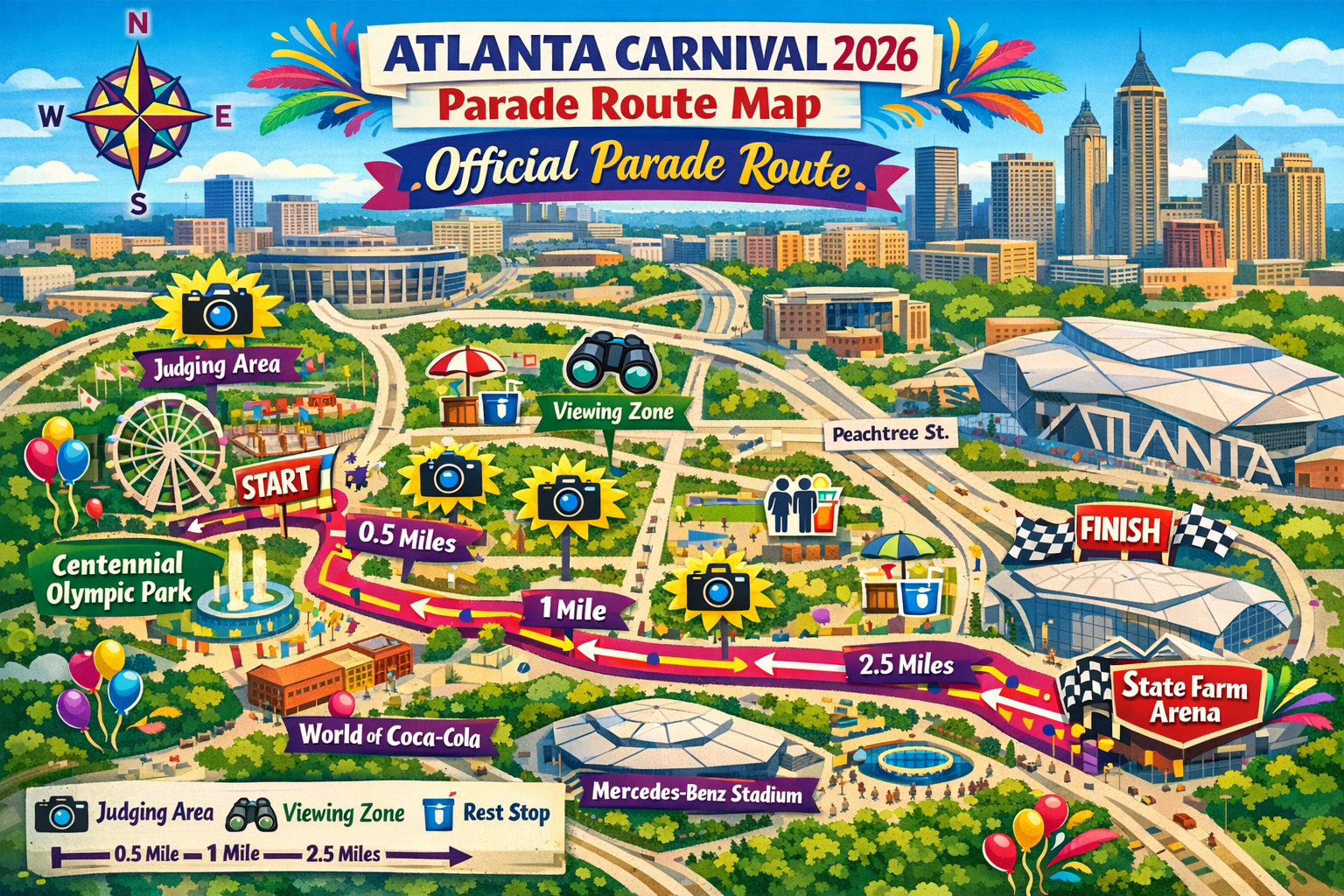
• The main parade route spans 2.5 miles through downtown Atlanta, starting at Centennial Olympic Park and ending at State Farm Arena
• Over 50 mas bands are expected to participate, representing various Caribbean islands and cultural themes
• Early booking is essential for accommodations, as hotels fill up quickly during carnival weekend
1. CARNIVAL BASICS
1.1 What is Atlanta Carnival
Atlanta Carnival represents the vibrant transplantation of traditional Caribbean carnival culture to the American Southeast. Born from the rich traditions of Trinidad and Tobago’s carnival, this celebration has its roots in the 18th-century festivities that combined African, European, and indigenous influences into a unique cultural expression.
The history and origins of carnival trace back to pre-Lenten Catholic celebrations, but in the Caribbean context, carnival became a powerful form of cultural resistance and artistic expression. Enslaved Africans transformed European masquerade traditions, infusing them with African rhythms, storytelling, and spiritual practices. This cultural fusion created the foundation for modern carnival celebrations worldwide.
The cultural significance of Atlanta Carnival extends far beyond entertainment. It serves as a vital link connecting the Caribbean diaspora in the Southeast, preserving traditions while creating new ones. The event celebrates Caribbean heritage through music, dance, cuisine, and visual arts, fostering community bonds and cultural pride among participants of all backgrounds.
Since its evolution from the 18th century to present, carnival has maintained its core elements while adapting to modern contexts. Traditional characters like the Midnight Robber, Dame Lorraine, and Moko Jumbie continue to appear alongside contemporary costume designs that push the boundaries of wearable art.
While carnival celebrations worldwide share common elements, comparison with other carnivals reveals Atlanta’s unique character. Unlike Rio’s massive scale or Trinidad’s deep historical roots, Atlanta Carnival blends Caribbean authenticity with American innovation, creating an accessible entry point for newcomers while maintaining cultural integrity.
1.2 When is Carnival
Atlanta Carnival 2026 will unfold over Memorial Day weekend, specifically Saturday, May 23rd through Monday, May 25th. This timing strategically capitalizes on the three-day holiday weekend, allowing maximum participation from both local and traveling revelers.
The dates and timing follow the traditional carnival calendar structure, though adapted for American holiday schedules rather than the pre-Lenten timing of Caribbean carnivals. This Memorial Day positioning has become Atlanta Carnival’s signature, distinguishing it from other major U.S. carnival celebrations.
The carnival calendar and countdown begins months in advance, with costume launches typically occurring in January. Band registration opens in February, followed by fete announcements throughout spring. The intensity builds through April and May, culminating in the weekend celebration.
The best time to visit Atlanta extends beyond carnival weekend itself. Arriving Thursday or Friday allows participation in pre-carnival events while avoiding the rush of weekend arrivals. The weather in late May typically provides ideal conditions with temperatures in the 70s-80s°F and minimal rainfall.
The duration of festivities spans three full days, though related events may begin earlier in the week. Each day offers distinct experiences, from intimate cultural showcases to the massive street parade finale.
1.3 Carnival Season Timeline
The post-Christmas activities mark the unofficial beginning of carnival season, as band leaders begin conceptualizing themes and designers start sketching costume prototypes. January brings costume launches and band presentations, building excitement for the upcoming celebration.
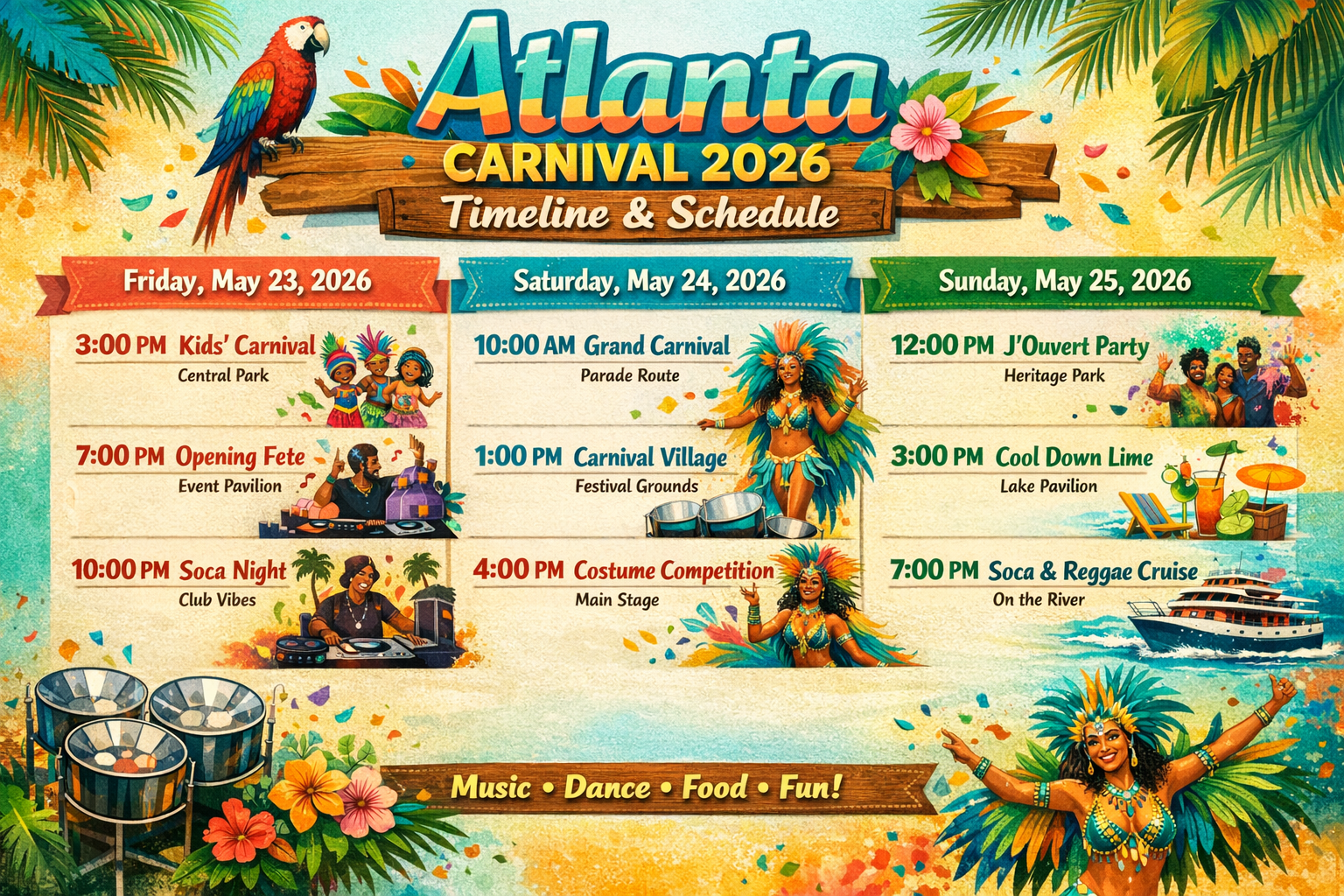
Carnival Saturday (May 23, 2026) opens with the Children’s Carnival parade, featuring young masqueraders in scaled-down versions of adult costumes. The day continues with cultural performances and culminates in evening fetes across the city.
Carnival Sunday (May 24, 2026) serves as the main parade day, when thousands of costumed participants dance through downtown Atlanta’s streets. This spectacle represents the heart of carnival, showcasing months of preparation in a explosion of color, music, and movement.
Carnival Monday (May 25, 2026) traditionally offers a more relaxed atmosphere with beach parties, cultural workshops, and recovery brunches. Many participants use this day to reflect on the weekend’s experiences while slowly transitioning back to everyday life.
2. CARNIVAL EVENTS & ACTIVITIES
2.1 Major Events
The main parade represents Atlanta Carnival’s centerpiece, featuring over 50 mas bands parading along a carefully planned 2.5-mile route through downtown Atlanta. Spectators can expect a continuous stream of elaborate costumes, live music trucks, and energetic dancers from 11 AM to 6 PM on Sunday.
What to expect includes professional sound systems on wheels pumping soca and calypso music, costume themes ranging from traditional Caribbean folklore to contemporary artistic interpretations, and an infectious party atmosphere that transforms downtown Atlanta into a Caribbean street festival.
Safety tips for parade participation include staying hydrated with the water stations provided every half-mile, wearing comfortable walking shoes despite costume requirements, and establishing meeting points with your group in case of separation in the crowds.
The King and Queens Competition showcases the pinnacle of carnival artistry, featuring individual performers in massive, ornate costumes that can weigh over 100 pounds and span 15 feet in width. These wearable sculptures tell stories through intricate craftsmanship and theatrical presentation.
Preliminaries, semifinals, and finals occur throughout carnival weekend, with preliminary judging on Friday evening, semifinals Saturday afternoon, and the final competition Sunday morning before the main parade. Each round eliminates contestants until only the most spectacular remain.
Where to watch the competitions varies by round, with preliminaries at the Georgia World Congress Center, semifinals at Centennial Olympic Park, and finals broadcast live on multiple screens throughout the parade route.
Venue and tickets for competition viewing range from free general admission areas to premium seating packages ($50-$200) that include food, drinks, and optimal viewing angles for photography.
Mas Bands on the Road form the parade’s backbone, with each band consisting of 100-1,000 costumed participants organized into themed sections. Band themes for 2026 include “Guardians of the Galaxy,” “Tropical Paradise,” “Ancient Civilizations,” and “Futuristic Visions.”
Monday Mas traditionally offers a more relaxed parade experience with smaller bands and more intimate participation. Tuesday Mas in Atlanta’s context refers to the main Sunday parade, maintaining Caribbean terminology despite the schedule adaptation.
Judging points along the parade route evaluate bands on costume design, presentation, music, and overall impact. Professional judges score performances at three designated stages, with awards announced during the closing ceremony.
Routes and stages span from Centennial Olympic Park through downtown’s main arteries, passing iconic Atlanta landmarks while providing multiple viewing opportunities for spectators.
2.2 Competitions
Beyond the King and Queens Competition, Atlanta Carnival 2026 features numerous contests celebrating different aspects of Caribbean culture. The Calypso Competition highlights lyrical storytelling through song, while the Soca Monarch contest crowns the best high-energy performance.
Steel Pan competitions showcase the Caribbean’s signature musical instrument, with bands from across the Southeast competing in categories ranging from traditional calypso arrangements to contemporary pop covers. The rhythmic complexity and melodic beauty of steel drums provide carnival’s musical foundation.
DJ competitions reflect carnival’s evolution, as sound system operators compete to deliver the most crowd-moving sets. These contests blend traditional Caribbean music with contemporary influences, creating soundscapes that keep masqueraders dancing for hours.
2.3 Pre-Carnival Parties
Fetes (carnival parties) begin weeks before the main event, building excitement and providing opportunities to practice dance moves and test costume elements. Popular 2026 fetes include “Caribbean Vibes,” “Soca Therapy,” and “Island Heat.”
Private vs public events offer different experiences, with exclusive fetes providing intimate settings and celebrity appearances, while public events welcome larger crowds and more diverse musical programming. Ticket prices range from $40 for general admission public fetes to $150+ for premium private events.
3. MUSIC & CULTURE
3.1 Music Genres
Soca music drives carnival’s infectious energy, with its fast-paced rhythms and call-and-response vocals designed specifically for dancing and celebration. Originating in Trinidad in the 1970s, soca combines calypso’s storytelling tradition with contemporary production techniques and irresistible beats.
The history and evolution of soca music reflects Caribbean society’s changes, from Lord Shorty’s original fusion experiments to modern power soca’s electronic influences. Atlanta Carnival 2026 will feature both classic soca hits and cutting-edge releases from the year’s carnival season.
Calypso provides carnival’s intellectual foundation, with clever lyrics addressing social issues, political commentary, and humorous observations about daily life. Master calypsonians craft verses that entertain while educating, maintaining a tradition of musical journalism that dates back centuries.
Dancehall and reggae influences have increasingly shaped carnival music, particularly in Atlanta’s multicultural context. These Jamaican genres contribute their own rhythmic patterns and vocal styles, creating fusion sounds that appeal to diverse audiences.
3.2 Dance & Movement
Carnival dancing emphasizes freedom of expression and joyful movement rather than technical precision. The signature “chipping” involves a rhythmic walking step that can be maintained for hours, while “wining” incorporates hip movements that reflect African dance traditions.
Traditional dance forms include the “jump up,” where participants literally jump to the music’s beat, and various regional styles brought by different Caribbean communities. These movements create a collective energy that transforms individual dancers into a unified celebration.
4. MASQUERADE BANDS
4.1 Choosing a Band
Large bands vs small bands offer different carnival experiences. Large bands (500+ members) provide extensive costume options, professional organization, and guaranteed amenities like food trucks and security, while small bands (50-200 members) offer intimate community feelings and often more affordable pricing.
Band reputation and reviews from previous years help inform decisions. Established bands like “Caribbean Fusion,” “Island Pride,” and “Atlanta Mas” have track records of quality costumes and well-organized parade experiences. New bands may offer innovative designs but carry higher risk of organizational issues.
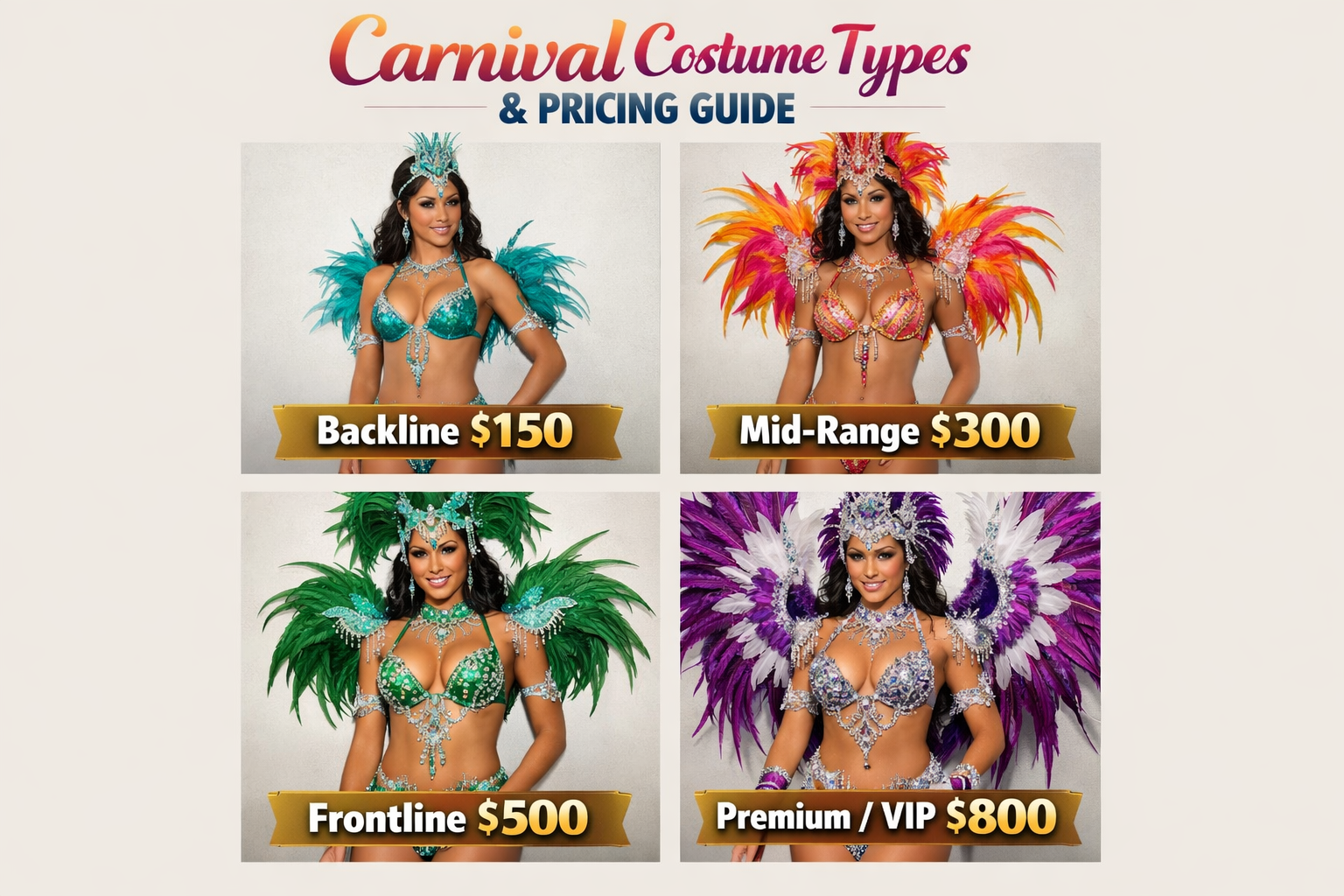
Price ranges vary significantly, from $150 for basic backline costumes to $800+ for elaborate frontline pieces. Mid-range options ($300-$500) typically provide good value with attractive costumes and adequate band services.
Costume sections within bands cater to different preferences and budgets. Frontline sections feature the most elaborate costumes with extensive featherwork and beading, while backline options offer simpler but still beautiful designs. VIP sections may include additional services like dedicated bars and seating areas.
4.2 Band Registration Process
Registration timeline typically opens in January with early bird pricing, followed by regular pricing through March, and premium pricing until capacity is reached. Popular bands may sell out by February, making early registration crucial.
Payment plans accommodate various budgets, with most bands accepting deposits ($50-$100) followed by monthly payments leading up to carnival. Full payment is typically required by April 1st to ensure costume production and fitting appointments.
Costume fittings occur in April and May, allowing for adjustments and ensuring proper fit. These appointments also serve as band meetings where participants receive parade instructions, route maps, and band merchandise.
4.3 Band Services and Amenities
Food and drink packages vary by band, with some including meals and beverages in registration fees while others operate cash bars and food trucks. Premium bands may offer catered meals and premium liquor selections.
Security and organization standards differ significantly between bands. Professional bands provide marshals, first aid stations, and lost-and-found services, while smaller operations may rely on volunteer coordination.
Transportation services may include shuttle buses from designated parking areas to parade starting points, though most participants arrange their own transportation to band assembly areas.
4.4 Alternative Mas
Individual mas allows creative freedom for experienced masqueraders who design and create their own costumes. These participants often compete in individual categories and showcase highly personal artistic visions.
Small bands (under 50 members) offer intimate experiences with close-knit communities and often innovative themes. Examples include “Cultural Warriors,” “Heritage Keepers,” and “Artistic Expressions.”
Traditional character bands preserve carnival’s historical elements, featuring classic characters like Midnight Robbers, Sailors, and Indians. These bands prioritize cultural authenticity over contemporary fashion trends.
Historical presentations educate while entertaining, with themes exploring Caribbean history, African heritage, and cultural evolution. These bands often collaborate with cultural organizations and academic institutions.
5. COSTUMES
5.1 Costume Selection
Costume sections within bands create hierarchical pricing and design complexity. Frontline costumes feature the most elaborate designs with extensive featherwork, crystals, and metallic elements. Backline costumes offer simpler but still attractive designs at lower price points.
Male vs female costumes traditionally differ significantly, with female costumes emphasizing decorative bikini-style designs and elaborate headpieces, while male costumes feature shorts, vests, or minimal coverage with corresponding accessories. Modern carnival increasingly offers gender-neutral options and non-binary designs.
Sizing and fitting require careful attention, as costume elements must accommodate dancing and movement over several hours. Most bands provide sizing charts and require measurements for custom fitting, particularly for headpieces and back pieces.
Price ranges ($200-$1000+) reflect costume complexity and band prestige. Budget options ($150-$300) provide basic participation opportunities, mid-range costumes ($400-$600) offer good quality and design, while premium options ($700+) feature luxury materials and intricate craftsmanship.
Costume reveal season builds excitement from January through March, as bands unveil their themes and designs through elaborate launch parties and social media campaigns. These reveals generate buzz and drive registration decisions.
5.2 Costume Elements
Headpieces serve as costume focal points, ranging from simple feathered bands to elaborate sculptural creations weighing several pounds. Designs incorporate feathers, crystals, LED lights, and artistic elements that reflect band themes.
Backpacks/back pieces create dramatic silhouettes and often represent costume themes’ central elements. These structures require careful engineering to balance visual impact with wearability during hours of dancing and movement.
Belts and leg pieces provide lower body decoration while maintaining mobility. Designs range from simple beaded belts to elaborate hip pieces with flowing fabric elements and decorative chains.
Bras and bodywear form costume foundations, requiring both aesthetic appeal and practical support for active participation. Modern designs incorporate athletic wear technology with traditional carnival aesthetics.
Monokinis vs bikinis offer different coverage options, with monokinis providing more support and coverage while bikinis allow greater customization and traditional carnival styling.
Embellishments and materials distinguish quality costumes, with premium options featuring genuine crystals, high-grade feathers, and durable metallic elements. Feathers, beads, and crystals create carnival’s signature sparkle and movement.
5.3 Costume Preparation
Fittings and alterations ensure proper fit and comfort during parade participation. Most bands schedule multiple fitting sessions, allowing for adjustments as costume production progresses.
Customization options may include color variations, additional embellishments, or minor design modifications. Some bands offer upgrade packages that enhance basic costumes with premium materials.
Costume collection typically occurs the week before carnival, with bands organizing pickup schedules to avoid last-minute rushes. Participants receive care instructions and parade day guidelines during collection.
What to bring on the road includes backup accessories, emergency repair supplies (safety pins, fabric glue), and protective items like bandages for potential chafing points.
Costume care and storage after carnival preserves memories and maintains resale value. Proper cleaning and storage techniques help preserve delicate materials and allow for future display or resale.
6. PLANNING YOUR CARNIVAL
6.1 When to Book
Costume sales timeline follows a predictable pattern, with early bird pricing available from January through February, regular pricing from March through April, and premium pricing (if available) in May. Popular bands and sections often sell out during early bird periods.
Accommodation booking should begin immediately after Atlanta Carnival 2026 dates are announced, as downtown hotels fill quickly and prices increase dramatically closer to the event. Booking by December 2025 ensures better selection and pricing.
Flight booking benefits from early planning, particularly for travelers from Caribbean communities in other cities. Memorial Day weekend represents peak travel time, making advance booking essential for reasonable prices.
Fete ticket purchasing begins in February and March, with popular events selling out weeks in advance. VIP and premium tickets disappear first, while general admission options may remain available closer to event dates.
6.2 Budgeting
Costume costs range from $150-$800+ depending on band choice and section selection. Additional costs may include accessories, shoes, and costume modifications or repairs.
Accommodation costs vary dramatically by location and booking timing. Downtown hotels during carnival weekend range from $200-$500+ per night, while suburban options may offer rates of $100-$200 per night with transportation considerations.
Fete tickets add $200-$600+ to carnival budgets, depending on the number and type of events attended. Premium fetes command higher prices but often include food, drinks, and exclusive entertainment.
Food and drinks during carnival weekend can be expensive, with vendor prices reflecting the captive audience. Budgeting $100-$150 per day for meals and beverages provides reasonable coverage.
Transportation includes flights (for out-of-town visitors), local transportation, and parking fees. Ride-sharing services may implement surge pricing during peak carnival times.
Total estimated budget for Atlanta Carnival 2026 participation ranges from $800-$2,500+ per person, depending on costume choice, accommodation preferences, and activity level.
Money-saving tips include early booking for everything, sharing accommodation costs, participating in potluck-style gatherings, and choosing mid-range costume options that provide good value.
6.3 Travel Logistics
Visa requirements for international visitors vary by country of origin. Caribbean nationals should verify current U.S. visa requirements and ensure passport validity extends beyond travel dates.
Flights to Atlanta benefit from the city’s status as a major airline hub, with direct service from most U.S. cities and many Caribbean destinations. Hartsfield-Jackson Atlanta International Airport provides convenient access to downtown carnival activities.
Airport transfers include MARTA rail service ($2.50), taxi services ($30-$40), ride-sharing ($25-$35), and rental cars. MARTA offers the most economical option with direct service to downtown hotels.
Currency and payments in the U.S. require consideration for international visitors. Credit cards are widely accepted, but cash remains useful for vendor purchases and tips.
Travel insurance provides protection against trip cancellations, medical emergencies, and costume damage. Comprehensive policies cost 4-8% of total trip value but offer valuable peace of mind.
6.4 Accommodation
Hotels in downtown Atlanta provide convenient access to carnival events but command premium pricing during carnival weekend. Popular options include the Hilton Atlanta, Marriott Marquis, and Omni Hotel at CNN Center.
Airbnb options may offer better value for groups, with entire apartments or houses available for $150-$400+ per night. Properties within walking distance of parade routes book earliest and command highest prices.
Areas to stay should consider proximity to carnival events, safety, and transportation access. Downtown, Midtown, and Buckhead offer different advantages in terms of location and amenities.
Safety considerations include choosing well-lit areas, using reputable transportation services, and staying aware of surroundings during late-night activities.
Proximity to events affects transportation costs and convenience. Staying within walking distance of parade routes eliminates transportation concerns but costs more than suburban options requiring driving or ride-sharing.
7. WHAT TO PACK & WEAR
7.1 Carnival Day Essentials
Comfortable shoes/sneakers represent the most critical packing decision, as participants may walk and dance for 6-8 hours. Athletic shoes with good arch support and cushioning prevent foot pain and injury. Many masqueraders pack backup shoes in case of damage or extreme discomfort.
Athletic/dance wear under costume provides essential support and comfort. Moisture-wicking fabrics help manage perspiration, while seamless designs prevent chafing under decorative costume elements. Sports bras for women and compression shorts for all participants offer necessary support during extended physical activity.
Hydration pack/water bottle maintains health and energy throughout the parade. Hands-free hydration systems allow continuous dancing while ensuring adequate fluid intake. Many bands provide water stations, but personal supplies guarantee availability.
Sunscreen (waterproof) protects exposed skin during hours of outdoor activity. SPF 30+ formulations designed for athletic activity resist sweat and provide long-lasting protection. Reapplication during the day may be necessary for fair-skinned participants.
Portable phone charger keeps communication devices functional for photos, coordination, and emergency contact. Solar chargers or high-capacity power banks ensure device availability throughout the day.
Waterproof phone case/pouch protects valuable electronics from sweat, spilled drinks, and potential weather. Clear cases allow photography while providing complete protection.
Small backpack or fanny pack carries essentials without interfering with costume elements. Lightweight, secure designs with multiple compartments organize necessities while maintaining easy access.
Cash and cards should be distributed across multiple secure locations. Small bills facilitate vendor purchases, while credit cards provide backup payment options.
7.2 Weather Preparedness
Sun protection extends beyond sunscreen to include hats, sunglasses, and UV-protective clothing. Late May in Atlanta typically provides warm, sunny conditions ideal for carnival but requiring adequate protection.
Rain contingency preparations acknowledge the possibility of afternoon thunderstorms. Lightweight rain ponchos protect costumes while allowing continued participation if weather conditions permit.
Temperature considerations for late May in Atlanta suggest daytime temperatures in the 70s-80s°F with potential evening cooling. Layering options accommodate temperature variations throughout the day.
7.3 Fete Attire
Festival wear for evening events emphasizes comfort, style, and dancing capability. Breathable fabrics and flexible designs accommodate hours of movement in crowded venues.
Comfortable dancing shoes for fetes differ from parade footwear, as indoor venues allow for different style choices. However, comfort remains paramount for extended dancing.
Light, breathable clothing manages heat and humidity in crowded party environments. Moisture-wicking fabrics and loose fits provide comfort during high-energy dancing.
Themed outfits when required for specific fetes may include color schemes, cultural dress, or costume elements. Event organizers typically announce theme requirements in advance.
8. FOOD & DRINK
8.1 Carnival Food
Road-side snacks during the parade include Caribbean favorites like doubles, roti, jerk chicken, and festival bread. Food trucks and vendors position themselves along the parade route, offering convenient refueling opportunities for participants and spectators.
Traditional Caribbean cuisine featured during carnival weekend showcases the diverse culinary traditions of the Caribbean diaspora. Popular options include Trinidadian doubles, Jamaican patties, Barbadian flying fish, and Guyanese cook-up rice.
Where to eat during Carnival includes established Caribbean restaurants throughout Atlanta, pop-up vendors during carnival events, and special menus offered by mainstream restaurants capitalizing on the celebration.
Vendor recommendations for authentic Caribbean food include established businesses like Caribbean Cuisine, Island Spice, and Tropical Taste. These restaurants often extend hours and offer special carnival menus during the weekend.
8.2 Drinks
Rum and cocktails represent carnival’s traditional beverages, with rum punch, piña coladas, and Caribbean-inspired cocktails available at most venues. Premium aged rums from various Caribbean islands showcase the region’s distilling traditions.
Local beers available during carnival include both mainstream American brands and Caribbean imports like Red Stripe, Carib, and Presidente. Many venues offer special carnival pricing and package deals.
Staying hydrated remains crucial during hours of physical activity in warm weather. Alternating alcoholic beverages with water prevents dehydration and maintains energy levels throughout the celebration.
Cooler system on the road allows bands to provide beverages to participants during the parade. Premium bands may include drinks in registration fees, while others operate cash bars or allow BYOB arrangements.
8.3 Restaurants & Cuisine
Caribbean restaurant scene in Atlanta has grown significantly, reflecting the expanding Caribbean community. Established restaurants often serve as community gathering places and carnival planning venues throughout the year.
Special carnival menus offered by restaurants during carnival weekend feature traditional dishes and party platters designed for group celebrations. Many establishments extend hours and offer takeout options for costume preparation days.
Authentic dining experiences include family-owned restaurants that maintain traditional recipes and cooking methods. These establishments often become unofficial carnival headquarters for specific island communities.
9. SAFETY & TIPS
9.1 Safety Guidelines
Travel in groups provides safety through numbers, particularly during evening events and when moving between venues. Establishing buddy systems ensures no one becomes separated or isolated during celebrations.
Keep valuables secure by using multiple storage locations and avoiding displays of expensive jewelry or electronics. Hotel safes provide secure storage for items not needed during carnival activities.
Be aware of surroundings at all times, particularly in crowded areas where pickpocketing may occur. Staying alert to unusual behavior or situations helps avoid potential problems.
Emergency contacts should include local police, medical services, band leaders, and accommodation providers. Programming these numbers into phones before carnival activities begin ensures quick access if needed.
Authorized taxi services and reputable ride-sharing companies provide safe transportation options. Avoiding unlicensed transportation reduces risks and ensures proper insurance coverage.
Avoiding dangerous areas requires research and local knowledge. Band leaders and hotel staff can provide guidance on areas to avoid, particularly during late-night activities.
9.2 Health Considerations
Staying hydrated requires consistent attention throughout carnival activities. Dehydration symptoms include headache, dizziness, and fatigue, which can quickly escalate in hot weather and crowded conditions.
Sun protection prevents painful sunburns that could ruin carnival enjoyment. Reapplying sunscreen every 2-3 hours maintains protection during extended outdoor exposure.
Foot care and blisters become critical during hours of walking and dancing. Proper footwear, moisture-wicking socks, and blister prevention products help maintain comfort throughout the celebration.
Stamina and rest management prevents exhaustion during multi-day celebrations. Pacing activities and ensuring adequate sleep between events maintains energy and enjoyment levels.
Medical facilities in downtown Atlanta include Grady Memorial Hospital and numerous urgent care centers. Knowing locations and contact information provides peace of mind during activities.
Prescription medications should be brought in sufficient quantities with backup supplies in separate locations. Carrying prescriptions in original containers helps avoid complications if medical attention becomes necessary.
9.3 First-Timer Tips
Start with smaller fetes to acclimate to carnival culture and energy levels before attending major events. Smaller gatherings provide opportunities to learn dance moves and understand carnival etiquette.
Pace yourself throughout the weekend to maintain energy and enjoyment. Attempting to attend every event often leads to exhaustion and diminished experiences.
Make friends with locals who can provide insider knowledge about the best food, events, and experiences. Caribbean community members often welcome newcomers and share cultural insights.
Join band WhatsApp groups for real-time communication about parade logistics, meeting points, and schedule changes. These groups become essential coordination tools during carnival weekend.
Download band apps that provide maps, schedules, and important announcements. Many bands develop custom apps specifically for carnival coordination and communication.
Study parade routes in advance to understand timing, rest stops, and spectator viewing areas. Familiarity with the route helps manage energy and plan for bathroom breaks and refreshments.
10. ATLANTA SPECIFIC INFORMATION
10.1 Local Caribbean Community
Atlanta’s Caribbean community has grown dramatically over the past two decades, with significant populations from Jamaica, Trinidad and Tobago, Barbados, Guyana, and other Caribbean nations. This diverse community provides the cultural foundation for Atlanta Carnival 2026.
Community organizations like the Caribbean American Chamber of Commerce and various island-specific associations coordinate year-round cultural activities and support carnival planning. These organizations often sponsor bands or host related events during carnival weekend.
Year-round Caribbean events include independence day celebrations, cultural festivals, and religious observances that maintain community connections throughout the year. These events help newcomers integrate into the community and learn about carnival traditions.
10.2 Venue Information
Centennial Olympic Park serves as carnival’s primary staging area, providing ample space for band assembly and spectator gathering. The park’s infrastructure supports large crowds with restroom facilities, vendor spaces, and emergency access.
Parade route details span approximately 2.5 miles through downtown Atlanta, passing major landmarks like the Georgia World Congress Center, CNN Center, and State Farm Arena. The route provides multiple viewing opportunities while showcasing Atlanta’s urban landscape.
Parking and transportation require advance planning, as downtown parking fills quickly during carnival weekend. MARTA rail service provides convenient access, while designated parking areas may offer shuttle services to parade starting points.
Accessibility considerations include wheelchair-accessible viewing areas and accommodations for participants with mobility challenges. Event organizers work to ensure inclusive participation opportunities for all community members.
10.3 Post-Carnival Activities
Tourism opportunities in Atlanta include the Georgia Aquarium, World of Coca-Cola, Martin Luther King Jr. National Historical Park, and numerous museums and cultural attractions. Many carnival visitors extend their stays to explore these attractions.
Hiking and nature options near Atlanta include Stone Mountain Park, Chattahoochee River National Recreation Area, and numerous state parks within driving distance. These destinations provide relaxing recovery options after carnival’s high energy.
Cultural sites throughout Atlanta reflect the city’s rich history and diverse communities. The High Museum of Art, Atlanta History Center, and various neighborhood cultural districts offer educational and entertaining experiences.
Relaxation and recovery options include spa services, quiet restaurants, and peaceful parks where carnival participants can decompress after the weekend’s activities.
11. PHOTOGRAPHY & MEDIA
11.1 Photography Tips
Best spots for photos along the parade route include Centennial Olympic Park for band assembly shots, the CNN Center area for urban backdrops, and State Farm Arena for finale celebrations. Early positioning secures optimal angles.
Hiring a photographer provides professional documentation of carnival experiences. Many local photographers specialize in carnival coverage and offer package deals for individuals or groups.
Band photographers typically capture parade action and provide photos to participants after the event. These services may be included in registration fees or available for additional charges.
Instagram-worthy locations throughout Atlanta include the Jackson Street Bridge for skyline views, Krog Street Tunnel for colorful murals, and various downtown landmarks that complement carnival costumes.
Drone regulations in downtown Atlanta require permits and restrict flight zones near airports and government buildings. Professional drone operators familiar with local regulations provide aerial photography services.
11.2 Social Media
Hashtags to use for Atlanta Carnival 2026 include #AtlantaCarnival2026, #CarnivalATL, #MasInAtlanta, and band-specific hashtags. Using consistent hashtags helps create searchable content archives.
Following Carnival updates through social media provides real-time information about schedule changes, weather updates, and special announcements. Official carnival accounts maintain current information throughout the weekend.
Band social media channels offer behind-the-scenes content, costume previews, and participant features. Following band accounts provides insider access to exclusive content and updates.
Live streams and coverage by local media outlets and community organizations allow global audiences to participate virtually. Many bands also provide live streaming of their parade experience.
11.3 Capturing Memories
Video highlights preserve carnival’s energy and movement better than still photography alone. Short video clips capture music, dancing, and crowd energy that photos cannot convey.
GoPro recommendations include chest mounts for hands-free recording during parade participation, head mounts for first-person perspectives, and handheld stabilizers for smooth footage.
Professional photo packages offered by event photographers provide comprehensive coverage including preparation, parade action, and celebration moments. These packages often include both digital files and printed options.
Copyright and privacy considerations include respecting other participants’ privacy and understanding usage rights for professional photography. Many participants welcome photos but appreciate being asked permission.
12. BEYOND CARNIVAL
12.1 Extending Your Stay
Atlanta attractions provide compelling reasons to extend carnival visits beyond the weekend. The city’s rich history, cultural attractions, and entertainment options offer diverse experiences for various interests.
Cultural experiences include the Atlanta Symphony Orchestra, Alliance Theatre, and numerous galleries showcasing local and international artists. These venues often offer special programming during major city events.
Nightlife options extend beyond carnival fetes to include live music venues, rooftop bars, and dance clubs throughout the city. Many establishments feature Caribbean music and themed events during carnival weekend.
12.2 Connecting with Community
Caribbean businesses throughout Atlanta provide opportunities to support the community year-round. Restaurants, grocery stores, and service providers often become gathering places for community members.
Cultural organizations welcome new members and volunteers who want to contribute to community activities beyond carnival. These organizations coordinate educational programs, cultural preservation efforts, and community service projects.
Future events throughout the year include independence day celebrations, cultural festivals, and fundraising activities that support various community causes and carnival preparation.
12.3 Post-Carnival Recovery
Hiking and nature activities near Atlanta provide peaceful recovery options after carnival’s intense energy. Stone Mountain, Kennesaw Mountain, and various state parks offer hiking trails and natural settings.
Cultural sites throughout Atlanta allow for educational and relaxing post-carnival activities. Museums, historical sites, and cultural centers provide quieter alternatives to carnival’s high energy.
Relaxation and recovery services include spas, massage therapy, and wellness centers that help participants recover from carnival’s physical demands while processing the weekend’s experiences.
13. CARNIVAL INDUSTRY
13.1 Behind the Scenes
How costumes are made involves months of planning, design, and construction using specialized techniques and materials. Costume builders combine traditional craftsmanship with modern materials to create wearable art pieces.
Designers and builders often come from Caribbean backgrounds and maintain traditional construction techniques while incorporating contemporary materials and designs. Many builders operate year-round businesses serving carnival communities across North America.
Innovation in carnival includes LED lighting, lightweight materials, and modular designs that improve wearability while maintaining visual impact. Technology integration continues to evolve carnival costume capabilities.
13.2 Economic Impact
Tourism statistics for Atlanta Carnival show significant economic impact, with visitors spending millions of dollars on hotels, restaurants, transportation, and shopping during carnival weekend.
Industry size encompasses costume production, event planning, music production, and related services that support carnival celebrations throughout North America. This industry provides year-round employment for many community members.
Employment opportunities during carnival include temporary positions in security, food service, transportation, and event coordination, providing economic benefits to local communities.
Sponsorships from local businesses and major corporations help fund carnival activities while providing marketing opportunities. These partnerships often extend beyond carnival weekend to support year-round community activities.
13.3 Carnival Arts
Wire bending creates the structural frameworks for elaborate costume pieces, requiring specialized skills to balance strength, weight, and flexibility. Master wire benders often train apprentices to preserve these traditional techniques.
Costume design combines artistic vision with practical considerations like wearability, weather resistance, and transportation requirements. Successful designs balance visual impact with participant comfort and safety.
Makeup artists (MUA) provide specialized services for carnival participants, creating looks that complement costumes while withstanding hours of physical activity and weather conditions.
Body painting offers alternative or complementary decoration options, with artists creating temporary designs that enhance costume themes or provide standalone artistic expression.
14. FAMILY CARNIVAL
14.1 Kiddies Carnival
Age groups and categories for children’s participation typically include toddlers (2-4), children (5-9), and youth (10-14), with costume designs and parade distances appropriate for each age group.
Children’s bands provide scaled-down versions of adult experiences, with shorter parade routes, more frequent rest stops, and supervision appropriate for young participants.
Junior competitions include scaled-down versions of adult contests, allowing children to showcase their costumes and performances in age-appropriate settings with encouraging rather than competitive atmospheres.
Safety for families includes designated family viewing areas, child identification systems, and specialized security personnel trained in family event management.
14.2 Family-Friendly Options
Daytime events provide alternatives to evening fetes that may be inappropriate for children. These events often feature cultural education components and interactive activities for young participants.
Family fetes offer early evening entertainment with appropriate music and activities for all ages. These events often end by 10 PM to accommodate family schedules.
Kid-friendly costumes provide coverage and comfort appropriate for children while maintaining carnival’s colorful aesthetic. Safety considerations include secure attachments and age-appropriate materials.
Parade viewing spots designated for families include shaded areas, restroom access, and space for strollers and family equipment.
15. SUSTAINABILITY & RESPONSIBILITY
15.1 Environmental Considerations
Costume recycling programs help reduce waste by facilitating costume resale, donation, or repurposing after carnival. Many bands coordinate these programs to extend costume lifecycles and reduce environmental impact.
Waste management during carnival events includes recycling programs, composting initiatives, and cleanup coordination. Participants are encouraged to minimize waste and dispose of materials responsibly.
Eco-friendly practices in costume construction include using sustainable materials, reducing packaging waste, and designing for durability and reusability.
Beach and street cleanup activities often follow carnival events, with community volunteers coordinating cleanup efforts to maintain Atlanta’s cleanliness and environmental health.
15.2 Cultural Respect
Understanding traditions helps participants appreciate carnival’s cultural significance beyond entertainment value. Educational components help newcomers understand the historical and cultural contexts of carnival practices.
Respectful participation includes learning about costume themes, understanding music meanings, and participating in ways that honor rather than appropriate Caribbean culture.
Supporting local businesses during carnival weekend helps ensure economic benefits reach community members who organize and support carnival activities year-round.
Cultural appropriation awareness helps participants understand the difference between cultural appreciation and appropriation, ensuring respectful engagement with Caribbean traditions.
15.3 Community Impact
Supporting local artisans includes purchasing costumes from community builders, hiring local musicians and DJs, and choosing Caribbean-owned businesses for carnival-related purchases.
Tipping and gratuities for service providers during carnival weekend acknowledges the extra effort required during high-demand periods and supports workers who make carnival possible.
Responsible tourism includes respecting local communities, following event guidelines, and engaging with Atlanta’s broader cultural landscape beyond carnival activities.
Giving back to the community through volunteer work, donations, or ongoing support helps strengthen the foundation that makes Atlanta Carnival possible year after year.
16. RESOURCES
16.1 Official Information
Atlanta Carnival Association serves as the primary organizing body for Atlanta Carnival 2026, providing official information about schedules, registration, and event guidelines. Their website and social media channels offer the most current and accurate information.
City of Atlanta departments including Parks and Recreation, Police, and Transportation coordinate with carnival organizers to ensure safe and successful events. Official city websites provide information about street closures, parking restrictions, and public safety measures.
Georgia Tourism promotes carnival as a signature state event, providing visitor information and coordinating with hospitality industry partners to support carnival tourism.
16.2 Carnival Apps & Tools
Band apps developed specifically for Atlanta Carnival 2026 provide real-time communication, route maps, schedule updates, and emergency contact information. Most major bands develop custom apps for participant coordination.
Event calendars available through various platforms help participants track fetes, competitions, and related activities throughout carnival weekend. These calendars often include ticket purchasing links and venue information.
Route maps showing parade paths, rest stops, judging points, and spectator areas help participants and spectators navigate carnival activities efficiently.
Ticket platforms for fetes and special events include both general ticketing services and specialized carnival platforms that cater specifically to Caribbean cultural events.
16.3 Community Resources
Carnival forums and online communities provide year-round discussion spaces for carnival enthusiasts to share information, coordinate travel, and maintain connections between events.
Facebook groups specific to Atlanta Carnival offer real-time information sharing, ride coordination, and community building opportunities. These groups often become primary communication channels during carnival weekend.
WhatsApp communities provide instant communication for band members, travelers, and local participants. These groups facilitate quick coordination and information sharing during fast-moving carnival activities.
Local contacts and concierge services specializing in carnival tourism provide personalized assistance with planning, booking, and coordination for visitors unfamiliar with Atlanta or carnival procedures.
16.4 Frequently Asked Questions
First-timer FAQs address common concerns about costume selection, parade participation, and cultural etiquette. These resources help newcomers feel confident about their carnival participation.
Costume FAQs cover sizing, care, customization, and transportation issues that commonly arise during costume preparation and carnival participation.
Travel FAQs address accommodation, transportation, and logistics questions specific to carnival weekend in Atlanta.
Safety FAQs provide guidance on personal safety, emergency procedures, and risk management during carnival activities.
Atlanta Carnival 2026 Budget Calculator
.cg-element-calculator {
max-width: 800px;
margin: 20px auto;
padding: 20px;
font-family: 'Segoe UI', Tahoma, Geneva, Verdana, sans-serif;
background: linear-gradient(135deg, #ff6b6b, #feca57, #48dbfb);
border-radius: 15px;
box-shadow: 0 10px 30px rgba(0,0,0,0.2);
color: #333;
}
.cg-element-header {
text-align: center;
margin-bottom: 30px;
color: white;
text-shadow: 2px 2px 4px rgba(0,0,0,0.3);
}
.cg-element-header h2 {
font-size: 2.2em;
margin-bottom: 10px;
font-weight: bold;
}
.cg-element-header p {
font-size: 1.1em;
opacity: 0.9;
}
.cg-element-form {
background: rgba(255,255,255,0.95);
padding: 25px;
border-radius: 10px;
backdrop-filter: blur(10px);
}
.cg-element-section {
margin-bottom: 25px;
padding: 15px;
border-left: 4px solid #ff6b6b;
background: rgba(255,107,107,0.05);
border-radius: 5px;
}
.cg-element-section h3 {
color: #ff6b6b;
margin-bottom: 15px;
font-size: 1.3em;
font-weight: bold;
}
.cg-element-input-group {
display: grid;
grid-template-columns: 1fr 1fr;
gap: 15px;
margin-bottom: 15px;
}
.cg-element-input-item {
display: flex;
flex-direction: column;
}
.cg-element-input-item label {
font-weight: 600;
margin-bottom: 5px;
color: #555;
}
.cg-element-input-item select,
.cg-element-input-item input {
padding: 10px;
border: 2px solid #ddd;
border-radius: 8px;
font-size: 16px;
transition: border-color 0.3s;
}
.cg-element-input-item select:focus,
.cg-element-input-item input:focus {
outline: none;
border-color: #ff6b6b;
}
.cg-element-results {
background: linear-gradient(135deg, #667eea, #764ba2);
color: white;
padding: 25px;
border-radius: 10px;
margin-top: 20px;
text-align: center;
}
.cg-element-total {
font-size: 2.5em;
font-weight: bold;
margin-bottom: 15px;
text-shadow: 2px 2px 4px rgba(0,0,0,0.3);
}
.cg-element-breakdown {
display: grid;
grid-template-columns: repeat(auto-fit, minmax(200px, 1fr));
gap: 15px;
margin-top: 20px;
}
.cg-element-breakdown-item {
background: rgba(255,255,255,0.1);
padding: 15px;
border-radius: 8px;
backdrop-filter: blur(10px);
}
.cg-element-breakdown-item h4 {
margin-bottom: 10px;
font-size: 1.1em;
}
.cg-element-breakdown-item .price {
font-size: 1.5em;
font-weight: bold;
}
.cg-element-tips {
background: rgba(254,202,87,0.1);
border: 2px solid #feca57;
border-radius: 10px;
padding: 20px;
margin-top: 20px;
}
.cg-element-tips h3 {
color: #ff6b6b;
margin-bottom: 15px;
}
.cg-element-tips ul {
list-style: none;
padding: 0;
}
.cg-element-tips li {
padding: 8px 0;
padding-left: 25px;
position: relative;
}
.cg-element-tips li::before {
content: "💡";
position: absolute;
left: 0;
}
@media (max-width: 768px) {
.cg-element-input-group {
grid-template-columns: 1fr;
}
.cg-element-header h2 {
font-size: 1.8em;
}
.cg-element-total {
font-size: 2em;
}
}
🎭 Atlanta Carnival 2026 Budget Calculator 🎭
Plan your perfect carnival experience with our comprehensive budget tool
🎨 Costume & Band
Backline ($150)
Mid-Range ($300)
Frontline ($500)
Premium/VIP ($800)
None ($0)
Basic ($50)
Moderate ($100)
Extensive ($200)
🏨 Accommodation
Budget Hotel ($200/night)
Mid-Range Hotel ($300/night)
Downtown Luxury ($450/night)
Airbnb/Shared ($150/night)
2 Nights
3 Nights
4 Nights
5 Nights
🎉 Events & Entertainment
0 Fetes
1 Fete
2 Fetes
3 Fetes
4+ Fetes
General Admission ($60 avg)
Premium ($100 avg)
VIP ($150 avg)
🍽️ Food & Drinks
Budget ($75/day)
Moderate ($125/day)
Premium ($200/day)
3 Days
4 Days
5 Days
✈️ Transportation
MARTA/Public ($50)
Ride-share Mix ($100)
Rental Car ($150)
Premium Transport ($200)
Total: $0
Your estimated Atlanta Carnival 2026 budget
🎨 Costume
$0
🏨 Hotel
$0
🎉 Events
$0
🍽️ Food
$0
✈️ Transport
$0
💰 Money-Saving Tips
- Book costumes during early bird period (January-February) for best prices
- Share accommodation costs with friends or carnival groups
- Look for fete combo packages and group discounts
- Use MARTA public transport instead of ride-sharing during peak times
- Book flights and hotels as early as possible for Memorial Day weekend
- Consider mid-range costume options that offer great value
- Join band WhatsApp groups for insider tips and cost-sharing opportunities
function calculateBudget() {
// Get all input values
const costumeType = parseInt(document.getElementById('costume-type').value);
const accessories = parseInt(document.getElementById('accessories').value);
const hotelType = parseInt(document.getElementById('hotel-type').value);
const nights = parseInt(document.getElementById('nights').value);
const numFetes = parseInt(document.getElementById('fetes').value);
const feteType = parseInt(document.getElementById('fete-type').value);
const dailyFood = parseInt(document.getElementById('daily-food').value);
const days = parseInt(document.getElementById('days').value);
const flightCost = parseInt(document.getElementById('flight-cost').value) || 0;
const localTransport = parseInt(document.getElementById('local-transport').value);
// Calculate totals for each category
const costumeTotal = costumeType + accessories;
const hotelTotal = hotelType * nights;
const eventsTotal = numFetes * feteType;
const foodTotal = dailyFood * days;
const transportTotal = flightCost + localTransport;
// Calculate grand total
const grandTotal = costumeTotal + hotelTotal + eventsTotal + foodTotal + transportTotal;
// Update display
document.getElementById('costume-total').textContent = costumeTotal.toLocaleString();
document.getElementById('hotel-total').textContent = hotelTotal.toLocaleString();
document.getElementById('events-total').textContent = eventsTotal.toLocaleString();
document.getElementById('food-total').textContent = foodTotal.toLocaleString();
document.getElementById('transport-total').textContent = transportTotal.toLocaleString();
document.getElementById('total-cost').textContent = grandTotal.toLocaleString();
}
// Add event listeners to all inputs
const inputs = document.querySelectorAll('select, input');
inputs.forEach(input => {
input.addEventListener('change', calculateBudget);
input.addEventListener('input', calculateBudget);
});
// Calculate initial budget
calculateBudget();
Conclusion
Atlanta Carnival 2026 represents more than just a weekend celebration—it’s a cultural bridge connecting Caribbean heritage with American innovation, creating an unforgettable experience that celebrates diversity, artistry, and community spirit. From the elaborate costumes that transform participants into walking works of art to the infectious rhythms that unite thousands in synchronized celebration, this event showcases the best of Caribbean culture while embracing Atlanta’s welcoming spirit.
Whether you’re a first-time participant drawn by the spectacle or a seasoned masquerader returning for another year of cultural celebration, Atlanta Carnival 2026 promises experiences that will create lasting memories and forge meaningful connections. The careful planning outlined in this guide—from costume selection and accommodation booking to understanding cultural protocols and safety considerations—ensures that your carnival experience will be both authentic and enjoyable.
Take action today by marking your calendar for costume registration in January 2026, researching band options that align with your budget and style preferences, and beginning to plan your travel arrangements. The most successful carnival experiences result from early preparation and cultural understanding, allowing participants to fully immerse themselves in the celebration without logistical stress.
Join the thousands of revelers who will transform Atlanta into a Caribbean paradise during Memorial Day weekend 2026, and become part of a cultural tradition that celebrates heritage, creativity, and community in one of the most spectacular street festivals in the Southeast.
—
SEO Meta Information:
Meta Title: Atlanta Carnival 2026: Complete Guide to Southeast’s Biggest Caribbean Festival
Meta Description: Discover everything about Atlanta Carnival 2026 – costume selection, parade routes, accommodations, and cultural experiences. Your complete guide to the Southeast’s premier Caribbean celebration.
—