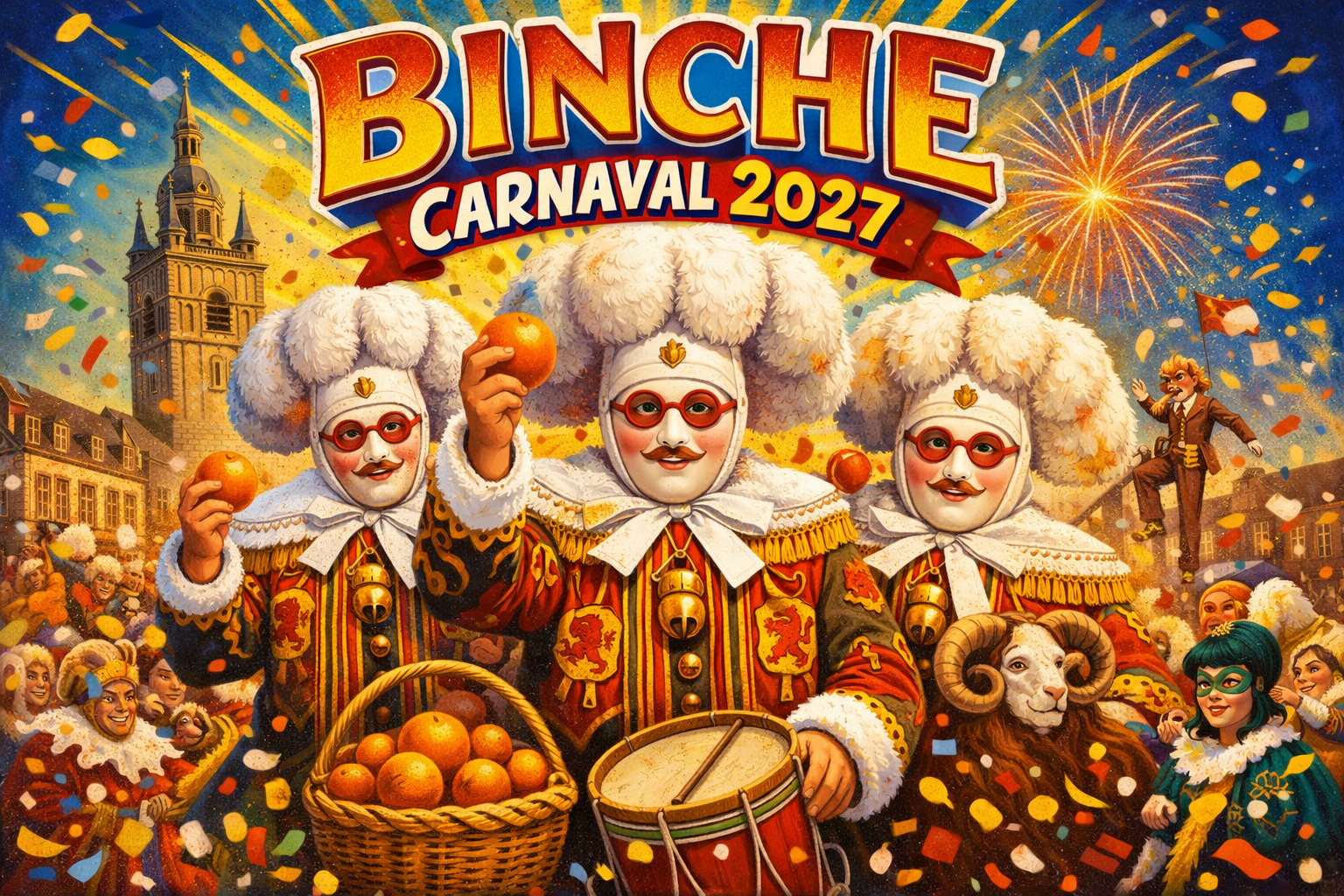
The Complete Guide to Binche Carnival 2027: Belgium’s UNESCO-Protected Medieval Spectacle
Picture this: you’re standing in the cobblestone streets of a medieval Belgian town as dawn breaks on a crisp February morning. Suddenly, the rhythmic beat of drums fills the air, and figures emerge from the mist wearing towering feather headdresses and elaborate 16th-century costumes. Welcome to the Binche Carnival 2027 – one of Europe’s most authentic and mesmerizing cultural celebrations that has remained virtually unchanged for over 500 years.
The Binche Carnival isn’t just another festival; it’s a living piece of history that UNESCO recognized as a “Masterpiece of Oral and Intangible Heritage of Humanity” in 2003. This extraordinary event transforms the small Belgian town of Binche into a theatrical stage where ancient traditions come alive through the famous Gilles – mystical figures who dance through the streets in a ritual that dates back to the Renaissance.
Key Takeaways
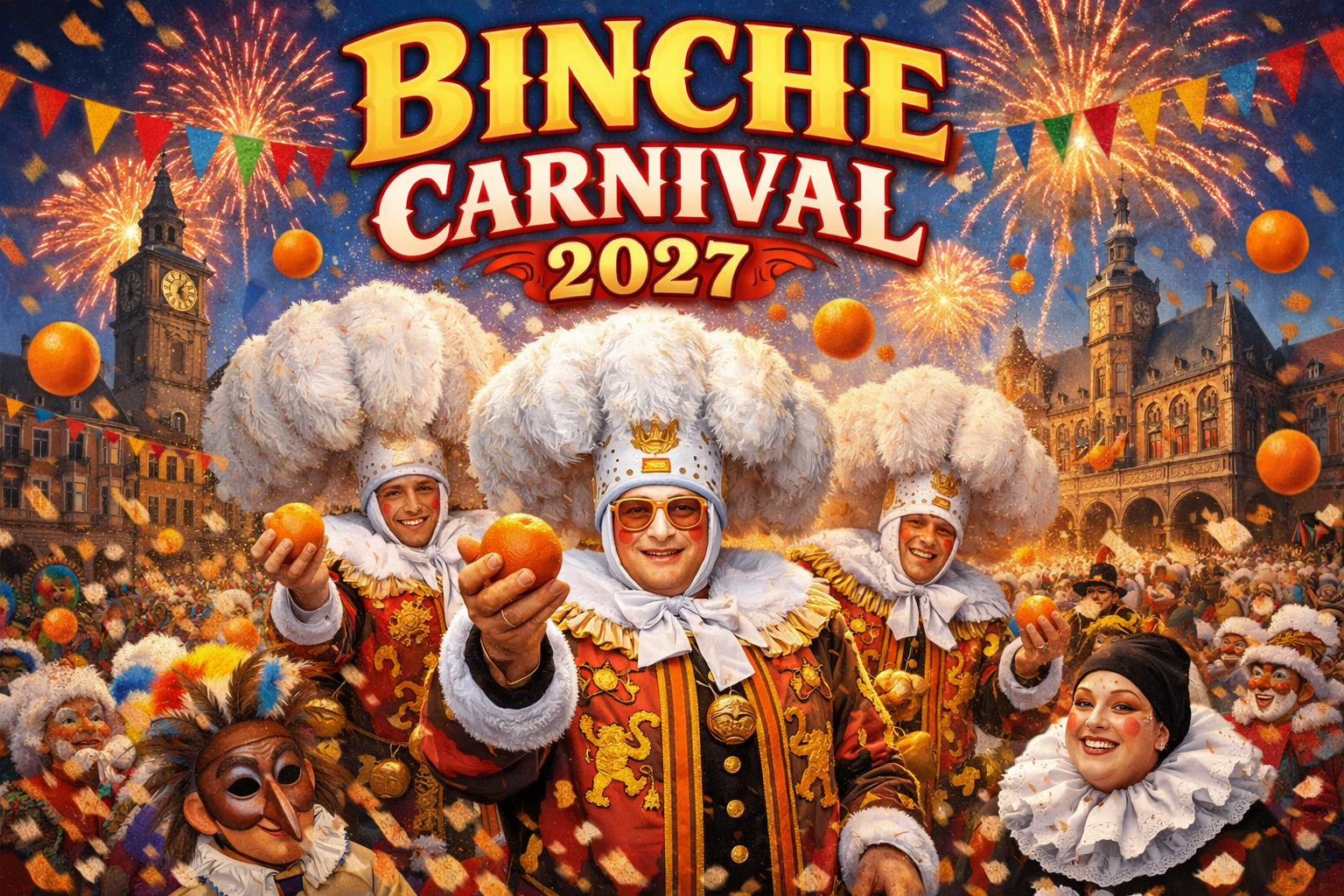
• Binche Carnival 2027 takes place from March 2-4, 2025, culminating on Shrove Tuesday with the legendary Gilles parade
• The carnival features over 1,000 participants in authentic 16th-century costumes, including the iconic Gilles with their ostrich feather headdresses
• This UNESCO World Heritage event is one of the oldest and most authentic carnivals in Europe, maintaining strict traditions for over 500 years
• Visitors can experience medieval pageantry, traditional folk music, and the famous orange-throwing ceremony by the Gilles
• Advance planning is essential as accommodation fills up quickly, and the best viewing spots require early arrival on carnival days
—
1. CARNIVAL BASICS
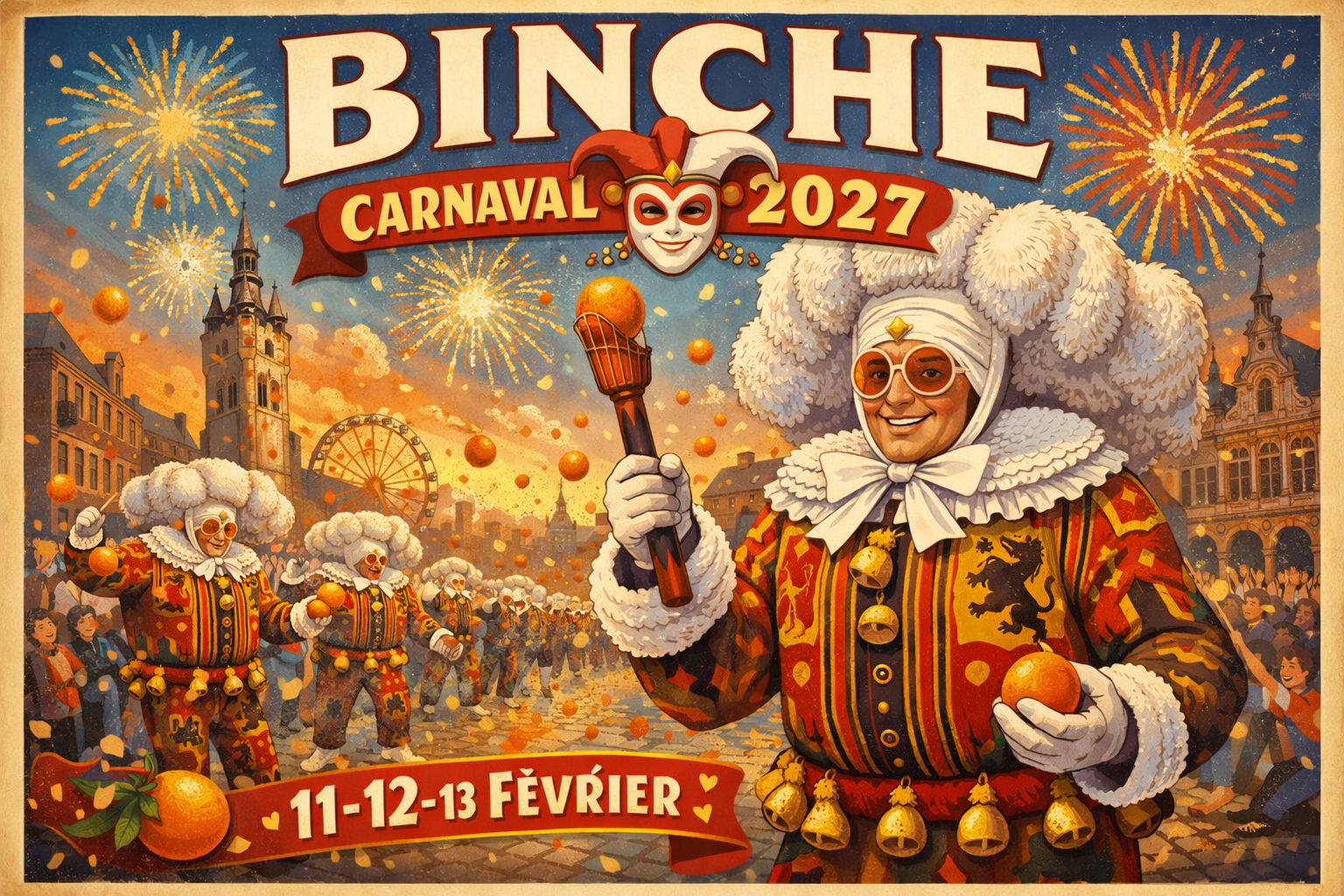
1.1 What is Binche Carnival
The Binche Carnival stands as one of Europe’s most remarkable cultural treasures, representing an unbroken chain of tradition stretching back to the 14th century. Unlike modern carnival celebrations that have evolved with contemporary influences, Binche has maintained its authentic medieval character with fierce dedication.
History and Origins 🏰
The carnival’s origins trace back to 1549 when Mary of Hungary organized lavish festivities to honor her brother, Emperor Charles V, and his son, the future Philip II of Spain. Legend suggests that the exotic costumes and feathered headdresses were inspired by the Inca nobles brought from the New World to entertain the imperial court. However, historians debate this romantic origin story, with many believing the traditions evolved from even older pagan winter festivals.
The carnival survived religious persecution, political upheavals, two world wars, and social changes that destroyed countless other European traditions. During World War I, German occupiers banned the celebration, but locals secretly maintained the costume-making traditions in hidden workshops. This resilience speaks to the deep cultural significance of the event for the people of Binche.
Cultural Significance 🎭
The Binche Carnival represents far more than entertainment – it’s a sacred ritual that binds the community together. Participation is strictly hereditary, passed down through family lines. You cannot simply decide to become a Gille; you must be born into a family with carnival rights, creating an exclusive brotherhood that spans generations.
The carnival serves multiple cultural functions:
Evolution from 18th Century to Present
While the core elements remain unchanged, the carnival has adapted subtly over centuries. The 18th century saw the standardization of Gilles costumes, with specific regulations governing colors, materials, and decorations. The 19th century introduced the famous ostrich feather headdresses, which became the carnival’s most recognizable symbol.
The 20th century brought challenges and innovations. Photography and later television brought global attention, while tourism created new pressures. The carnival society established strict rules to prevent commercialization, limiting participation and maintaining authenticity even as visitor numbers grew.
UNESCO Recognition 🏆
In 2003, UNESCO designated the Binche Carnival as a “Masterpiece of Oral and Intangible Heritage of Humanity,” recognizing its exceptional universal value. This designation acknowledges:
Comparison with Other Carnivals Worldwide
Unlike Rio’s Carnival with its samba schools and commercial spectacle, or Venice’s elegant masked balls, Binche maintains a distinctly medieval character. Here’s how it compares:
| Carnival | Duration | Participants | Commercial Level | Historical Period |
|———-|———-|————–|——————|——————-|
| Binche | 3 days | 1,000+ | Minimal | Medieval/Renaissance |
| Rio de Janeiro | 1 week | 2 million+ | Highly commercial | Modern |
| Venice | 2 weeks | Thousands | Moderate | 18th century |
| New Orleans | 2 weeks | Hundreds of thousands | Commercial